Web Engineering: A Comprehensive Guide for 2026
Web engineering has evolved from a niche discipline into a foundational practice that drives digital transformation across industries. As businesses increasingly rely on sophisticated web applications to deliver services, manage operations, and engage customers, the systematic approach to building these systems becomes critical. Unlike traditional software development, web engineering addresses unique challenges related to scalability, security, user experience, and the distributed nature of internet-based applications. This discipline combines principles from computer science, software engineering, and design to create robust, maintainable web solutions that serve millions of users worldwide.
Understanding Web Engineering Fundamentals
Web engineering represents a systematic, disciplined, and quantifiable approach to developing web-based systems and applications. This field emerged as a response to the growing complexity of web projects and the need for structured methodologies that ensure quality, reliability, and maintainability. Rather than treating web development as an ad-hoc activity, web engineering applies rigorous engineering principles throughout the entire lifecycle.
The foundation of web engineering rests on understanding core web technologies and how they interact. Web standards provide the framework that ensures interoperability across different browsers, devices, and platforms. These standards, maintained by organizations like the W3C and IETF, define how HTML structures content, CSS handles presentation, and JavaScript enables interactivity.
Core Components of Web Architecture
Modern web engineering requires deep knowledge of both client-side and server-side technologies. The client-side encompasses everything that runs in the user's browser, including responsive layouts, interactive interfaces, and client-side logic. Server-side engineering focuses on application logic, database management, API design, and infrastructure.
Key architectural considerations include:
- Separation of concerns between presentation, business logic, and data layers
- Stateless communication protocols and session management
- Caching strategies for improved performance
- Load balancing and horizontal scaling approaches
- Security measures including authentication, authorization, and data protection
The relationship between these components determines how well an application performs under load, how easily it can be maintained, and how secure it remains against emerging threats.
Methodologies and Development Practices
Web engineering projects demand methodologies that accommodate rapid changes in requirements, technologies, and user expectations. Agile frameworks have become predominant in this space, enabling teams to deliver value incrementally while responding to feedback and market shifts.
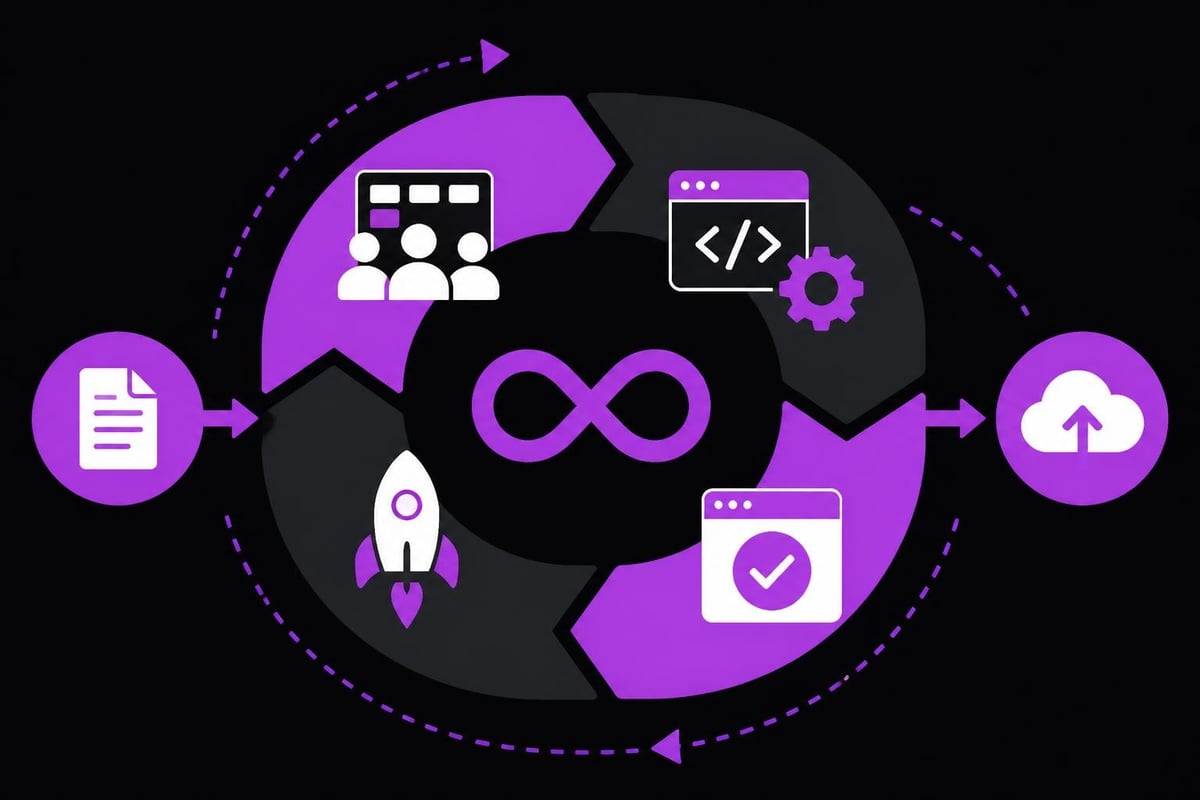
Continuous integration and continuous deployment (CI/CD) practices have transformed how web applications move from development to production. Automated testing, code reviews, and deployment pipelines ensure that changes can be safely and quickly released to users. This approach aligns perfectly with how modern product engineering firms like Absolute Foundry deliver solutions.
Version Control and Collaboration
Modern web engineering relies heavily on version control systems to manage code across distributed teams. Git has become the de facto standard, enabling developers to work on features simultaneously, track changes over time, and merge contributions systematically. Branching strategies like GitFlow or trunk-based development help teams coordinate their efforts while maintaining code quality.
| Practice | Benefit | Implementation Complexity |
|---|---|---|
| Automated Testing | Catches bugs early, enables confident refactoring | Medium |
| Code Reviews | Improves code quality, shares knowledge | Low |
| CI/CD Pipelines | Faster deployments, reduced manual errors | High |
| Feature Flags | Gradual rollouts, A/B testing capability | Medium |
| Documentation | Easier onboarding, better maintainability | Low |
These practices create a safety net that allows teams to move quickly without sacrificing quality. When building web apps, implementing these practices from the start prevents technical debt accumulation.
Front-End Engineering Excellence
Front-end web engineering has grown exponentially in sophistication over the past decade. What once involved simple HTML and CSS now encompasses complex state management, component architectures, and build tooling. Modern frameworks like React, Vue, and Angular provide structured approaches to building interactive user interfaces.
Performance optimization stands as a critical concern in front-end engineering. Users expect pages to load within seconds, and search engines factor loading speed into rankings. Techniques like code splitting, lazy loading, tree shaking, and asset optimization directly impact user experience and business metrics.
Essential front-end engineering skills include:
- Semantic HTML markup for accessibility and SEO
- CSS methodologies like BEM, SMACSS, or CSS-in-JS
- JavaScript fundamentals and modern ES6+ features
- State management patterns for complex applications
- Performance profiling and optimization techniques
- Responsive design and progressive enhancement
- Accessibility standards compliance (WCAG)
The web standards model provides guidance on how these technologies work together cohesively. Understanding the mechanics of how browsers parse, render, and execute code enables engineers to make informed architectural decisions.
Component-Based Architecture
Component-based development has revolutionized front-end web engineering by promoting reusability and maintainability. Breaking interfaces into discrete, self-contained components makes applications easier to test, debug, and extend. This approach mirrors concepts from component engineering in other disciplines, where modular design principles lead to better outcomes.
Design systems take this concept further by establishing standardized components, patterns, and guidelines across an entire organization. These systems ensure consistency, speed up development, and improve collaboration between designers and engineers. When implemented well, they become powerful tools for scaling product development.
Back-End Systems and Architecture
Back-end web engineering focuses on server-side logic, data management, and API design. This domain has seen tremendous evolution with the rise of microservices, serverless computing, and cloud-native architectures. Engineers must now consider not just how to build features, but how to architect systems that scale, remain resilient to failures, and can be maintained by growing teams.
Database design remains fundamental to back-end engineering. Choosing between relational and NoSQL databases, designing efficient schemas, implementing proper indexing, and optimizing queries all impact application performance. Modern web applications often use polyglot persistence, selecting the right database technology for specific use cases within a single system.
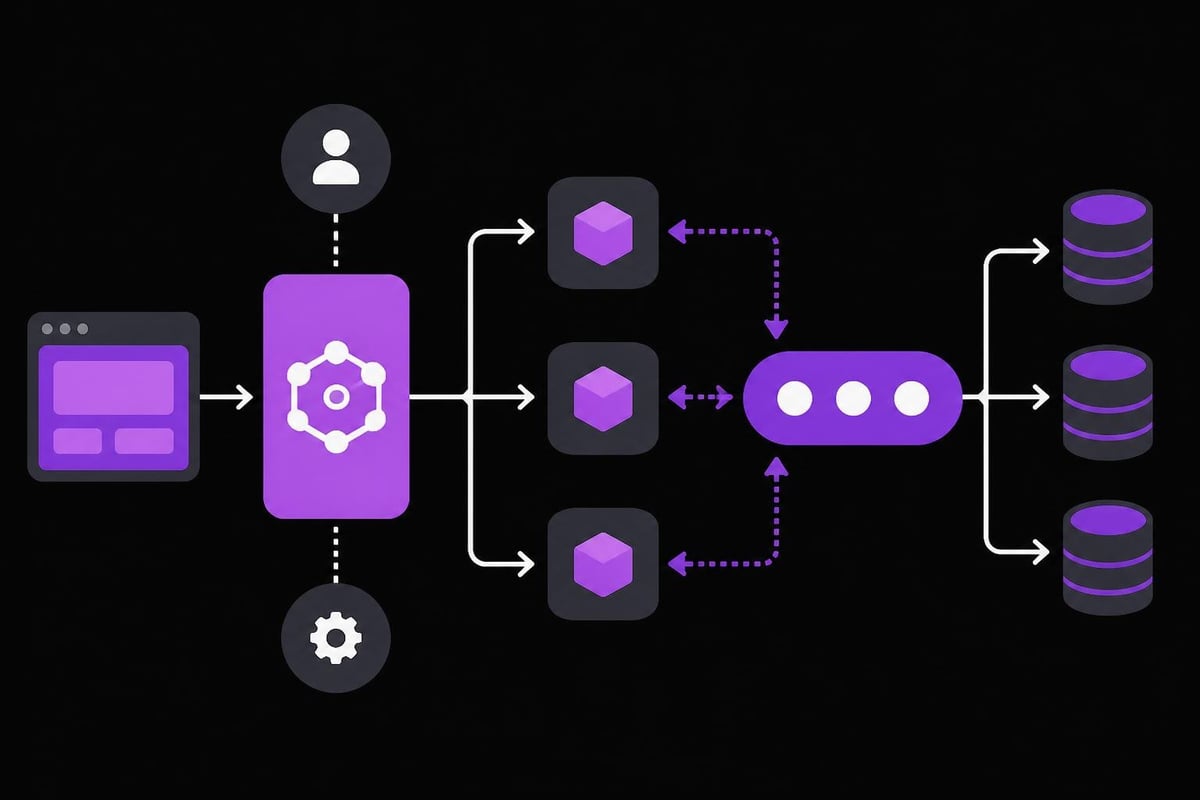
API design deserves special attention in web engineering. Well-designed APIs enable front-end flexibility, third-party integrations, and future expansion. RESTful principles provide time-tested patterns, while GraphQL offers an alternative approach that gives clients more control over data fetching. When building SaaS MVPs, API-first design accelerates development and enables rapid iteration.
Security Considerations
Security permeates every aspect of back-end web engineering. Authentication mechanisms verify user identity, while authorization systems control access to resources. Input validation prevents injection attacks, encryption protects data in transit and at rest, and proper session management prevents hijacking.
Critical security practices include:
- Input sanitization and output encoding
- SQL injection prevention through parameterized queries
- Cross-site scripting (XSS) protection
- Cross-site request forgery (CSRF) tokens
- Secure password hashing with salts
- Regular security audits and dependency updates
- Rate limiting and DDoS protection
The web mechanics of how HTTP requests travel across networks expose multiple attack vectors that engineers must understand and defend against. Security cannot be an afterthought but must be integrated throughout the engineering process.
DevOps and Infrastructure
Modern web engineering extends beyond writing code to encompass deployment, monitoring, and infrastructure management. DevOps practices bridge the gap between development and operations, creating workflows where engineers take responsibility for the entire lifecycle of their applications.
Cloud platforms like AWS, Google Cloud, and Azure have transformed infrastructure management. Rather than maintaining physical servers, engineers define infrastructure as code, provision resources on demand, and scale automatically based on load. This shift enables smaller teams to manage sophisticated global deployments that would have required large operations teams a decade ago.
Containerization with Docker and orchestration with Kubernetes have become standard tools in the web engineering toolkit. These technologies provide consistent environments across development, testing, and production, eliminating the "works on my machine" problem while enabling sophisticated deployment strategies like blue-green deployments and canary releases.
Monitoring and Observability
Production systems require comprehensive monitoring to detect issues before they impact users. Metrics, logs, and traces provide different lenses for understanding system behavior. Application performance monitoring (APM) tools track response times, error rates, and resource utilization, while log aggregation systems help diagnose issues across distributed systems.
| Metric Type | Purpose | Tools |
|---|---|---|
| Performance | Response times, throughput | New Relic, DataDog |
| Errors | Exception tracking, error rates | Sentry, Rollbar |
| Infrastructure | CPU, memory, disk usage | Prometheus, Grafana |
| User Experience | Real user monitoring | Google Analytics, Heap |
Setting up proper monitoring when developing web applications enables proactive issue resolution and data-driven optimization. Alerting systems notify teams of anomalies, while dashboards provide at-a-glance system health visibility.
Specialized Web Engineering Domains
Web engineering encompasses numerous specialized domains that require unique expertise. Building payment rails demands understanding financial regulations, PCI compliance, and transaction security. Gaming platforms require real-time communication, complex state synchronization, and anti-cheat mechanisms. Smart contract development introduces immutability, gas optimization, and security auditing concerns unique to blockchain environments.
Dashboard applications present particular engineering challenges around data visualization, real-time updates, and complex filtering. When designing trading dashboards, engineers must balance feature richness with performance, ensuring that data-heavy interfaces remain responsive under load.
Progressive Web Applications
Progressive Web Apps (PWAs) represent an evolution in web engineering that bridges the gap between traditional websites and native mobile applications. These applications leverage service workers for offline functionality, push notifications for engagement, and installability for easy access. PWAs deliver app-like experiences while maintaining the reach and discoverability of the web.
PWA features include:
- Offline functionality through service worker caching
- Push notifications for user engagement
- Home screen installation without app stores
- Background synchronization for data updates
- Responsive design across all device sizes
- Progressive enhancement for broad compatibility
When building production dApps or other sophisticated web applications, PWA capabilities enhance user experience while reducing development costs compared to maintaining separate native applications.
Testing and Quality Assurance
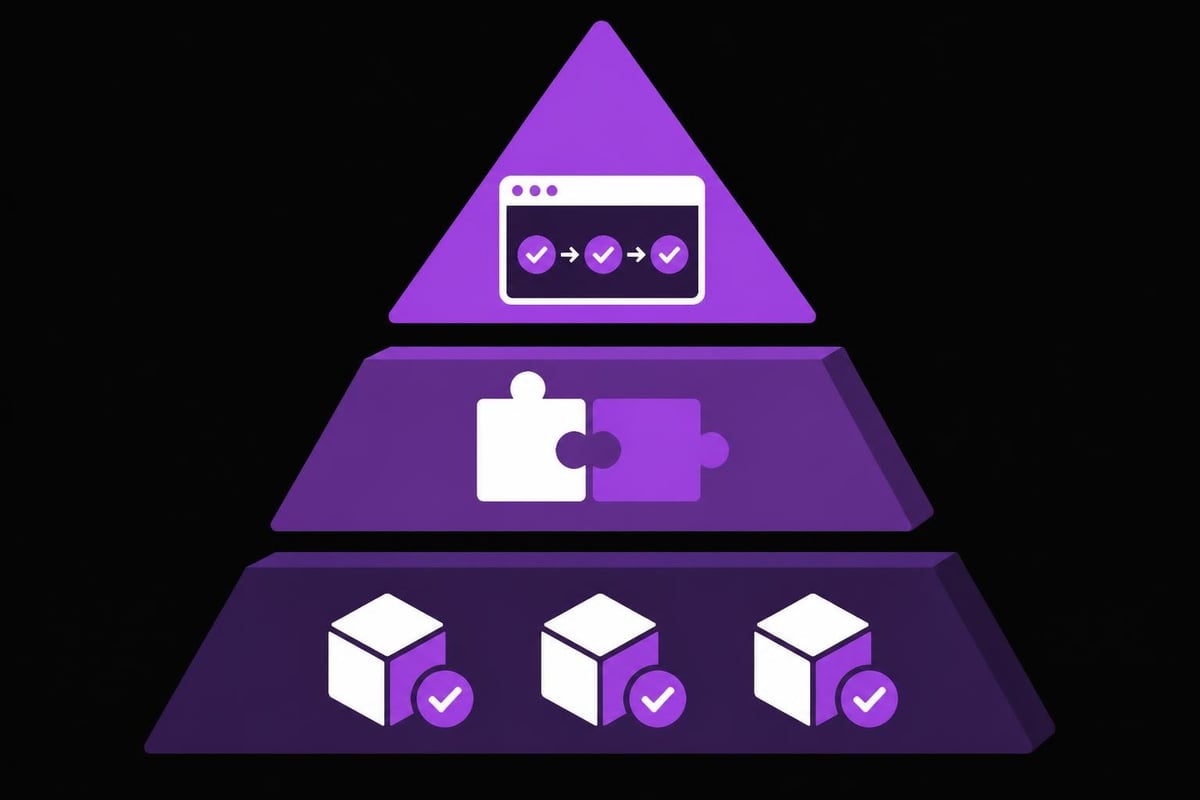
Testing represents a cornerstone of professional web engineering. Different testing levels serve distinct purposes: unit tests verify individual functions, integration tests ensure components work together, and end-to-end tests validate complete user workflows. Test-driven development (TDD) pushes testing even earlier in the process, writing tests before implementation code.
Automated testing enables confident refactoring and rapid deployment. Front-end testing frameworks like Jest, React Testing Library, and Cypress provide tools for testing components and user interactions. Back-end testing frameworks validate API responses, database operations, and business logic. The investment in test automation pays dividends in reduced bugs, faster debugging, and improved code quality.
Performance testing ensures applications handle expected load. Load testing simulates high traffic volumes, stress testing pushes systems beyond normal capacity to find breaking points, and spike testing validates behavior under sudden traffic increases. These tests reveal bottlenecks before they impact users in production.
Accessibility Testing
Accessibility in web engineering ensures applications work for users with disabilities. This includes keyboard navigation, screen reader compatibility, proper color contrast, and semantic HTML. Automated tools like Lighthouse, axe, and WAVE catch many issues, but manual testing with assistive technologies remains essential.
Meeting WCAG standards isn't just ethical but increasingly legally required. Many jurisdictions mandate digital accessibility, making it a compliance issue as much as an engineering concern. Building accessibility into the development process from the start costs far less than retrofitting later.
Emerging Trends and Future Directions
Web engineering continues evolving at a rapid pace. Edge computing brings computation closer to users, reducing latency for globally distributed applications. WebAssembly enables near-native performance for computationally intensive tasks in browsers, opening new possibilities for web applications. AI integration transforms how applications interact with users, from chatbots to personalized recommendations.
The intersection of web standards and emerging technologies creates both opportunities and challenges. Engineers must balance adopting new capabilities with maintaining compatibility and accessibility. The academic discipline of web engineering provides theoretical frameworks for addressing these evolving challenges systematically.
Jamstack architecture has gained momentum by decoupling front-end presentation from back-end services. Static site generation combined with client-side JavaScript and API calls delivers excellent performance while simplifying deployment and scaling. This approach works particularly well for content-heavy sites and applications where most data can be pre-rendered.
Key trends shaping web engineering:
- Serverless architecture and function-as-a-service platforms
- Headless CMS systems decoupling content from presentation
- Real-time collaboration features in web applications
- Voice interfaces and conversational UI patterns
- Augmented reality experiences in browsers
Performance Optimization Strategies
Performance optimization in web engineering requires systematic approaches at multiple levels. Resource optimization includes minimizing file sizes through compression, using modern image formats like WebP and AVIF, and implementing lazy loading for below-the-fold content. Network optimization leverages HTTP/2 multiplexing, connection keep-alive, and strategic use of CDNs.
Rendering performance depends on minimizing reflows and repaints, using CSS transforms for animations, and implementing virtual scrolling for large lists. Critical rendering path optimization ensures that essential content loads quickly by inlining critical CSS, deferring non-essential JavaScript, and prioritizing above-the-fold content.
| Optimization Technique | Impact | Difficulty |
|---|---|---|
| Image Optimization | High | Low |
| Code Splitting | High | Medium |
| Server-Side Rendering | High | High |
| CDN Implementation | High | Medium |
| Caching Strategy | High | Medium |
| Database Query Optimization | Medium | Medium |
Measurement drives optimization. Tools like Lighthouse, WebPageTest, and Chrome DevTools provide insights into performance bottlenecks. Core Web Vitals-Largest Contentful Paint, First Input Delay, and Cumulative Layout Shift-offer metrics that correlate with user experience and search rankings.
Scalability and System Design
Scalability challenges distinguish simple web applications from enterprise-grade systems. Horizontal scaling adds more servers to handle increased load, while vertical scaling increases individual server capacity. Web engineering must consider both approaches and the trade-offs each presents.
Caching strategies dramatically improve performance and reduce server load. Browser caching stores static assets locally, CDN caching distributes content globally, application caching stores frequently accessed data in memory, and database query caching reduces expensive operations. Implementing appropriate cache invalidation ensures users see current data while maximizing performance benefits.
Database scaling presents unique challenges. Read replicas distribute query load, sharding partitions data across multiple databases, and denormalization trades storage for query performance. The right approach depends on specific application requirements and growth patterns. Organizations working with web dashboard applications often face particular scaling challenges around aggregating and visualizing large datasets.
Message queues enable asynchronous processing, decoupling time-intensive operations from user requests. Background job processing prevents slow operations from blocking user interactions while enabling retry logic and failure handling. This architecture pattern proves essential for complex workflows like payment processing, email sending, and data transformation.
Web engineering combines rigorous methodologies with cutting-edge technologies to build robust, scalable applications that serve modern business needs. As digital products become increasingly sophisticated, the systematic approaches, security practices, and performance optimizations discussed here separate professional implementations from amateur efforts. Whether you're building smart contracts, payment systems, or complex dashboards, having an experienced partner makes the difference between a functional product and an exceptional one. Absolute Foundry serves as your on-demand tech department, bringing deep web engineering expertise to projects while you focus on growing your market. From initial architecture through production deployment and beyond, the right engineering foundation sets your product up for long-term success.