How to Develop a Web Application: A Complete Guide
Modern businesses require robust web applications to compete effectively in digital markets. Whether you're building a dashboard, payment system, or customer portal, the process to develop a web application demands careful planning, technical expertise, and strategic execution. This comprehensive guide explores the essential steps, technologies, and best practices that transform concepts into fully functional web applications that serve users worldwide.
Understanding Web Application Architecture
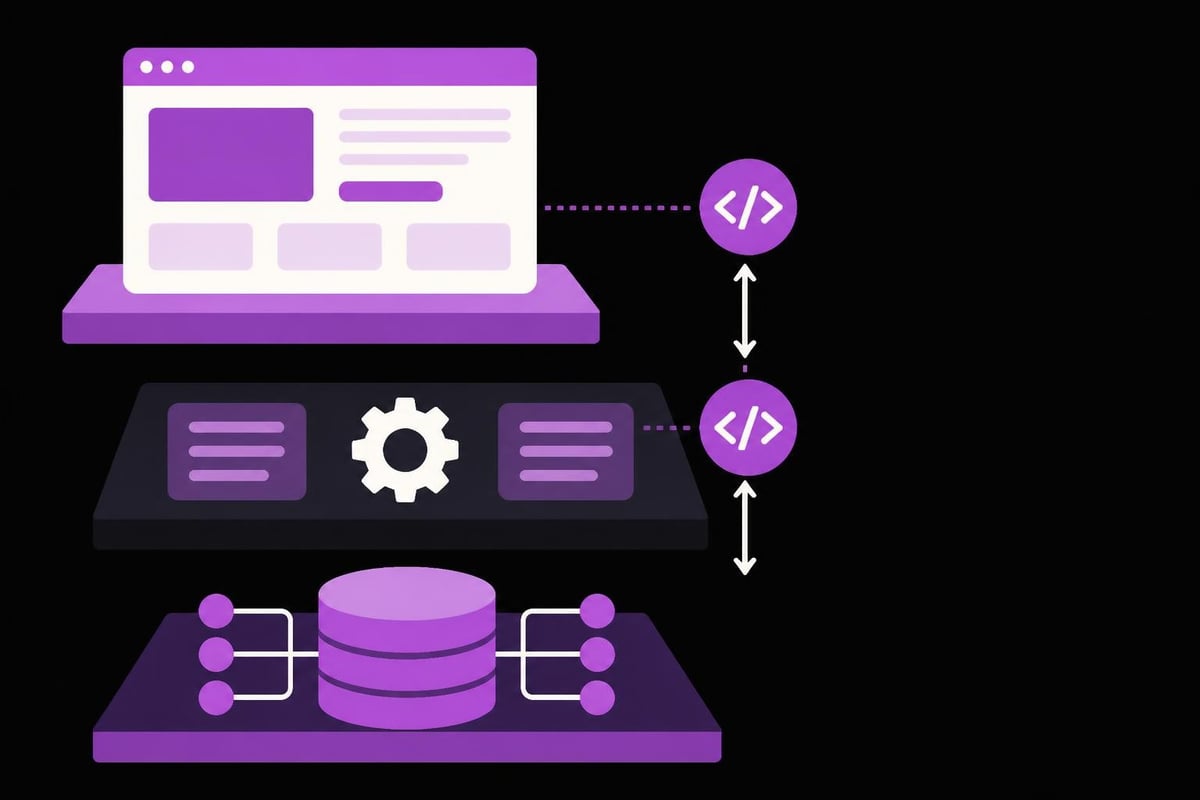
When you develop a web application, the underlying architecture determines its scalability, performance, and maintainability. Web applications consist of three primary layers that work together seamlessly.
Front-End Layer: User Interface
The presentation layer encompasses everything users see and interact with directly. Modern front-end development leverages frameworks like React, Vue, or Angular to create responsive interfaces that adapt to different screen sizes and devices. This layer communicates with the back-end through APIs, fetching and displaying data in real-time.
Key front-end technologies include:
- JavaScript frameworks for dynamic content rendering
- CSS preprocessors like Sass or Less for maintainable styling
- State management libraries for complex application logic
- Progressive Web App (PWA) features for offline functionality
Back-End Layer: Business Logic
The application server processes requests, executes business logic, and manages data flow between the database and front-end. When organizations develop a web platform, choosing the right back-end technology stack impacts development speed and long-term maintenance costs.
| Technology Stack | Best For | Primary Language |
|---|---|---|
| Node.js/Express | Real-time applications, APIs | JavaScript |
| Django/Flask | Data-driven apps, ML integration | Python |
| Ruby on Rails | Rapid prototyping, startups | Ruby |
| .NET Core | Enterprise applications | C# |
| Spring Boot | Large-scale Java applications | Java |
Data Layer: Storage and Retrieval
Databases store application data persistently, supporting both relational (PostgreSQL, MySQL) and non-relational (MongoDB, Redis) systems. The choice depends on data structure requirements, query patterns, and scalability needs.
Planning Your Web Application Development
Strategic planning prevents costly mistakes and ensures your web application meets business objectives. Before writing a single line of code, teams must define clear requirements and technical specifications.
Defining Business Requirements
Start by identifying the problem your web application solves. Document user stories, feature priorities, and success metrics that align with business goals. This foundation guides technical decisions throughout the development lifecycle.
Essential planning activities:
- Stakeholder interviews to gather requirements
- Competitive analysis to identify market gaps
- User persona development for target audience clarity
- Feature prioritization using frameworks like MoSCoW (Must have, Should have, Could have, Won't have)
- Technical feasibility assessment to validate concepts
Creating Technical Specifications
Translate business requirements into technical documentation that developers can execute. Specifications should cover data models, API endpoints, authentication flows, and integration requirements. Teams that develop a web application with comprehensive specs reduce ambiguity and accelerate development.
Consider whether you need to build web apps with specific features like real-time collaboration, payment processing, or complex data visualization. Each capability requires different technical approaches and third-party integrations.
Selecting the Right Technology Stack
Technology choices impact development speed, application performance, and maintenance costs. The optimal stack balances team expertise, project requirements, and long-term scalability.
Front-End Framework Selection
Modern frameworks offer different philosophies and capabilities. React provides flexibility and a vast ecosystem, Vue offers gentle learning curves with progressive adoption, while Angular delivers comprehensive enterprise solutions with built-in tooling.
Performance considerations matter significantly when you develop a web interface. Understanding web performance best practices helps teams optimize loading times, minimize resource consumption, and improve user experience across varying network conditions.
Back-End Technology Considerations
Select back-end technologies based on specific application needs:
- Real-time features benefit from WebSocket-enabled frameworks
- Data-intensive applications require robust ORM (Object-Relational Mapping) tools
- Microservices architectures need containerization and orchestration
- Serverless deployments reduce infrastructure management overhead
When working with complex requirements like smart contracts or blockchain integration, specialized expertise becomes critical. Solutions that build production dapp applications require deep understanding of both web technologies and distributed systems.
Development Workflow and Best Practices
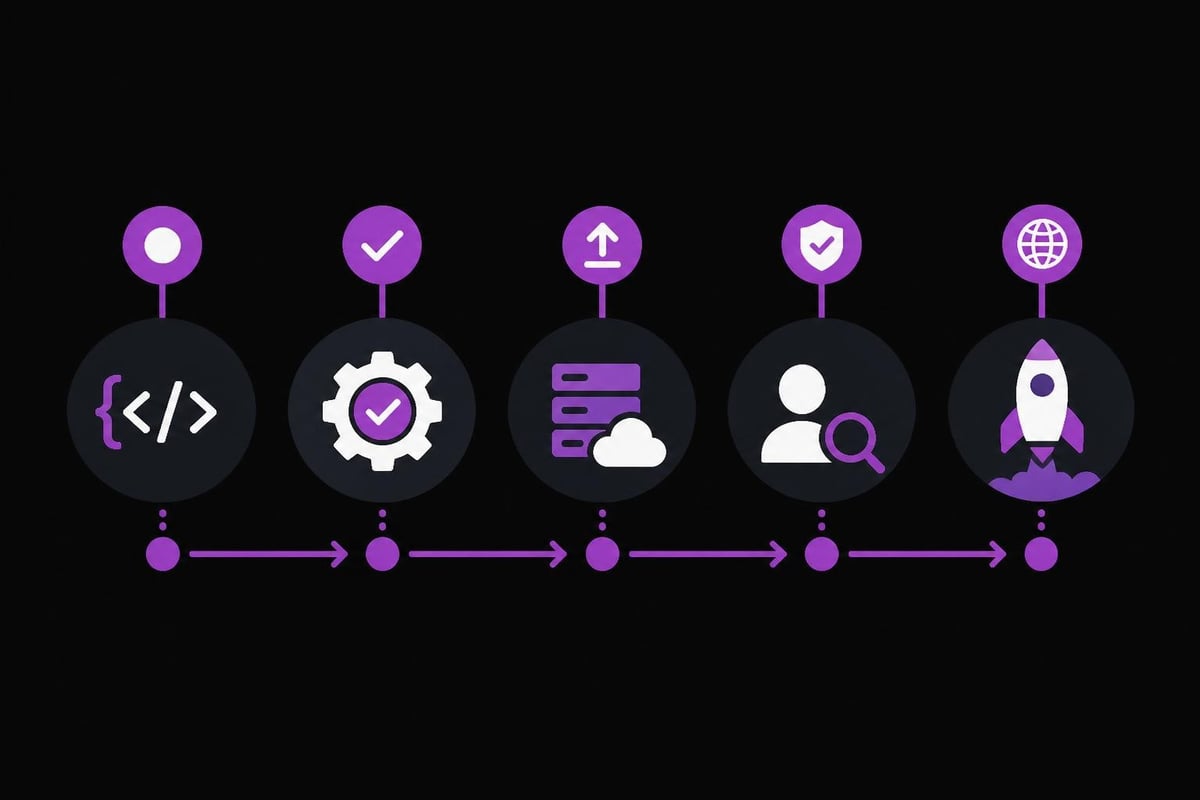
Establishing efficient workflows ensures consistent code quality and enables team collaboration. Modern web development relies on version control, automated testing, and continuous integration pipelines.
Version Control and Collaboration
Git-based workflows enable multiple developers to work simultaneously without conflicts. Branch strategies like Git Flow or trunk-based development organize feature development, testing, and production releases systematically.
Effective Git practices include:
- Descriptive commit messages explaining changes
- Regular commits to track incremental progress
- Pull request reviews for code quality assurance
- Protected main branches preventing direct commits
- Automated checks before merging code
Code Quality and Testing
Writing testable code from the start reduces debugging time and prevents regressions. Test-driven development (TDD) approaches encourage developers to write tests before implementing features, ensuring comprehensive coverage.
| Testing Type | Purpose | Tools |
|---|---|---|
| Unit Tests | Verify individual functions | Jest, Mocha, PyTest |
| Integration Tests | Validate component interactions | Cypress, Selenium |
| End-to-End Tests | Simulate user workflows | Playwright, TestCafe |
| Performance Tests | Measure load capacity | Artillery, JMeter |
Teams that develop a web application with robust testing practices ship more reliable products and respond faster to issues. Automated test suites catch problems early, before they reach production environments.
Security Considerations for Web Applications
Security vulnerabilities expose businesses to data breaches, financial losses, and reputational damage. Implementing security best practices throughout development protects both applications and users.
Authentication and Authorization
Secure authentication verifies user identity, while authorization controls access to resources. Modern applications implement OAuth 2.0, JSON Web Tokens (JWT), or session-based authentication depending on requirements.
Security implementation checklist:
- Password hashing using bcrypt or Argon2
- Multi-factor authentication for sensitive operations
- Role-based access control (RBAC) for permissions
- Token expiration and refresh mechanisms
- Secure session storage and management
Research shows that flawed tutorials can seed large-scale web vulnerabilities, emphasizing the importance of following established security patterns rather than copying unvetted code samples.
Data Protection and Privacy
Encrypt sensitive data both in transit (HTTPS/TLS) and at rest (database encryption). Comply with regulations like GDPR, CCPA, or industry-specific requirements that govern data handling and user privacy.
When you develop a web application handling financial transactions or personal information, security becomes paramount. Projects that build stablecoin payment rails require additional security layers including transaction verification, fraud detection, and regulatory compliance.
API Design and Integration
Well-designed APIs enable scalability, support multiple client applications, and facilitate third-party integrations. RESTful APIs remain popular, though GraphQL gains traction for complex data requirements.
RESTful API Principles
REST (Representational State Transfer) APIs use HTTP methods (GET, POST, PUT, DELETE) to perform operations on resources. Consistent endpoint naming, proper status codes, and comprehensive documentation improve developer experience.
API design best practices:
- Use nouns for endpoint names, not verbs
- Implement proper HTTP status codes (200, 201, 400, 404, 500)
- Version APIs to support backward compatibility
- Provide clear error messages with actionable guidance
- Document endpoints with examples and parameter descriptions
Third-Party Service Integration
Modern applications rarely exist in isolation. Payment processors, analytics platforms, email services, and cloud storage solutions extend functionality without custom development overhead.
Integration strategies vary based on service capabilities. Some providers offer SDKs that simplify implementation, while others require direct API calls with custom error handling and retry logic.
Database Design and Optimization
Database architecture impacts application performance, data integrity, and future scalability. Poor database design creates bottlenecks that become expensive to fix after launch.
Schema Design Principles
Normalize relational databases to reduce redundancy while balancing query performance. Define appropriate indexes to accelerate common queries without excessive storage overhead.
Database optimization techniques:
- Index frequently queried columns
- Use connection pooling to manage database connections
- Implement caching layers (Redis, Memcached) for read-heavy operations
- Partition large tables for improved query performance
- Regular query analysis to identify slow operations
When organizations develop a web dashboard or analytics platform, database performance directly affects user experience. Complex queries requiring web dashboard visualizations benefit from optimized schemas and strategic denormalization.
Data Migration Strategies
As applications evolve, database schemas change. Version-controlled migrations track schema modifications, enabling consistent deployment across development, staging, and production environments.
| Migration Tool | Language | Features |
|---|---|---|
| Alembic | Python | Auto-generation, branching |
| Flyway | Java | Versioned, repeatable migrations |
| Knex.js | JavaScript | Schema builder, transactions |
| Entity Framework | .NET | Code-first, database-first |
User Interface and Experience Design
Technical excellence means little if users find applications confusing or frustrating. Effective UI/UX design balances aesthetics with usability, creating interfaces that users navigate intuitively.
Design Systems and Component Libraries
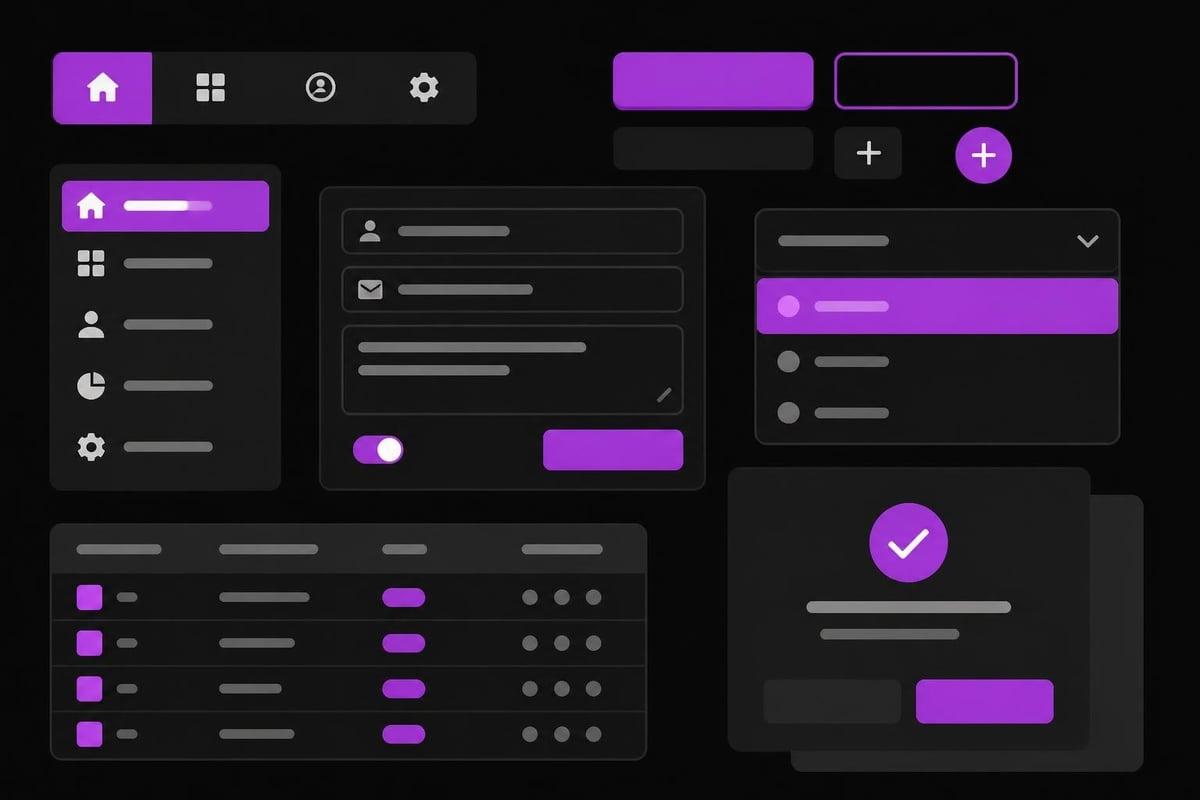
Design systems establish consistent visual languages across applications. Component libraries enable developers to reuse tested UI elements, accelerating development while maintaining design coherence.
Organizations that build UI components systematically create more maintainable applications. Documented components with clear usage guidelines help teams collaborate effectively across design and development disciplines.
Responsive and Accessible Design
Applications must function across devices, screen sizes, and assistive technologies. Responsive design adapts layouts dynamically, while accessibility ensures users with disabilities can navigate effectively.
Accessibility requirements include:
- Semantic HTML for screen reader compatibility
- Keyboard navigation for all interactive elements
- Sufficient color contrast ratios (WCAG 2.1 guidelines)
- Alternative text for images and media
- Form labels and error message associations
Learning resources like MDN Web Docs tutorials provide comprehensive guidance on implementing accessible, standards-compliant interfaces that work reliably across browsers and devices.
Deployment and DevOps Practices
Moving applications from development to production requires careful orchestration. Modern DevOps practices automate deployment, monitor performance, and enable rapid iteration.
Cloud Infrastructure Selection
Cloud platforms (AWS, Google Cloud, Azure) offer scalable infrastructure without upfront hardware investments. Choose services based on application requirements, budget constraints, and team expertise.
Common cloud service models:
- Infrastructure as a Service (IaaS) provides virtual machines and networking
- Platform as a Service (PaaS) abstracts infrastructure management
- Serverless computing eliminates server management entirely
- Container orchestration (Kubernetes) manages distributed applications
Continuous Integration and Deployment
CI/CD pipelines automate testing and deployment, reducing manual errors and accelerating release cycles. When developers push code, automated systems run tests, build artifacts, and deploy to staging environments.
Teams that develop a web application with mature DevOps practices ship features faster and respond to issues more effectively. Automated rollback capabilities minimize downtime when problems occur.
Performance Optimization Strategies
Fast applications retain users and rank higher in search results. Performance optimization encompasses front-end rendering, back-end processing, and network efficiency.
Front-End Performance Techniques
Minimize JavaScript bundle sizes through code splitting and lazy loading. Optimize images using modern formats (WebP, AVIF) and appropriate compression levels. Implement browser caching strategies to reduce repeated resource downloads.
| Optimization | Impact | Implementation Effort |
|---|---|---|
| Image compression | High | Low |
| Code splitting | High | Medium |
| Lazy loading | Medium | Low |
| CDN implementation | High | Low |
| Service workers | Medium | High |
Back-End Optimization
Cache frequently accessed data to reduce database queries. Implement database connection pooling to manage resources efficiently. Use asynchronous processing for long-running tasks that shouldn't block user requests.
When evaluating web design software or development tools, consider how they support performance optimization through built-in features or extensibility options.
Maintenance and Continuous Improvement
Launch marks the beginning, not the end, of the development lifecycle. Successful applications evolve based on user feedback, performance metrics, and changing business requirements.
Monitoring and Analytics
Implement application monitoring to track errors, performance metrics, and user behavior. Tools like Google Analytics, Mixpanel, or custom analytics solutions provide insights that inform product decisions.
Key metrics to monitor:
- Page load times and server response latency
- Error rates and exception patterns
- User engagement and conversion funnels
- Infrastructure costs and resource utilization
- Security events and potential threats
Iterative Enhancement
Gather user feedback through surveys, support tickets, and usage analytics. Prioritize improvements based on impact and development effort. Regular updates demonstrate commitment to product quality and user satisfaction.
Organizations that develop a web presence continuously must balance new feature development with technical debt reduction. Allocating time for refactoring and infrastructure improvements prevents long-term maintenance challenges.
Specialized Web Application Types
Different application categories require specialized approaches. Understanding these variations helps teams make appropriate technical decisions.
Real-Time Collaborative Applications
Applications supporting simultaneous multi-user editing require WebSocket connections, operational transformation algorithms, or CRDTs (Conflict-free Replicated Data Types). These technologies synchronize state across clients while handling concurrent modifications.
E-Commerce Platforms
Online stores demand payment processing, inventory management, and order fulfillment capabilities. Security requirements intensify when handling financial transactions and customer data.
Projects that build profitable Shopify stores or custom e-commerce solutions must address cart abandonment, product recommendations, and seamless checkout experiences.
Data Visualization Dashboards
Analytics platforms transform raw data into actionable insights through charts, graphs, and interactive visualizations. Back-end systems aggregate and process data while front-ends render visual representations efficiently.
Progressive Web Applications
PWAs combine web technologies with native app capabilities, offering offline functionality, push notifications, and home screen installation. Service workers cache resources and manage background synchronization.
Compliance and Regulatory Considerations
Regulated industries face additional requirements when building web applications. Healthcare, finance, and government sectors must comply with specific standards.
Common compliance frameworks:
- HIPAA for healthcare data protection
- PCI DSS for payment card processing
- SOC 2 for service organization controls
- ISO 27001 for information security management
- GDPR for European data privacy
Implementing compliance by design principles from the project start reduces costly retrofitting and ensures regulatory adherence throughout development.
Successfully developing web applications requires balancing technical expertise, strategic planning, and continuous improvement. From architecture decisions to deployment strategies, each choice impacts long-term success and scalability. Whether you're building payment systems, dashboards, or complex enterprise platforms, partnering with experienced product engineering teams accelerates delivery while maintaining quality standards. Absolute Foundry serves as an on-demand tech department for businesses worldwide, delivering end-to-end web development services that transform concepts into production-ready applications. Focus on growing your market while expert engineers handle the technical complexities of modern web development.