Build Web Apps: A Complete 2026 Development Guide
The ability to build web apps has become a fundamental skill for businesses aiming to stay competitive in 2026. Whether you're developing internal tools, customer-facing platforms, or complex dashboards, understanding the modern web application development landscape is essential. Today's web applications demand more than basic functionality-they require scalability, security, performance optimization, and seamless user experiences across devices. This comprehensive guide explores the key considerations, technologies, and methodologies that shape successful web application projects.
Understanding Modern Web Application Architecture
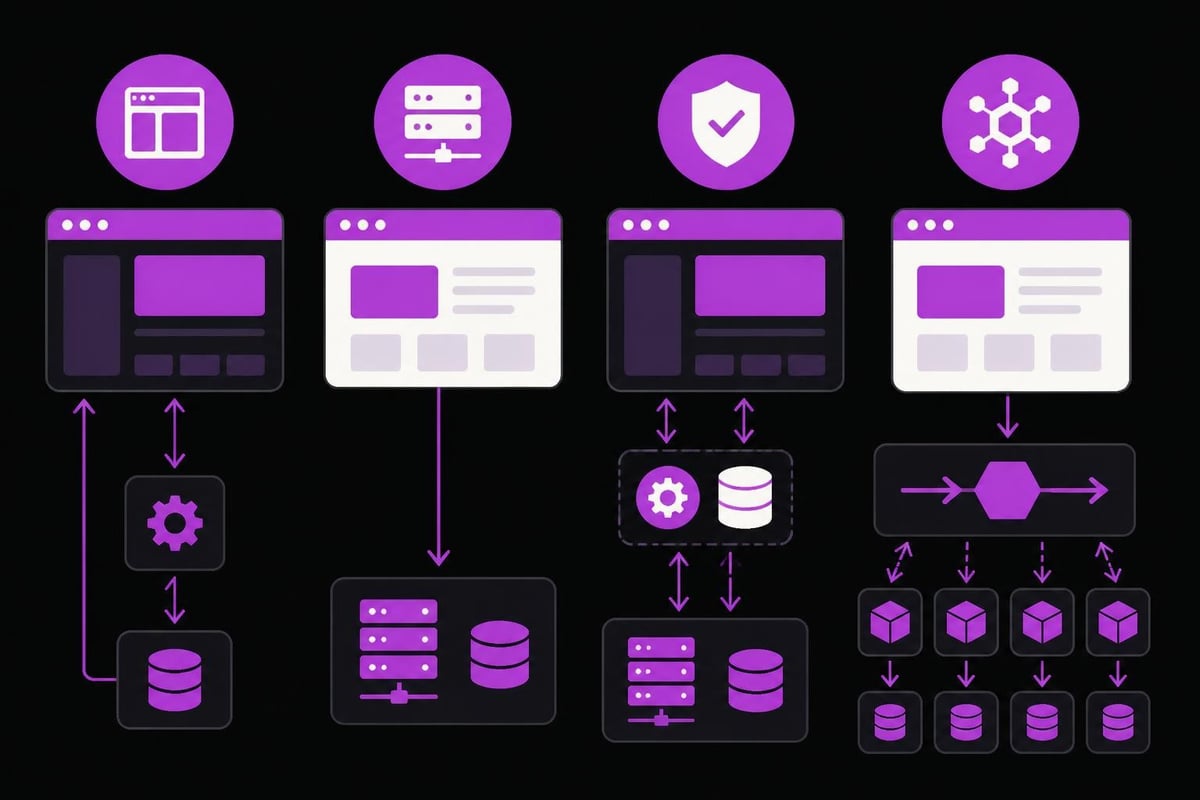
When you build web apps today, the architectural decisions you make early determine long-term success. Modern applications typically follow one of several proven patterns, each suited to different business requirements and technical constraints.
Single-page applications (SPAs) dominate the landscape for their responsive, app-like user experiences. These applications load once and dynamically update content without full page refreshes. React, Vue, and Angular remain the leading frameworks, with React maintaining the largest ecosystem and community support.
Server-side rendered (SSR) applications have experienced a renaissance through frameworks like Next.js and Nuxt.js. They combine the benefits of traditional server rendering with modern JavaScript capabilities, offering improved SEO performance and faster initial page loads.
Progressive Web Apps (PWAs) represent another critical architecture pattern. Following MDN's best practices for developing Progressive Web Apps, these applications bridge the gap between web and native experiences, offering offline functionality, push notifications, and installation capabilities without app store distribution.
| Architecture Pattern | Best Use Case | Primary Benefit | Trade-off |
|---|---|---|---|
| Single-Page App | Dynamic dashboards, admin panels | Fluid user experience | SEO complexity |
| Server-Side Rendered | Content-heavy sites, marketing pages | SEO performance | Server load |
| Progressive Web App | Mobile-first applications | Cross-platform reach | Feature limitations |
| Microservices | Enterprise applications | Independent scaling | Operational complexity |
Planning Your Web Application Development Process
Strategic planning separates successful projects from costly failures. When organizations build web apps without proper preparation, they encounter scope creep, budget overruns, and technical debt that compounds over time.
Defining Requirements and User Stories
Start by documenting functional requirements through user stories. Each story should capture a specific user need, following the format: "As a [user type], I want to [action] so that [benefit]." This approach keeps development focused on delivering actual value rather than theoretical features.
Technical requirements deserve equal attention. Consider:
- Expected concurrent users and traffic patterns
- Data storage and retention requirements
- Third-party integrations and API dependencies
- Compliance standards (GDPR, CCPA, PCI-DSS)
- Performance benchmarks and uptime targets
Choosing Your Technology Stack
Stack selection impacts every subsequent decision. In 2026, the ecosystem has matured around several proven combinations, but modern web development flexibility allows teams to mix technologies based on specific requirements.
Frontend frameworks should align with team expertise and project requirements. React offers the most extensive third-party library ecosystem, making it ideal for projects requiring specialized components. Vue provides a gentler learning curve with excellent documentation. Svelte delivers superior performance through compile-time optimization.
Backend technologies vary by use case. Node.js excels for real-time applications and when sharing code between frontend and backend. Python with Django or FastAPI suits data-intensive applications and machine learning integration. Go provides exceptional performance for high-throughput services.
The web development services you choose should offer expertise across multiple stacks, ensuring technology decisions align with business goals rather than limiting options to a single preferred framework.
Frontend Development Best Practices
The frontend represents your application's face to users. When you build web apps with attention to frontend quality, you create experiences that users trust and enjoy, directly impacting conversion rates and retention.
Component Architecture and Reusability
Modern frontend development centers on component-based architecture. Breaking interfaces into reusable components reduces code duplication, simplifies testing, and accelerates development velocity. Each component should have a single, clear responsibility.
Design systems provide the foundation for consistent component libraries. Establishing patterns for buttons, forms, navigation, cards, and other common elements ensures visual consistency while enabling rapid prototyping. Teams working with design systems can maintain brand consistency across multiple applications.
State management deserves careful consideration. Simple applications might need only React's built-in hooks or Vue's composition API. Complex applications benefit from dedicated state management libraries like Redux, Zustand, or Pinia. The key is choosing appropriate complexity-over-engineering state management creates unnecessary cognitive overhead.
Performance Optimization Techniques
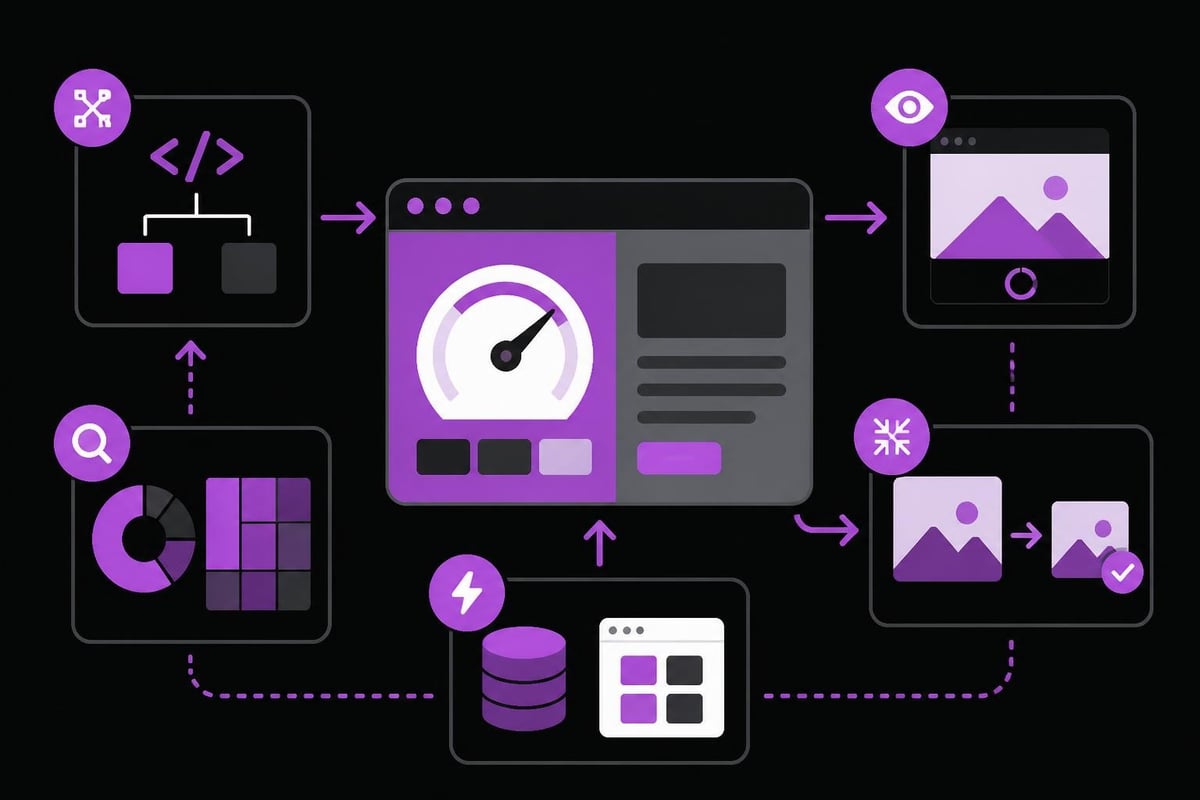
Performance directly affects user satisfaction and business metrics. Research consistently shows that page load times beyond three seconds result in significant user abandonment.
- Code splitting divides application bundles into smaller chunks loaded on demand
- Lazy loading defers non-critical resources until needed
- Image optimization includes compression, modern formats (WebP, AVIF), and responsive sizing
- Caching strategies leverage service workers and HTTP caching headers
- Tree shaking eliminates unused code from production bundles
Implementing UI/UX best practices extends beyond aesthetics to encompass performance, ensuring interfaces respond instantly to user interactions through optimistic updates and skeleton screens during data loading.
Backend Development and API Design
Backend systems handle business logic, data persistence, authentication, and third-party integrations. When you build web apps with robust backend architecture, you create foundations that scale efficiently and maintain security as user bases grow.
RESTful API Design Principles
Well-designed APIs make frontend development smoother and enable future integrations with mobile applications or third-party services. RESTful conventions provide proven patterns that developers understand intuitively.
Resource-based URLs organize endpoints around business entities rather than actions. For example, /api/users/123 retrieves user 123, while /api/users creates a new user via POST. HTTP methods (GET, POST, PUT, DELETE) express operations clearly without requiring custom action endpoints.
Status codes communicate outcomes precisely. 200-series codes indicate success, 400-series signal client errors, and 500-series represent server problems. Proper status codes enable clients to handle responses appropriately without parsing error messages.
Version your APIs from inception. The /api/v1/ prefix allows introducing breaking changes in /api/v2/ while maintaining backward compatibility for existing clients during transition periods.
Database Selection and Optimization
Database choice fundamentally shapes application capabilities and performance characteristics. Relational databases (PostgreSQL, MySQL) suit applications requiring complex queries, transactions, and strong consistency. NoSQL databases (MongoDB, DynamoDB) excel with flexible schemas and horizontal scaling.
| Database Type | Strengths | Ideal For | Considerations |
|---|---|---|---|
| PostgreSQL | ACID compliance, complex queries | Financial applications, relational data | Scaling complexity |
| MongoDB | Schema flexibility, horizontal scaling | Rapid prototyping, hierarchical data | Transaction limitations |
| Redis | Sub-millisecond latency | Caching, sessions, real-time features | Persistence configuration |
| Elasticsearch | Full-text search, analytics | Search-heavy applications | Resource intensive |
Query optimization prevents performance degradation as data volumes grow. Proper indexing, query analysis, and database monitoring identify bottlenecks before they impact users. Projects requiring dashboards particularly benefit from optimized database queries that deliver real-time insights without lag.
Security Considerations for Web Applications
Security cannot be an afterthought when you build web apps. Data breaches damage reputation, incur regulatory penalties, and erode customer trust. Implementing security throughout the development lifecycle rather than bolting it on before launch produces more resilient applications.
Authentication and Authorization
Authentication verifies user identity through credentials, tokens, or biometrics. Modern applications typically implement JWT (JSON Web Tokens) for stateless authentication or session-based authentication for traditional server-rendered applications.
Authorization determines what authenticated users can access. Role-based access control (RBAC) assigns permissions through roles like admin, editor, or viewer. Attribute-based access control (ABAC) provides finer granularity through policies evaluating user attributes, resource properties, and environmental factors.
Multi-factor authentication (MFA) adds critical security layers. Implementing MFA reduces account takeover risks by requiring secondary verification beyond passwords, which remain vulnerable to phishing and credential stuffing attacks.
Data Protection and Input Validation
Never trust user input. Every form submission, query parameter, and API request requires validation and sanitization. SQL injection, cross-site scripting (XSS), and command injection attacks exploit applications that fail to validate input properly.
Encryption in transit through HTTPS protects data moving between clients and servers. In 2026, HTTPS is non-negotiable-browsers warn users about insecure connections, and search engines penalize HTTP sites.
Encryption at rest secures sensitive data stored in databases. Fields containing personally identifiable information (PII), payment details, or health records require encryption even if attackers gain database access.
Following web application security best practices includes regular security audits, dependency updates, and penetration testing. Security is continuous, not a one-time implementation.
Testing Strategies for Web Applications
Comprehensive testing catches bugs before users encounter them. When organizations build web apps with testing integrated throughout development, they ship more reliable products and spend less time firefighting production issues.
Types of Testing to Implement
Unit tests verify individual functions and components in isolation. They execute quickly, providing rapid feedback during development. Jest and Vitest dominate JavaScript unit testing, offering excellent developer experiences with watch mode and coverage reporting.
Integration tests ensure components work correctly together. They catch issues at module boundaries where unit tests fall short. Testing library interactions between frontend components and API endpoints prevents common integration failures.
End-to-end tests simulate real user workflows through the entire application stack. Tools like Playwright and Cypress automate browser interactions, verifying critical paths like registration, checkout, and dashboard navigation function correctly across browsers.
- Write tests before fixing bugs to prevent regressions
- Maintain test coverage above 80% for critical business logic
- Run tests automatically in CI/CD pipelines
- Balance test types following the testing pyramid (many unit tests, fewer integration tests, minimal e2e tests)
Continuous Integration and Deployment
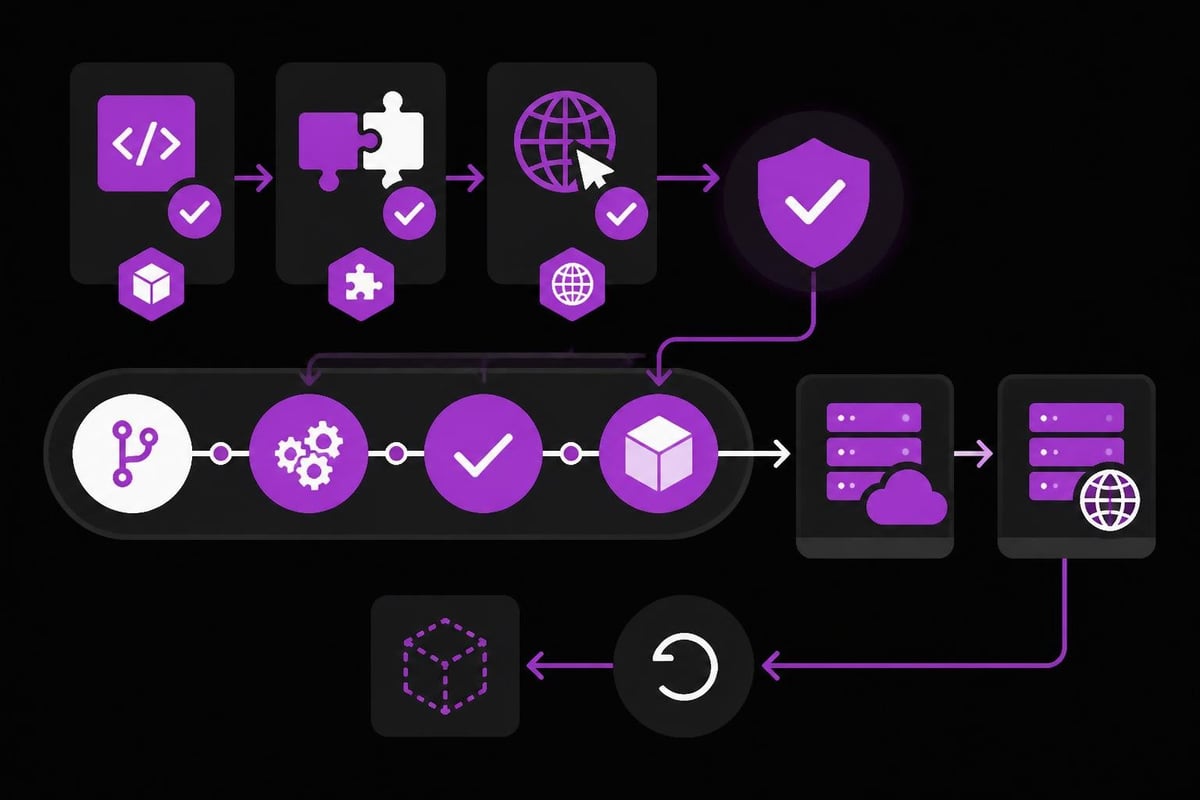
CI/CD pipelines automate testing, building, and deployment processes. GitHub Actions, GitLab CI, and Jenkins trigger automated test suites on every commit, ensuring code quality remains high as teams grow.
Staging environments mirror production configurations, enabling final validation before deployment. Deploying to staging first catches environment-specific issues like missing environment variables or configuration mismatches.
Blue-green deployments minimize downtime by maintaining two identical production environments. New versions deploy to the inactive environment, then traffic switches instantly. If issues arise, rolling back is immediate.
Deployment and Infrastructure Management
Deployment strategies have evolved dramatically. Cloud platforms, containerization, and serverless architectures enable you to build web apps that scale automatically while controlling costs through usage-based pricing.
Cloud Platform Selection
AWS offers the most comprehensive service catalog, suitable for applications requiring specialized services like machine learning, IoT, or blockchain integration. Complexity increases with service breadth, requiring dedicated DevOps expertise.
Google Cloud Platform excels at data analytics, machine learning, and Kubernetes management. BigQuery and AI/ML services provide sophisticated capabilities for data-intensive applications.
Vercel and Netlify simplify deployment for frontend applications and static sites. Their platforms optimize for developer experience, offering zero-configuration deployments, automatic HTTPS, and global CDN distribution.
Containerization and Orchestration
Docker containers package applications with dependencies, ensuring consistent execution across development, testing, and production environments. Containers eliminate "works on my machine" problems by standardizing runtime environments.
Kubernetes orchestrates container deployments at scale, managing load balancing, auto-scaling, and health monitoring. While powerful, Kubernetes introduces operational complexity suitable for applications requiring sophisticated deployment strategies.
For simpler deployments, managed container services like AWS ECS, Google Cloud Run, or Azure Container Instances provide container benefits without Kubernetes complexity.
Monitoring and Maintenance
Applications require ongoing attention after launch. When teams build web apps with monitoring and maintenance plans, they identify issues proactively rather than reactively responding to user complaints.
Application Performance Monitoring
APM tools track response times, error rates, and resource utilization across application components. New Relic, DataDog, and Application Insights provide visibility into performance bottlenecks, slow database queries, and API latency spikes.
Real user monitoring (RUM) captures actual user experiences, including page load times, interaction delays, and JavaScript errors. Unlike synthetic monitoring, RUM reveals how real users with varying devices, networks, and locations experience your application.
Set up alerts for critical metrics like error rates exceeding thresholds, response times degrading, or disk space running low. Proactive alerts enable teams to address issues before they impact users significantly.
Logging and Error Tracking
Centralized logging aggregates logs from multiple servers and services, making troubleshooting distributed systems manageable. The ELK stack (Elasticsearch, Logstash, Kibana) and cloud alternatives like CloudWatch Logs provide powerful search and visualization capabilities.
Error tracking services like Sentry and Rollbar capture JavaScript errors, stack traces, and contextual information automatically. They group similar errors, track frequency, and identify affected users, prioritizing fixes based on impact.
Regular dependency updates patch security vulnerabilities and improve performance. Automated tools like Dependabot create pull requests for dependency updates, streamlining the maintenance burden.
Scaling Considerations for Growing Applications
Successful applications eventually face scaling challenges. Planning for growth when you build web apps prevents painful migrations later, though premature optimization wastes resources on hypothetical problems.
Horizontal vs. Vertical Scaling
Vertical scaling adds resources to existing servers-more CPU, RAM, or disk space. It's simple but hits physical limits and creates single points of failure.
Horizontal scaling adds more servers behind load balancers, distributing traffic across multiple instances. This approach scales indefinitely and eliminates single points of failure but requires stateless application design.
Stateless applications store session data in external systems like Redis rather than server memory, enabling any server to handle any request. This architecture supports horizontal scaling and simplifies deployments.
Caching Strategies
Caching reduces database load and improves response times dramatically. Multiple caching layers address different needs:
- CDN caching serves static assets from edge locations near users
- Application caching stores frequently accessed data in memory (Redis, Memcached)
- Database query caching prevents repeated execution of identical queries
- Browser caching leverages HTTP headers to cache resources locally
Implementing intelligent caching requires balancing data freshness with performance gains. Cache invalidation strategies ensure users see current data while maintaining performance benefits.
Emerging Technologies and Trends
The web development landscape continues evolving rapidly. Staying current with emerging technologies helps teams build web apps that remain competitive and maintainable as industry standards shift.
AI and Machine Learning Integration
AI automation increasingly enhances web applications through personalization, content generation, and intelligent automation. Large language models enable sophisticated chatbots, content summarization, and code generation within applications.
Recommendation engines analyze user behavior to suggest relevant content, products, or connections. These systems drive engagement and conversion rates when implemented thoughtfully.
Predictive analytics forecast trends, identify anomalies, and optimize operations. Applications processing financial data, inventory management, or user behavior benefit from predictive capabilities that surface insights humans might miss.
WebAssembly and Performance
WebAssembly (Wasm) enables near-native performance in browsers by compiling languages like C++, Rust, and Go to efficient bytecode. Performance-critical operations like image processing, video encoding, or complex calculations execute dramatically faster through Wasm than JavaScript.
Serverless architectures continue maturing, with edge computing bringing computation closer to users. Cloudflare Workers, Vercel Edge Functions, and AWS Lambda@Edge execute code globally with minimal latency.
Following guidance from resources like Netguru's comprehensive guide and IBM Developer's tutorials keeps development approaches aligned with current industry best practices.
Building for Specific Use Cases
Different application types present unique challenges. Understanding these nuances helps you build web apps tailored to specific business requirements rather than applying one-size-fits-all approaches.
Internal Tools and Dashboards
Internal tools prioritize functionality and efficiency over marketing polish. Teams working on internal tool development benefit from frameworks like Retool or internal component libraries that accelerate development of CRUD interfaces, data visualizations, and workflow automation.
Admin panels require robust permission systems, audit logging, and data export capabilities. These applications handle sensitive operations, making security and accountability paramount.
Customer-Facing Applications
Customer applications demand exceptional user experiences, performance, and reliability. Every interaction shapes brand perception, making attention to detail critical.
E-commerce platforms like those built with Shopify require payment processing, inventory management, order tracking, and customer accounts. PCI DSS compliance is mandatory for applications handling payment card data.
SaaS products need subscription management, usage tracking, feature gating, and account administration. Building SaaS MVPs requires balancing rapid iteration with architectural decisions that won't require complete rewrites as the product matures.
Marketplace Platforms
Marketplace development involves complex workflows coordinating multiple user types, transactions, and communications. Buyers, sellers, and administrators each require distinct interfaces and capabilities.
Two-sided marketplaces must solve chicken-and-egg problems, building both supply and demand simultaneously. Technical architecture must support complex search, matching algorithms, payment splitting, and reputation systems.
Building modern web applications requires balancing user needs, technical requirements, security considerations, and business constraints. Success depends on selecting appropriate technologies, following proven architectural patterns, implementing comprehensive testing, and planning for growth. Whether you're developing internal tools, customer-facing platforms, or specialized applications, partnering with experienced teams accelerates delivery while avoiding common pitfalls. Absolute Foundry serves as an on-demand tech department for businesses worldwide, delivering end-to-end product engineering across web applications, smart contracts, dashboards, AI integration, and more. Let us handle the technical complexity while you focus on market expansion and business growth.