Web Design Case Study: Technical Excellence & Results
Analyzing successful projects through detailed documentation reveals patterns that separate exceptional digital products from mediocre ones. A well-structured web design case study offers more than visual appeal; it provides actionable insights into decision-making processes, technical implementations, and measurable outcomes that drive business value. For product engineering teams working on complex platforms like payment rails, smart contracts, and AI-powered dashboards, understanding how design decisions translate into user engagement and conversion metrics becomes critical for justifying investment and refining future approaches.
Understanding the Anatomy of Effective Case Studies
A compelling web design case study follows a narrative structure that balances technical depth with business context. The most valuable documentation begins with clear problem statements that quantify challenges in measurable terms. Rather than vague descriptions like "poor user experience," effective case studies specify metrics such as bounce rates, task completion times, or conversion funnel drop-off points.
Problem Definition and Research Methodology
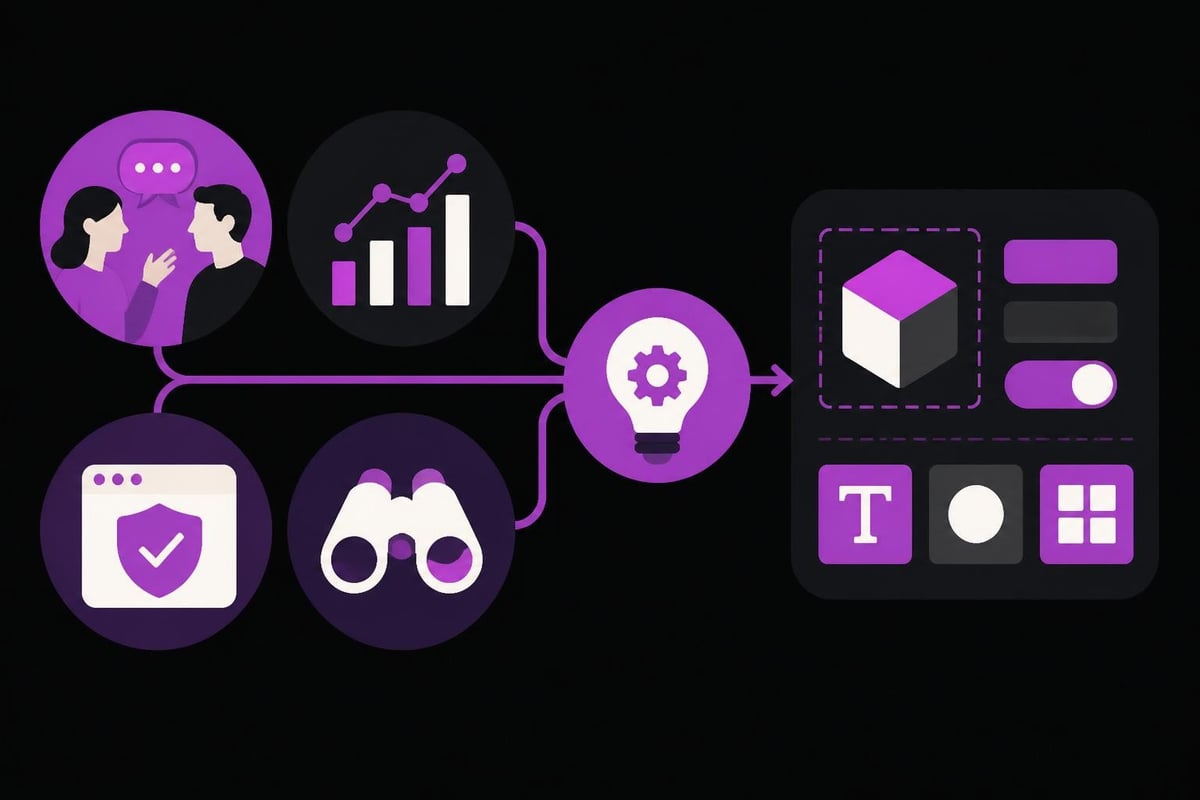
The foundation of any worthwhile case study lies in thorough discovery work. This phase encompasses stakeholder interviews, competitive analysis, user research, and technical audits. For teams building web design solutions, documenting research methodology demonstrates rigor and establishes credibility with technical audiences.
Key research components include:
- Quantitative analytics review (traffic patterns, conversion data, device distribution)
- Qualitative user interviews and usability testing sessions
- Technical performance audits (Core Web Vitals, accessibility scores, security assessments)
- Competitive landscape analysis and feature gap identification
- Stakeholder alignment workshops to define success metrics
The research phase typically consumes 15-20% of total project time but provides the foundation for all subsequent design and development decisions. Teams that skip this step often face costly revisions later when assumptions prove incorrect.
Translating Strategy Into Visual Systems
After establishing the strategic foundation, the design phase transforms insights into tangible interfaces. A comprehensive web design case study documents not just final deliverables but the iterative process that led to them. This transparency helps teams understand design evolution and avoid repeating ineffective approaches.
Design System Development and Component Architecture
Modern web development projects benefit from systematic approaches to interface design. Rather than creating isolated page mockups, teams increasingly build design systems that establish reusable components, typography scales, color systems, and interaction patterns. Documenting this architecture demonstrates sophistication and enables faster iteration cycles.
| Design System Element | Purpose | Documentation Requirements |
|---|---|---|
| Component Library | Reusable UI patterns | Usage guidelines, variants, accessibility notes |
| Typography Scale | Hierarchical text system | Font specifications, responsive behavior, line heights |
| Color Palette | Brand-aligned color system | Hex values, contrast ratios, semantic naming |
| Spacing System | Consistent layout rhythm | Scale values, responsive adjustments, grid specifications |
| Icon Set | Visual communication toolkit | SVG optimization, sizing guidelines, semantic meanings |
The design systems approach proves particularly valuable for complex platforms requiring consistency across multiple touchpoints. By establishing these foundations early, teams reduce technical debt and enable non-designers to maintain consistency when adding new features.
Prototyping and Validation Testing
Before committing to full development, sophisticated teams validate design decisions through prototyping and testing. A thorough web design case study documents these validation efforts, including testing methodologies, participant demographics, and quantified results. Examples of successful case studies highlighting measurable results demonstrate how structured testing informs final design decisions.
Effective validation approaches include:
- Low-fidelity wireframe testing to validate information architecture and user flows
- High-fidelity prototype testing to assess visual hierarchy and interaction patterns
- A/B testing variations of critical conversion elements like CTAs and forms
- Accessibility audits ensuring WCAG 2.1 AA compliance across components
- Performance budget validation confirming designs meet speed requirements
Documentation should include specific changes made based on testing feedback. For instance, noting that navigation restructuring increased task success rates from 67% to 89% provides concrete evidence of design impact.
Technical Implementation and Performance Optimization
The transition from design to development represents a critical phase where visual concepts become functional code. Sophisticated web design case study documentation tracks this transformation, highlighting technical decisions that impact performance, scalability, and maintainability.
Architecture Decisions and Technology Selection
For product engineering teams building AI automation systems or blockchain-based platforms, technology choices significantly impact long-term success. Case studies should explain framework selections, hosting decisions, and integration patterns with sufficient technical depth to inform future projects.
Consider how different technology stacks affect project outcomes:
- Static site generators (Next.js, Gatsby) excel for content-heavy marketing sites requiring exceptional performance
- Headless CMS architectures (Contentful, Sanity) provide flexibility for teams managing content across multiple channels
- Component frameworks (React, Vue, Svelte) enable complex interactive features while maintaining code organization
- Backend services (Supabase, Firebase) accelerate development for applications requiring authentication and database functionality
The WebFX portfolio showcases diverse technical approaches across industries, illustrating how technology choices align with project goals and constraints.
Performance Metrics and Optimization Strategies
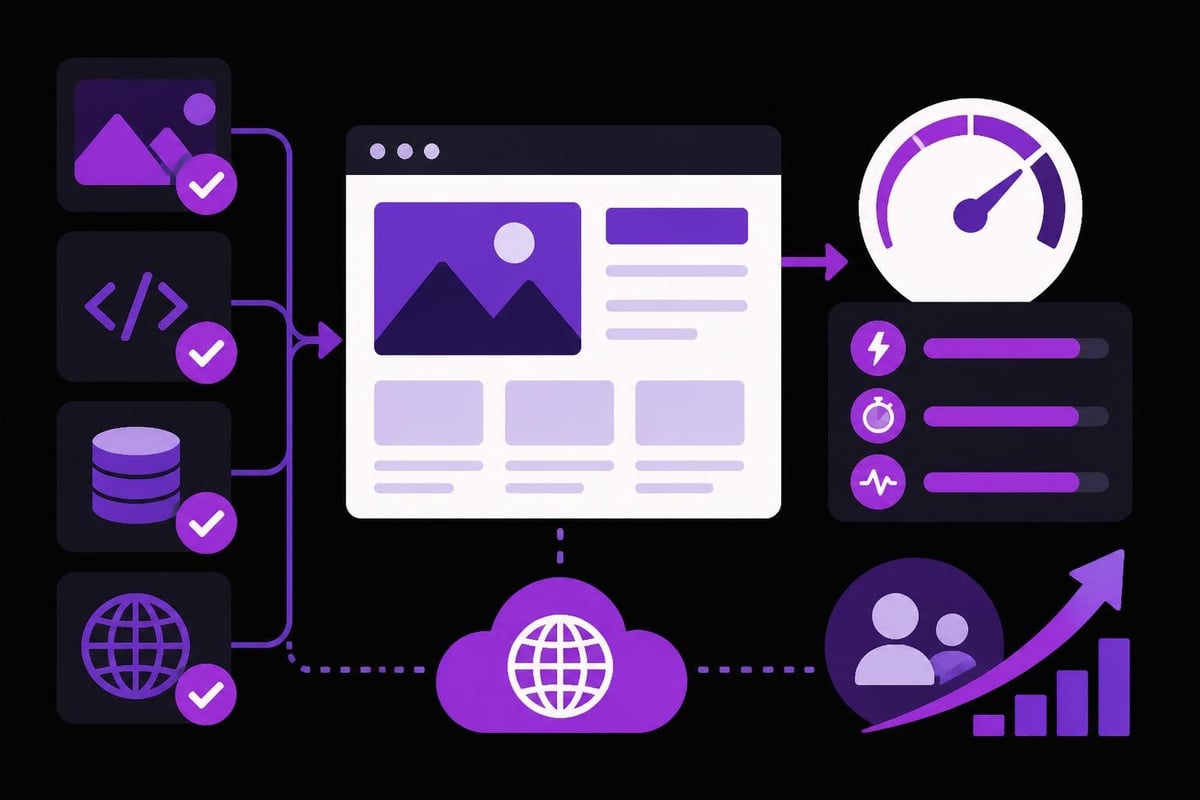
Quantifying performance improvements provides objective validation of design and development decisions. A rigorous web design case study documents baseline metrics before redesign, implementation strategies, and post-launch measurements. Core Web Vitals have become the standard benchmark for modern web performance:
| Metric | Target | Measurement Focus | Optimization Techniques |
|---|---|---|---|
| Largest Contentful Paint (LCP) | < 2.5s | Loading performance | Image optimization, lazy loading, CDN implementation |
| First Input Delay (FID) | < 100ms | Interactivity responsiveness | Code splitting, defer non-critical JavaScript, optimize event handlers |
| Cumulative Layout Shift (CLS) | < 0.1 | Visual stability | Reserved space for images, avoid dynamic content injection, size attributes |
Beyond technical metrics, business-focused measurements demonstrate ROI. The Tianma America web design case study achieved a 174% increase in views per active user through strategic redesign, exemplifying how technical improvements translate to engagement gains.
Measuring Impact Through Analytics and User Behavior
Post-launch analysis separates vanity metrics from meaningful business outcomes. An effective web design case study extends beyond launch day to document real-world performance over weeks or months. This longitudinal perspective reveals whether initial gains sustain or require additional optimization.
Conversion Funnel Analysis and Optimization
For platforms focused on user acquisition and monetization, conversion tracking provides the ultimate success metric. Documentation should map user journeys from entry points through conversion events, identifying friction points and opportunities for refinement.
Critical conversion metrics to track:
- Landing page bounce rates and average engagement time
- Form abandonment rates at each input field
- Checkout completion rates for e-commerce flows
- Sign-up conversion rates from visitor to registered user
- Feature adoption rates for SaaS platforms
The Evolz case studies demonstrate how web design and development projects focus on specific goals like increasing traffic and improving conversions, providing templates for structuring outcome documentation.
User Behavior Patterns and Heatmap Analysis
Qualitative insights from user behavior tracking complement quantitative analytics. Tools like Hotjar, Microsoft Clarity, and Fullstory reveal how users actually interact with interfaces, often uncovering unexpected patterns that numerical data alone misses.
A comprehensive web design case study might document findings such as:
- Scroll depth analysis revealing that critical content placed below 60% scroll depth receives minimal engagement
- Click heatmaps showing users attempting to interact with non-clickable elements, indicating design confusion
- Session recordings demonstrating where users encounter obstacles in multi-step processes
- Rage click identification pinpointing interface elements causing user frustration
These insights inform continuous improvement cycles, with successful teams implementing incremental optimizations based on observed behavior patterns.
Content Strategy and Information Architecture
While visual design attracts attention, content strategy determines whether users find value and complete desired actions. A thorough web design case study examines how content decisions support business objectives and user needs throughout the experience.
Content Hierarchy and Messaging Framework
Effective information architecture guides users toward high-value actions while providing supporting information for those seeking deeper understanding. The ROC Web Tech case study on Elevated Digital Works highlights how differentiated services architecture and AI-search-ready content structure improve discoverability and engagement.
Content strategy considerations include:
- Value proposition clarity and differentiation messaging
- Navigation taxonomy aligned with user mental models
- Progressive disclosure patterns revealing complexity gradually
- Call-to-action placement and messaging optimization
- Supporting content that addresses objections and questions
For technical audiences interested in blockchain, AI, or fintech solutions, content must balance accessibility for decision-makers with sufficient technical depth for implementation teams. This dual-audience approach requires careful information layering.
SEO Integration and Discoverability
Search optimization represents more than keyword placement. Modern SEO encompasses technical performance, content quality, semantic markup, and link architecture. Case study documentation should explain SEO content strategies and measure organic search improvements post-launch.
The Alba Americas case study demonstrates how transforming hidden advantages into clear differentiators through content strategy delivers measurable results. Projects achieving 200%+ organic traffic increases typically implement comprehensive strategies addressing technical, content, and authority dimensions simultaneously.
Design System Governance and Scalability
For organizations building multiple products or planning long-term platform evolution, design system governance determines whether initial investments compound over time or decay into inconsistency. A mature web design case study addresses sustainability beyond initial launch.
Component Documentation and Usage Guidelines
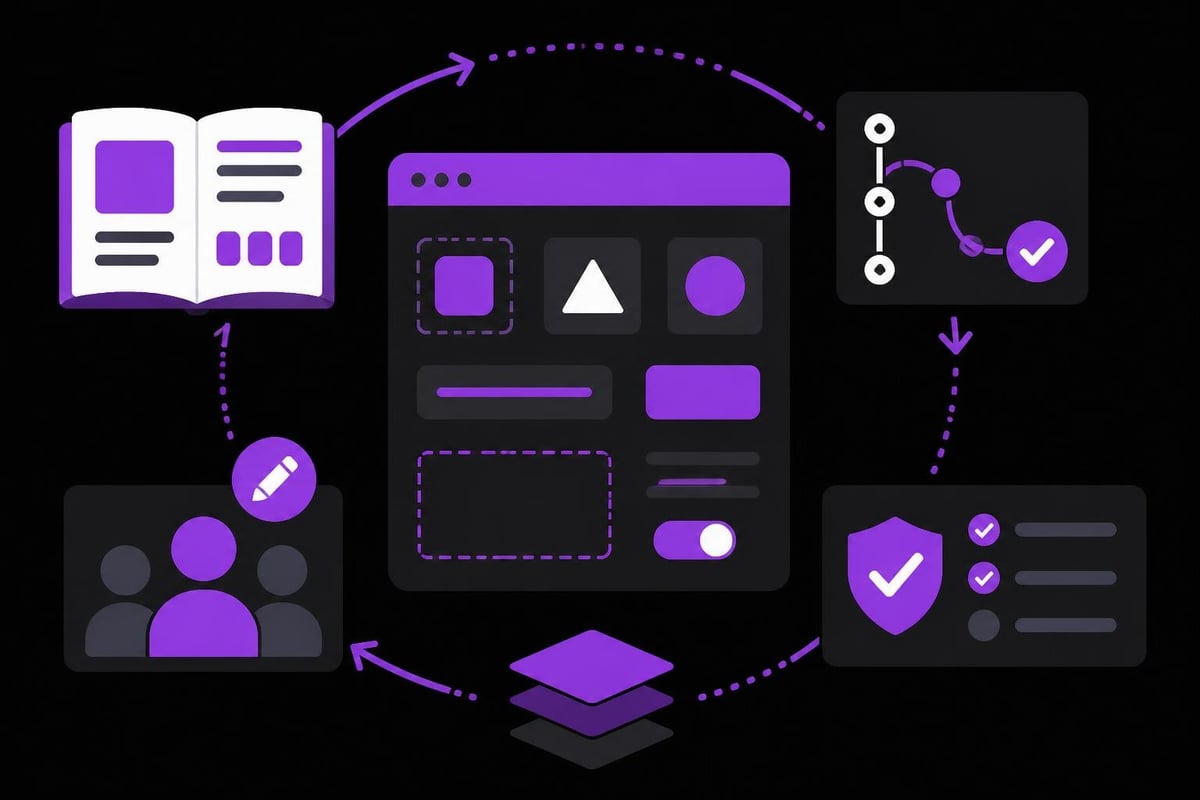
Well-documented design systems empower team members to implement consistent interfaces without designer involvement for every decision. Comprehensive documentation includes code examples, accessibility requirements, responsive behavior specifications, and usage guidelines for each component.
Essential documentation elements:
- Component purpose and appropriate use cases
- Props, variants, and configuration options
- Accessibility considerations and ARIA requirements
- Responsive behavior across breakpoint ranges
- Code examples in primary framework
- Visual examples showing component in context
Teams building product design systems benefit from establishing these standards early, preventing fragmentation as products scale.
Version Control and Evolution Patterns
Design systems evolve alongside products they support. Effective governance establishes processes for proposing changes, reviewing contributions, and deprecating outdated patterns. A comprehensive web design case study documents these processes, providing templates for other teams facing similar scaling challenges.
The 12Stone Church redesign case study achieved a 165% increase in views per session and 63% longer engagement time, demonstrating how systematic design approaches translate to measurable improvements even in specialized sectors.
Cross-Functional Collaboration and Stakeholder Management
Complex product engineering projects require coordination across design, development, marketing, and business teams. A thorough web design case study acknowledges this collaborative reality, documenting communication patterns and decision-making frameworks that contributed to success.
Workshop Facilitation and Alignment Techniques
Early alignment on goals, constraints, and success metrics prevents costly misunderstandings later. Successful teams invest in structured workshops that surface assumptions, establish shared language, and build consensus around priorities.
- Discovery workshops align stakeholders on problem definitions and success criteria
- Design critiques gather feedback systematically while maintaining design coherence
- Technical feasibility reviews identify constraints early before significant design investment
- Content strategy sessions ensure messaging aligns with brand positioning and SEO goals
- Launch planning workshops coordinate marketing, support, and product teams for rollout
Documentation of these collaborative processes helps teams refine their own approaches and demonstrates sophistication to potential clients reviewing brand and web design capabilities.
Iterative Review Cycles and Feedback Integration
Effective collaboration requires structured feedback loops that balance stakeholder input with design expertise. The most successful projects establish clear decision-making authority while creating space for diverse perspectives to inform solutions.
Tools and techniques for managing feedback include:
- Asynchronous design reviews using tools like Figma comments, allowing stakeholders to provide context-rich feedback
- Structured critique frameworks focusing feedback on specific criteria rather than subjective preferences
- Priority matrices helping teams distinguish critical changes from nice-to-have refinements
- Decision logs documenting rationale for significant choices to prevent circular discussions
The Oostas case studies demonstrate how elevating small businesses through premium web design requires balancing client vision with design expertise, often through carefully managed collaborative processes.
Accessibility and Inclusive Design Practices
Building products that serve diverse user populations requires intentional inclusive design practices. A comprehensive web design case study documents accessibility considerations throughout the design and development process, not as afterthought compliance but as core quality criteria.
WCAG Compliance and Testing Methodology
Web Content Accessibility Guidelines (WCAG) provide objective standards for accessible design. Level AA compliance represents the baseline for most commercial projects, while government and educational institutions often require Level AAA conformance.
| WCAG Principle | Requirements | Testing Approach |
|---|---|---|
| Perceivable | Text alternatives, captions, adaptable layouts | Automated scanners, screen reader testing |
| Operable | Keyboard navigation, sufficient time, seizure prevention | Manual keyboard testing, timing analysis |
| Understandable | Readable text, predictable behavior, input assistance | Plain language review, consistency audits |
| Robust | Compatible with assistive technologies | Multiple browser/AT combinations |
Beyond automated testing tools, manual review with actual assistive technologies reveals issues that scanners miss. Sophisticated teams include users with disabilities in testing protocols, gathering authentic feedback on usability challenges.
Inclusive Design for Global Audiences
For product engineering teams serving international markets, inclusive design extends beyond disability considerations to encompass language, cultural context, and connectivity constraints. The Seeker case study demonstrates complete website development for a digital media network, emphasizing improvements that enhance engagement across diverse audience segments.
Global design considerations include:
- Internationalization architecture supporting multiple languages
- Right-to-left (RTL) layout support for Arabic, Hebrew, and other languages
- Performance optimization for regions with limited connectivity
- Cultural sensitivity in imagery, color symbolism, and interaction patterns
- Payment method diversity accommodating regional preferences
Documentation of these inclusive practices demonstrates sophistication and positions teams to serve broader markets effectively.
Post-Launch Optimization and Continuous Improvement
Launch represents a beginning rather than an ending for sophisticated product teams. A mature web design case study extends months beyond initial release, documenting optimization cycles that refine the product based on real-world usage data.
A/B Testing Programs and Experimentation Frameworks
Systematic testing programs remove guesswork from optimization decisions. Rather than relying on opinions about which design performs better, teams implement controlled experiments that measure actual user behavior under different conditions.
Effective experimentation approaches:
- Hypothesis formation based on analytics insights or user research findings
- Variant development creating alternative designs addressing the hypothesis
- Traffic allocation splitting users between control and variant conditions
- Statistical analysis determining whether differences reach significance
- Implementation rolling successful variants to all users
The marketing website design approach benefits particularly from systematic testing, as conversion improvements directly impact business outcomes and ROI calculations.
Feature Iteration Based on Usage Analytics
Initial designs reflect assumptions about user needs and behaviors. Real-world usage reveals which assumptions proved accurate and which require revision. Effective teams establish monitoring systems that surface unexpected patterns and feed continuous improvement cycles.
For platforms building complex functionality like trading dashboards or smart contract interfaces, usage analytics reveal which features drive engagement and which add complexity without corresponding value. This data-driven approach to feature refinement prevents bloat while focusing development resources on high-impact improvements.
Financial Impact and ROI Calculation
Business stakeholders ultimately evaluate digital projects through financial lenses. A comprehensive web design case study translates design and technical metrics into business outcomes, demonstrating return on investment through increased revenue, reduced costs, or improved efficiency.
Revenue Attribution and Conversion Value
For e-commerce platforms and lead generation sites, direct revenue attribution provides clear ROI calculation. Documentation should trace conversion improvements to specific design interventions, establishing causal relationships between changes and outcomes.
Revenue impact calculations might include:
- Conversion rate improvements multiplied by traffic volume and average order value
- Reduced cart abandonment translated to recovered revenue
- Increased average order value from improved product discovery
- Higher customer lifetime value from enhanced retention and repeat purchases
Projects demonstrating 50%+ conversion increases with documented methodologies provide compelling evidence for future investment in design excellence.
Efficiency Gains and Cost Reduction
For internal tools, dashboards, and operational systems, value manifests as time savings and error reduction. The Ad Astra web design case study focuses on mobile-first development enhancing online presence, demonstrating how design improvements serve business objectives even without direct revenue attribution.
Efficiency metrics worth documenting include:
- Task completion time reductions from improved interface design
- Error rate decreases from clearer information architecture
- Support ticket volume reductions from improved self-service tools
- Onboarding time improvements from streamlined user flows
Teams building internal tools or operational platforms should quantify these efficiency gains to justify design investment and guide future optimization priorities.
Well-documented case studies transform individual projects into institutional knowledge that elevates every subsequent effort. By systematically capturing research insights, design decisions, technical implementations, and measurable outcomes, product engineering teams build competitive advantages that compound over time. Whether you're developing blockchain platforms, AI-powered systems, or complex dashboards, Absolute Foundry provides the end-to-end product engineering expertise to transform your vision into measurable results while you focus on market expansion and business growth.