Marketing Website Design: Engineer Growth in 2026
The digital front door to your product engineering business determines whether prospects engage or exit within seconds. Marketing website design transcends aesthetic appeal, functioning as a strategic asset that communicates technical expertise, builds trust with enterprise clients, and converts visitors into qualified leads. For engineering-focused companies building complex products like smart contracts, payment rails, or AI systems, your website must balance technical credibility with accessible communication. The challenge lies in creating a digital presence that resonates with both technical decision-makers and business stakeholders while showcasing your unique capabilities in a crowded marketplace.
The Strategic Foundation of Marketing Website Design
Building an effective marketing website requires understanding that design decisions directly impact business outcomes. Every element serves a purpose beyond decoration, from the navigation structure to the placement of social proof elements.
Your homepage carries the heaviest burden. Research from enterprise clients shows that B2B homepage best practices emphasize placing critical information above the fold, ensuring visitors immediately grasp your value proposition without scrolling. For product engineering firms, this means clearly articulating what you build and whom you serve.
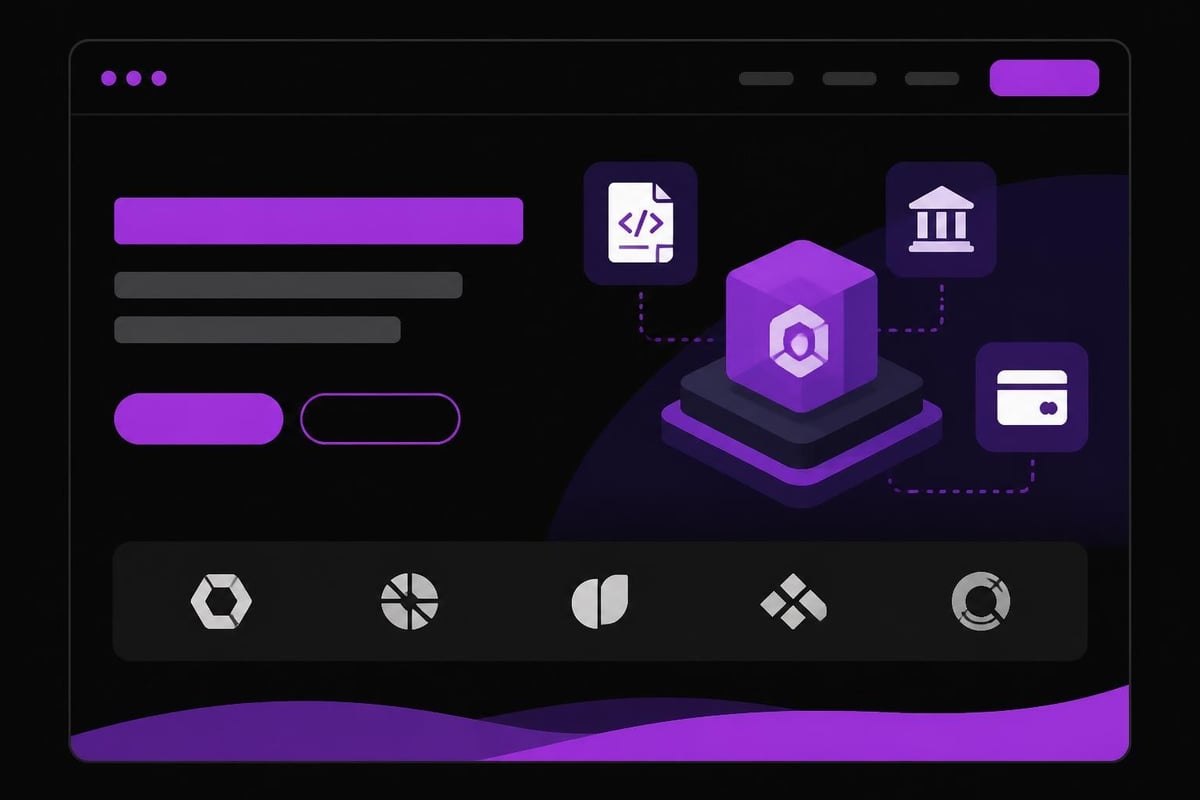
The architecture of your marketing website design should reflect your customer's decision journey. Technical buyers research extensively before engaging, requiring:
- Deep portfolio showcases that demonstrate complexity and execution quality
- Technical case studies explaining problem-solving approaches
- Clear service categorization that helps prospects self-qualify
- Trust signals including client testimonials and project outcomes
Navigation design deserves special attention in engineering contexts. Unlike consumer sites, effective navigation for marketing websites must accommodate multiple user types with different technical literacy levels. Your CTO prospects need quick access to technical specifications, while business stakeholders seek outcome-focused content.
Conversion Architecture for Technical Services
Marketing website design for product engineering requires deliberate conversion pathways. Unlike e-commerce sites with single transaction goals, technical services sites must nurture longer sales cycles through strategic content placement.
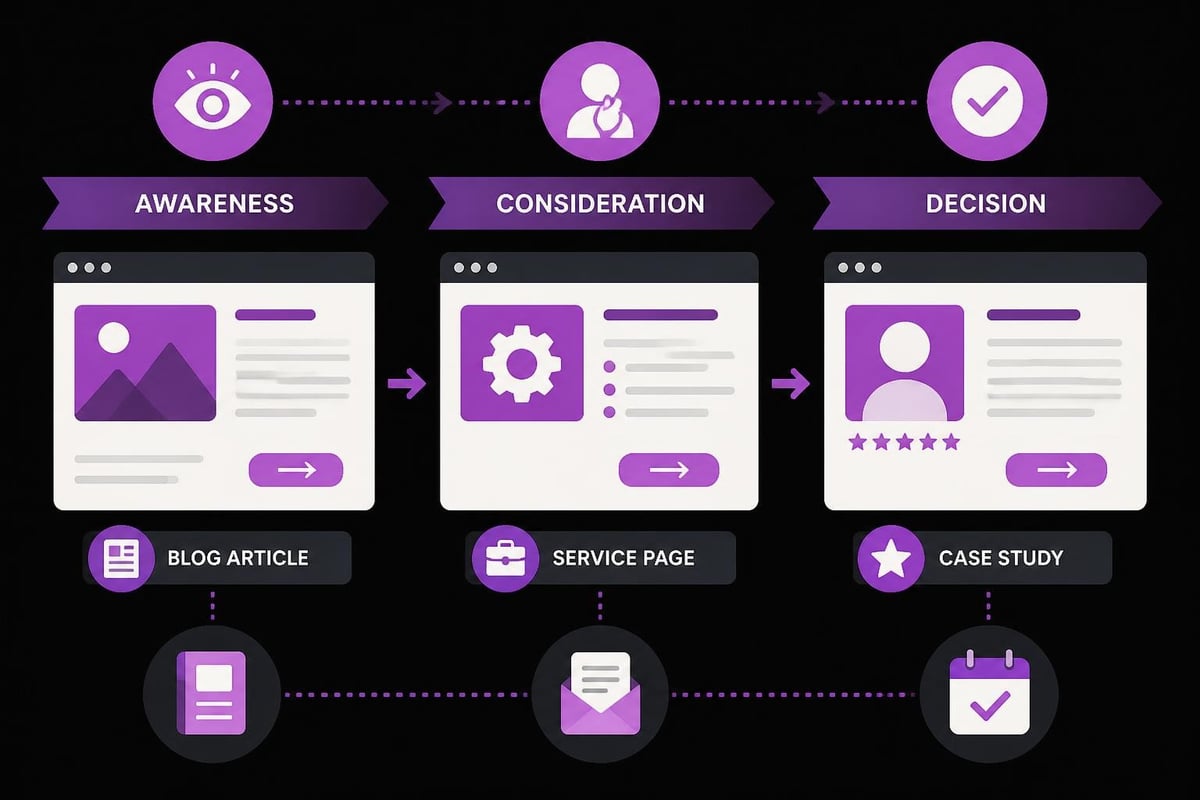
Consider the typical journey of an enterprise client evaluating product engineering partners:
- Initial awareness through search or referral
- Capability assessment via portfolio and case studies
- Technical validation through detailed project breakdowns
- Commercial evaluation of process and pricing models
- Decision and outreach
Your site architecture should support each stage. A visitor researching building production dApps needs different content than someone exploring AI automation services. Strategic internal linking guides prospects through this journey naturally.
| Conversion Element | Purpose | Placement Strategy |
|---|---|---|
| Primary CTA | Schedule consultation | Header, hero section, contact page |
| Secondary CTA | View case studies | Service pages, blog articles |
| Lead Magnets | Capture email for nurturing | Gated technical guides, whitepapers |
| Social Proof | Build credibility | Homepage, service pages, case studies |
The psychology behind effective marketing website design recognizes that technical buyers seek risk reduction. Showcasing completed projects like payment rails or smart contract escrow systems demonstrates proven capability, reducing perceived implementation risk.
Design Systems and Visual Consistency
Professional marketing website design demands systematic approaches to visual elements. Design systems ensure consistency across pages while enabling rapid iteration and scaling as your service offerings expand.
Typography hierarchy communicates information structure. Technical content requires exceptional readability, particularly when explaining complex systems. Primary headings establish section topics, secondary headings break content into digestible segments, and body text maintains comfortable reading rhythms.
Color psychology plays a subtle but powerful role. Product engineering firms often default to blue palettes signaling trust and stability, but differentiation requires thoughtful palette development. Your visual identity should reflect your positioning whether you emphasize innovation, reliability, or specialized expertise in domains like gaming or blockchain.
Component-Based Design Thinking
Modern marketing website design embraces component-based architecture borrowed from development practices. This approach proves especially valuable for engineering firms maintaining multiple project showcases and service descriptions.
Reusable components include:
- Service cards with consistent layouts highlighting capabilities like web development or product design
- Case study templates maintaining uniform structure across diverse projects
- Call-to-action blocks with standardized messaging and visual treatment
- Testimonial components that scale across pages without design drift
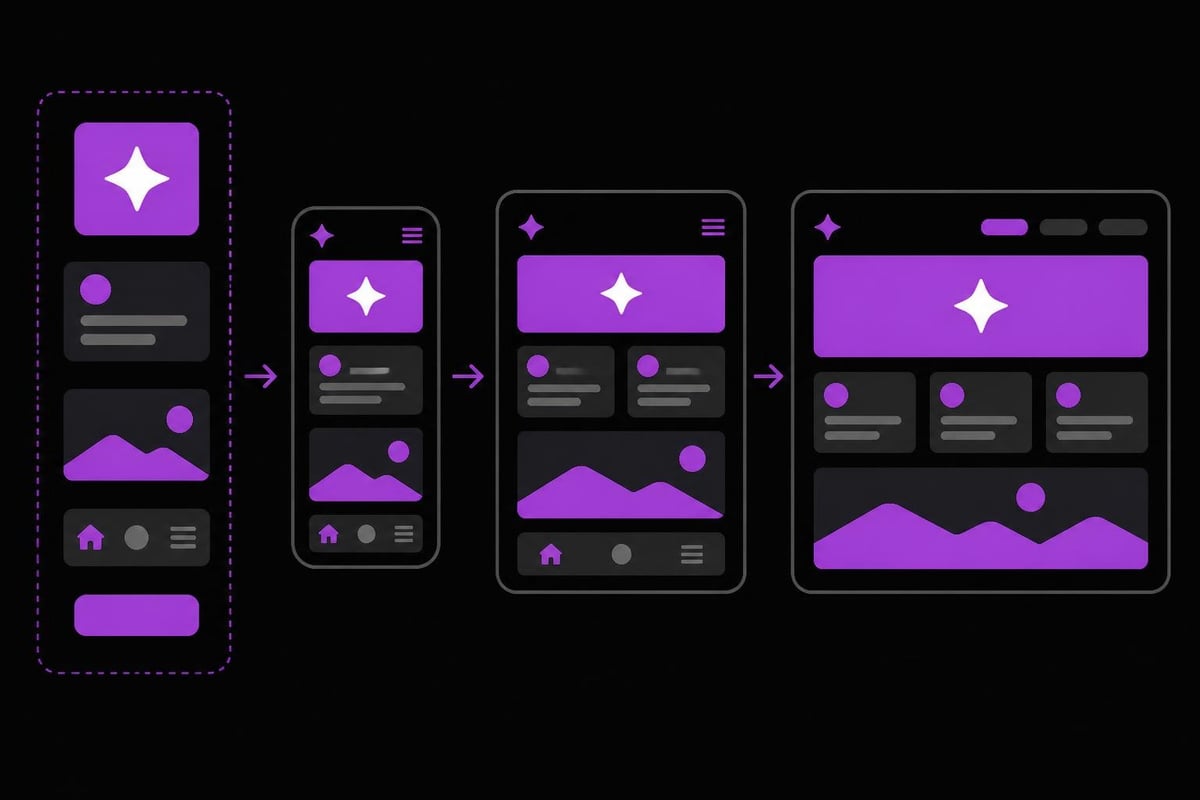
This systematic approach extends to responsive design considerations. With enterprise decision-makers reviewing vendors across devices, your marketing website design must maintain functionality and visual impact from mobile screens to large displays. According to marketing website design best practices, responsive design directly impacts SEO rankings alongside user experience.
Content Strategy Integration
Marketing website design succeeds or fails based on content quality and strategic organization. For product engineering firms, content serves dual purposes: educating prospects about technical capabilities while demonstrating thought leadership.
Service pages require careful content balance. Unlike generic agency sites, engineering firms must explain technical approaches without overwhelming non-technical stakeholders. Effective service pages layer information, providing overview content upfront with progressive disclosure for technical deep-dives.
The relationship between SEO content strategy and marketing website design cannot be overstated. Search algorithms evaluate content quality, relevance, and user engagement signals. Pages that answer specific technical queries like "how to build a SaaS MVP" attract qualified organic traffic.
Blog architecture within your marketing website design establishes thought leadership while supporting SEO objectives. Technical content demonstrates expertise in specific domains:
- Smart contract development methodologies
- Payment infrastructure security considerations
- Dashboard design for complex data visualization
- AI integration best practices
Strategic content planning identifies keyword opportunities aligned with your capabilities. Rather than competing for generic terms, engineering firms succeed by targeting specific technical queries their ideal clients search.
Portfolio Showcasing Technical Depth
Your project portfolio represents the core conversion driver in marketing website design for technical services. Generic "our work" galleries fall short compared to detailed case studies explaining problem context, solution architecture, and measurable outcomes.
Effective portfolio presentations include:
- Problem statement establishing client context and challenges
- Technical approach explaining methodology and technology decisions
- Implementation details showcasing execution quality
- Results and metrics quantifying impact where possible
- Visual documentation through screenshots, diagrams, and prototypes
Projects like crypto lottery platforms or trading dashboards require different presentation approaches based on technical complexity and visual richness. Your marketing website design should accommodate diverse project types through flexible templates.
Performance and Technical Excellence
Marketing website design for engineering firms carries an inherent credibility test: does your own website demonstrate technical excellence? Slow load times, broken interactions, or poor mobile experiences undermine your positioning as a technical partner.
Performance metrics directly impact conversion rates. Page load speed affects bounce rates, with studies showing each additional second of load time decreasing conversions significantly. For technical audiences particularly sensitive to digital quality, performance problems signal potential execution issues in client work.
| Performance Metric | Target | Impact |
|---|---|---|
| First Contentful Paint | Under 1.8s | User perceives page loading |
| Time to Interactive | Under 3.5s | User can engage with content |
| Cumulative Layout Shift | Under 0.1 | Visual stability during load |
| Total Page Size | Under 3MB | Mobile data usage, load speed |
Modern marketing website design leverages technical optimizations including image compression, lazy loading for below-fold content, code minification, and content delivery networks. These same technical considerations you implement for clients should be evident in your own digital presence.
Accessibility represents both ethical obligation and business opportunity. Website design best practices emphasize WCAG compliance, ensuring your content reaches all potential clients regardless of abilities. Proper semantic HTML, sufficient color contrast, keyboard navigation, and screen reader compatibility expand your addressable market while demonstrating attention to quality.
Lead Capture and Conversion Optimization
Marketing website design must balance information provision with strategic lead capture. Engineering services involve high-value, long-cycle sales requiring nurturing rather than immediate conversion.
Progressive profiling respects visitor privacy while capturing qualification data. Initial contact forms request minimal information, reducing friction for early-stage prospects. As relationships develop through content engagement, additional data points emerge naturally.
Form design psychology reveals important insights. Technical buyers resist obviously sales-focused forms, preferring consultation or technical discussion framing. Rather than "Request a Quote," consider "Discuss Your Project" or "Schedule Technical Review."
Strategic lead magnet placement throughout your marketing website design provides value exchange for contact information:
- Technical guides on specific implementation challenges
- Architecture templates for common system types
- Technology selection frameworks
- Industry-specific best practice documents
The product website design principles you apply to client projects should inform your own lead generation strategy, focusing on solving prospect problems before requesting commitment.
Testing and Iteration Methodology
Marketing website design represents a hypothesis requiring continuous validation. A/B testing methodologies borrowed from product development apply equally to marketing sites.
Elements worth systematic testing include:
- Headline variations emphasizing different value propositions
- Call-to-action button copy, color, and placement
- Form length and field requirements
- Portfolio presentation formats
- Navigation structure and labeling
Analytics instrumentation provides insight into user behavior patterns. Heat mapping reveals which sections engage attention, scroll tracking shows content consumption depth, and conversion funnel analysis identifies drop-off points.
For engineering firms, qualitative feedback supplements quantitative data. Client interviews revealing how prospects evaluated your site against competitors inform design iterations that better address decision criteria.
Authority Building Through Design
Marketing website design communicates expertise through both explicit content and implicit design choices. Your site architecture, visual sophistication, and attention to detail signal your approach to client work.
Strategic brand positioning manifests through design decisions. Firms emphasizing cutting-edge innovation might embrace bold, contemporary aesthetics, while those targeting regulated industries may choose conservative, trust-building design languages. According to marketing agency website design insights, distinctive design differentiates in competitive markets.
Trust signals require strategic placement throughout your marketing website design:
- Client logos demonstrating enterprise relationships
- Industry certifications and partnerships
- Media mentions and speaking engagements
- Team credentials and expertise indicators
- Security and compliance badges where relevant
The challenge lies in balancing credibility building with humility. Excessive self-promotion alienates technical audiences, while underselling capabilities costs opportunities. Your growth marketing approach should inform content tone, emphasizing results and methodologies over hyperbolic claims.
Mobile-First Design Considerations
Marketing website design in 2026 demands mobile-first thinking, acknowledging that initial prospect research increasingly occurs on smartphones. Technical decision-makers review potential partners between meetings, during commutes, and outside traditional office contexts.
Mobile optimization extends beyond responsive layouts to fundamental content prioritization. Limited screen real estate forces ruthless editing, surfacing only essential information in initial views. Navigation transforms from horizontal menus to collapsible hamburger patterns or bottom bars optimizing thumb reach.
Interactive elements require mobile-specific consideration:
- Touch targets sized appropriately for finger taps (minimum 44x44 pixels)
- Form inputs optimized for mobile keyboards (appropriate input types)
- Scrolling experiences that feel natural rather than janky
- Load performance on cellular connections, not just WiFi
The mobile experience of complex portfolio pieces presents particular challenges. Detailed technical diagrams readable on desktop require alternative presentations or thoughtful zoom/pan implementations on smaller screens. Video demonstrations of internal tools or marketplace platforms need careful optimization for mobile bandwidth constraints.
SEO Architecture and Discoverability
Marketing website design fundamentally supports organic discovery through search engines. Technical SEO considerations shape site architecture, URL structures, and content organization.
Semantic HTML provides search engines with content understanding. Proper heading hierarchy (H1, H2, H3) structures information logically while signaling importance to algorithms. Schema markup adds structured data enabling rich search results display.
Internal linking strategy distributes authority throughout your site while guiding both users and search crawlers through related content. Articles exploring programmatic SEO for fintech should link to relevant service pages and related case studies, creating topical clusters that strengthen domain authority.
URL architecture demands strategic planning. Descriptive, hierarchical URLs communicate content relationships: /services/web-development clearly indicates category structure compared to arbitrary identifiers. This clarity benefits both users and search algorithms attempting to categorize your content.
Page speed and Core Web Vitals increasingly influence search rankings. Google's emphasis on user experience metrics means technical performance directly impacts discoverability. Your marketing website design must balance visual richness with loading efficiency to maintain search visibility.
Conversion-Focused Design Patterns
Marketing website design ultimately serves conversion goals, requiring strategic application of persuasion principles throughout the user experience. For engineering services, conversion means moving prospects toward consultation booking rather than immediate purchase.
Visual hierarchy directs attention strategically. Size, color, contrast, and whitespace guide eyes toward priority elements. Primary calls-to-action receive prominent visual treatment, while secondary actions remain accessible without competing for attention. According to conversion-focused design practices, reducing friction in the user journey significantly improves conversion rates.
Scarcity and urgency principles apply cautiously in B2B contexts. Rather than artificial countdown timers, legitimate capacity constraints ("Limited availability Q3 2026") or time-sensitive opportunities create appropriate urgency without undermining credibility.
Social proof integration throughout your marketing website design provides continuous reassurance:
- Client testimonials addressing specific concerns
- Project outcome metrics demonstrating capability
- Industry recognition and awards
- Team expertise credentials
The challenge involves balancing conversion optimization with authentic relationship building. Hard-sell tactics alienate technical audiences, while passive information provision misses conversion opportunities. Your design should guide prospects toward engagement while respecting their evaluation process.
Integration with Marketing Systems
Modern marketing website design extends beyond standalone presence to integration with broader marketing technology infrastructure. CRM systems, email platforms, analytics tools, and marketing automation create a comprehensive growth engine.
Form submissions should trigger immediate workflows: acknowledgment emails, CRM record creation, internal notifications to sales teams, and nurture sequence enrollment. This integration transforms your website from passive brochure to active lead generation machine.
Analytics integration provides continuous optimization insight. Beyond basic traffic metrics, event tracking reveals how visitors interact with specific elements: which case studies generate longest engagement, which service pages drive consultation requests, which blog topics attract qualified traffic.
Marketing automation enables sophisticated nurturing based on website behavior. Visitors exploring multiple smart contract development articles receive targeted content about blockchain capabilities, while those focused on AI agents enter different nurture tracks.
For engineering firms offering diverse services from e-signature flows to crypto iGaming platforms, segmentation based on interest patterns enables personalized follow-up that addresses specific technical needs.
Future-Proofing Your Marketing Presence
Marketing website design requires forward-thinking architecture accommodating growth and evolution. Your service offerings will expand, your positioning may shift, and technology capabilities will advance. Design systems and content structures should enable adaptation without complete rebuilds.
Emerging technologies like AI-powered personalization will influence next-generation marketing websites. AI website builder capabilities already enable sophisticated design generation, though human strategic thinking remains essential for positioning and messaging decisions.
Content management systems require careful selection balancing flexibility with maintenance overhead. Headless CMS architectures separate content from presentation, enabling omnichannel delivery while maintaining design consistency. This approach proves valuable for engineering firms repurposing technical content across websites, proposals, and documentation.
Accessibility standards continue evolving, with increasing legal and ethical imperatives for inclusive design. Building accessibility into your initial marketing website design proves more cost-effective than retrofitting compliance later. Universal design principles creating barrier-free experiences benefit all users, not just those with specific accessibility needs.
Measuring Marketing Website Effectiveness
Marketing website design success demands measurable outcomes beyond aesthetic appreciation. Key performance indicators should align with business objectives, tracking both leading indicators and ultimate conversion metrics.
Primary metrics for engineering services sites include:
- Qualified lead generation rate: Consultation requests from target client profiles
- Engagement depth: Pages per session and time on site indicating serious evaluation
- Portfolio engagement: Case study views and downloads
- Organic search performance: Rankings and traffic for target technical keywords
- Conversion funnel progression: Movement from awareness to consideration to decision
Secondary metrics provide diagnostic insight:
- Bounce rate by traffic source identifying quality issues
- Mobile versus desktop conversion rate differences
- Page load performance across device types
- Form abandonment rates revealing friction points
Understanding how built-in marketing and SEO tools contribute to traffic growth enables data-driven optimization. Regular performance reviews identify winning patterns and underperforming areas requiring attention.
For product engineering firms, attribution modeling connects website interactions to eventual project engagements. Multi-touch attribution recognizes the complex B2B journey where prospects typically engage multiple times across various content before converting.
Effective marketing website design balances technical credibility with accessible communication, creating digital experiences that convert prospects into engaged clients. The principles outlined here transform your website from passive information repository into active business development asset.
Whether you need to showcase complex technical capabilities, optimize conversion pathways, or build integrated marketing systems, Absolute Foundry provides end-to-end product engineering services. Our Singapore-based team specializes in creating high-performance marketing websites alongside the smart contracts, payment rails, dashboards, and AI systems that power modern digital businesses.