Product Website: Building Digital Experiences That Convert
A product website serves as the digital storefront and conversion engine for businesses launching new offerings to market. Unlike traditional corporate sites, a product website focuses intensely on a specific solution, guiding visitors through a carefully crafted journey from awareness to purchase. In 2026, successful product websites combine strategic design, technical excellence, and data-driven optimization to transform curious visitors into committed customers. Whether launching a SaaS platform, physical product, or digital service, understanding the essential elements that make a product website effective can dramatically impact your bottom line.
Understanding the Core Purpose of a Product Website
A product website exists to communicate value and drive action. Every element on the page should answer fundamental questions visitors have: What does this product do? How will it solve my problem? Why should I trust this solution? What happens next?
The architecture of your product website must prioritize clarity over creativity for creativity's sake. Visitors typically spend less than 15 seconds deciding whether to stay or leave, which means your value proposition needs immediate visibility. Professional web design services can help ensure your messaging hits home within those critical first moments.
Key objectives every product website should accomplish:
- Clearly articulate the product's unique value proposition
- Build credibility through social proof and trust signals
- Address common objections before they derail conversions
- Create multiple conversion pathways for different visitor segments
- Provide sufficient information for informed purchase decisions
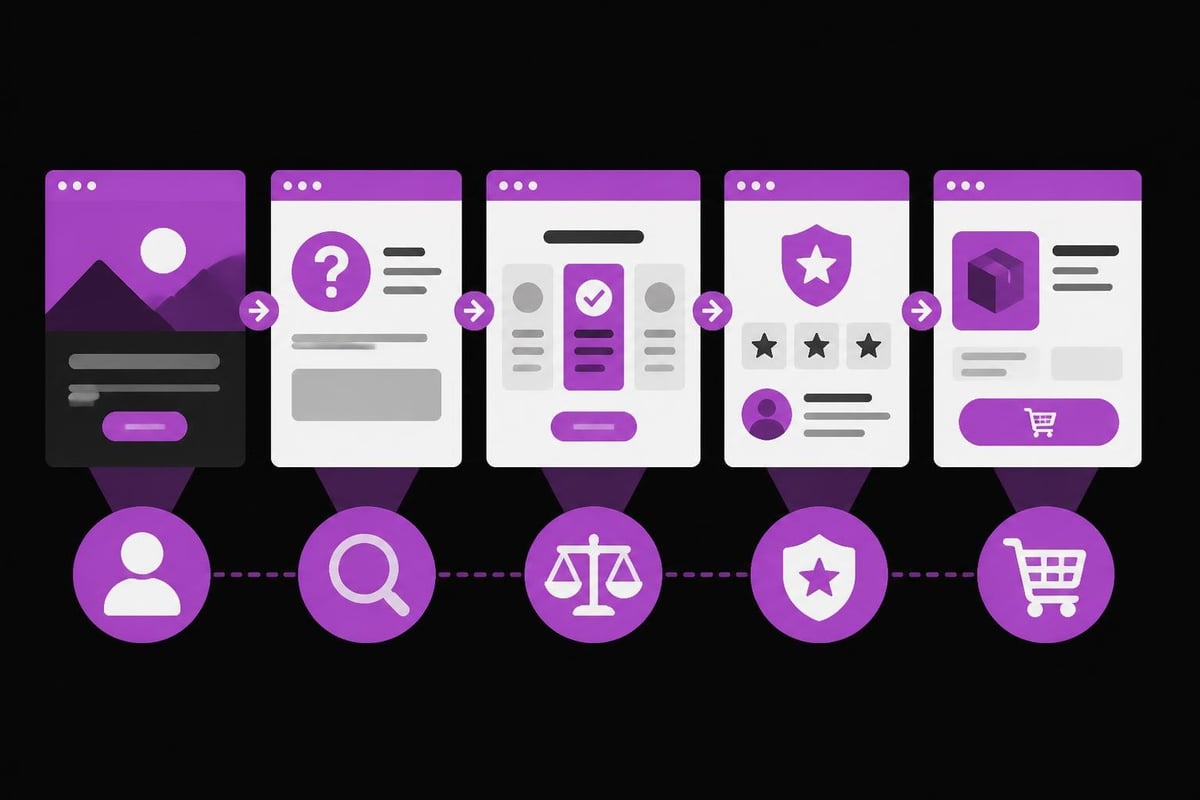
The distinction between a product website and a company website matters significantly. While company sites often serve multiple audiences and purposes, a product website maintains laser focus on a single offering. This specialization allows for deeper storytelling, more targeted messaging, and higher conversion rates.
Essential Components That Drive Product Website Success
Navigation and Information Architecture
Navigation on a product website should be intuitive yet minimal. Unlike sprawling corporate sites with dozens of pages, effective product design keeps menu options focused on what matters: Features, Pricing, Resources, and Contact.
Single-page layouts work exceptionally well for straightforward products, while more complex offerings may require separate sections. The key is ensuring visitors can find answers without hunting through multiple layers of navigation. Research on ecommerce website design emphasizes that clear menu structure directly impacts conversion rates.
| Navigation Element | Purpose | Best Practice |
|---|---|---|
| Features/Benefits | Communicate value | Use benefit-focused language |
| Pricing | Remove purchase barriers | Display transparently |
| FAQ/Resources | Address objections | Anticipate common questions |
| Social Proof | Build trust | Place strategically |
| CTA Buttons | Drive conversion | Repeat at natural decision points |
Hero Section Strategy
Your hero section carries the heaviest conversion weight. Within three seconds, visitors should understand what you offer and why it matters to them. A compelling headline paired with a subheadline that expands on the value creates immediate clarity.
Visual elements in the hero section should reinforce your message rather than distract from it. Product screenshots, demonstration videos, or conceptual imagery can help visitors grasp your offering quickly. High-quality product imagery significantly influences engagement metrics and conversion rates.
Feature Presentation and Benefit Translation
Features describe what your product does. Benefits explain why those features matter. The most effective product website presentations bridge both worlds, starting with the benefit and supporting it with the feature.
For technical products like smart contracts or AI automation tools, this translation becomes especially critical. Your audience may not initially understand technical capabilities, but they absolutely understand their pain points and desired outcomes.
Effective feature presentation includes:
- Clear, jargon-free headlines
- Concise descriptions (2-3 sentences maximum)
- Supporting visuals or icons
- Real-world application examples
- Links to deeper documentation when needed
Optimizing for Conversion Throughout the User Journey
Conversion optimization begins with understanding that not all visitors arrive with the same intent or readiness to purchase. Some are in research mode, others are comparing alternatives, and a select few are ready to buy immediately.
Your product website must serve all these segments simultaneously. Early-stage visitors need educational content and social proof. Comparison shoppers need detailed specifications and differentiation. Ready buyers need frictionless purchase pathways.
Strategic Call-to-Action Placement
CTAs should appear at natural decision points throughout the page. After explaining a key benefit, offer a way to take action. After showing social proof, provide a conversion opportunity. After addressing common objections, remove barriers to purchase.
The language in your CTAs matters tremendously. Generic phrases like "Learn More" or "Submit" underperform compared to specific, value-oriented alternatives like "Start Your Free Trial" or "Get Your Custom Quote." Testing different CTA copy can yield double-digit conversion improvements.
Social Proof and Trust Signals
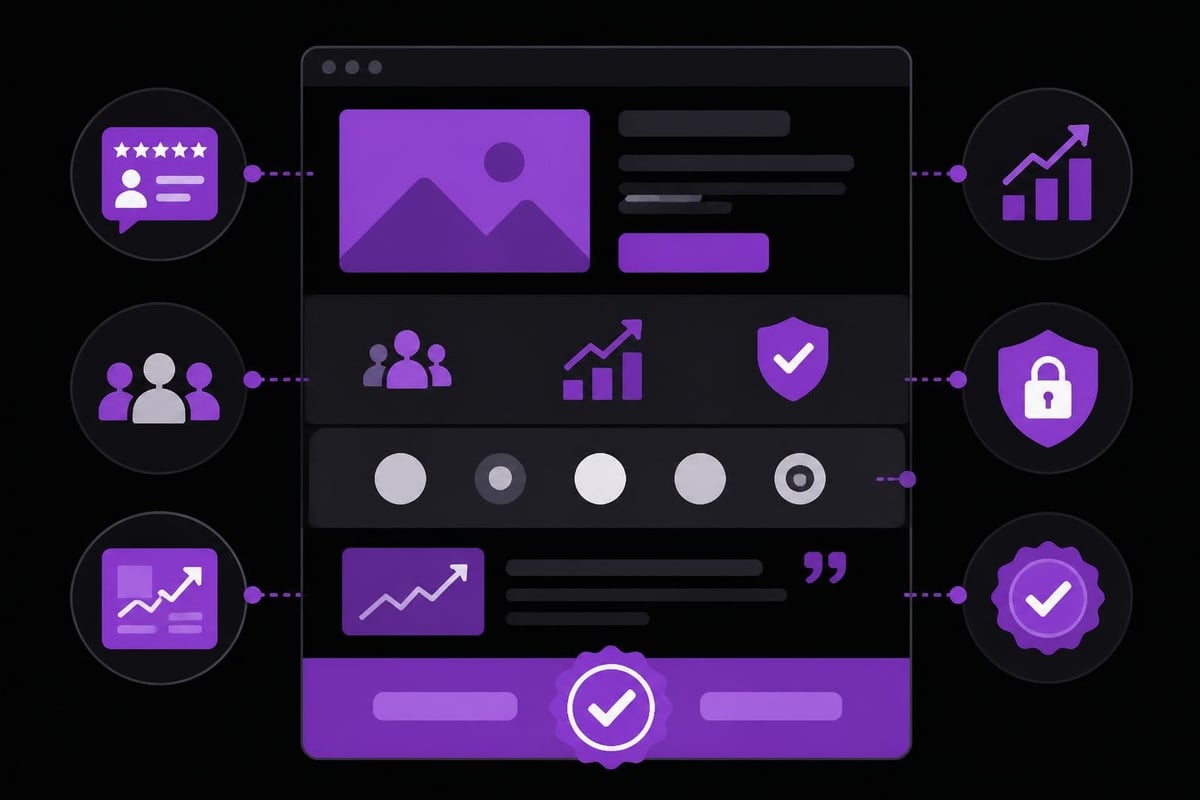
Visitors to your product website are inherently skeptical. They have encountered countless products that overpromised and underdelivered. Breaking through this skepticism requires multiple forms of social proof strategically placed throughout your site.
- Customer testimonials with specific outcomes
- Case studies showing real-world applications
- Usage statistics or customer counts
- Media mentions and awards
- Security certifications and compliance badges
- Money-back guarantees or free trial offers
Design systems help maintain consistent presentation of trust elements across your product website, reinforcing credibility through professional polish.
Technical Foundation and Performance Considerations
A beautifully designed product website that loads slowly or breaks on mobile devices will hemorrhage potential customers. Technical excellence forms the foundation upon which persuasive messaging and attractive design operate.
Mobile-First Responsive Design
Over 60% of web traffic now originates from mobile devices, making responsive design non-negotiable. However, truly effective web development goes beyond simply making desktop designs fit smaller screens.
Mobile-first thinking means considering the mobile experience from the ground up. Touch targets need adequate size. Forms require minimal input. Navigation must work with thumbs, not mouse cursors. Images need optimization for cellular connections.
Best practices for user-friendly websites emphasize that mobile responsiveness directly impacts both user experience and search engine rankings, making it a dual imperative for business success.
Page Speed and Core Web Vitals
Google's Core Web Vitals have made page speed an official ranking factor, but the impact on conversions matters even more. Every second of load time decreases conversion rates by approximately 7%. For a product website generating significant traffic, those seconds translate directly to lost revenue.
Technical optimizations that improve product website performance:
- Image compression and next-gen formats (WebP, AVIF)
- Lazy loading for below-the-fold content
- Minified CSS and JavaScript
- Content delivery network (CDN) implementation
- Browser caching strategies
- Code splitting for faster initial loads
Security and Credibility Infrastructure
Visitors notice security signals, even if subconsciously. SSL certificates (HTTPS) have become table stakes. Privacy policies, terms of service, and clear data handling practices build additional confidence.
For product websites handling payments or sensitive data, displaying security certifications prominently reduces abandonment at critical conversion moments. PCI compliance badges, SOC 2 attestations, and GDPR compliance indicators all contribute to the trust equation.
Content Strategy for Product Websites
Content on a product website serves dual masters: human visitors and search engines. Balancing persuasive copywriting with SEO content optimization ensures both audiences receive what they need.
Value Proposition and Messaging Hierarchy
Your primary value proposition deserves the most prominent position and largest text on your product website. Secondary benefits and supporting points follow in descending order of importance. This hierarchy ensures visitors grasp the essential message even if they only skim.
Messaging should speak to outcomes, not features. Instead of "Advanced AI algorithms," try "Reduce manual data entry by 80%." Instead of "Cloud-based infrastructure," use "Access your data securely from anywhere." This outcome-focused language connects with visitor motivations more effectively.
Addressing Objections Proactively
Every product faces predictable objections. Price concerns. Implementation complexity. Integration challenges. Support availability. Competitive alternatives. Your product website should address these objections before they become deal-breakers.
FAQ sections serve this purpose well, but objection-handling can also integrate into feature descriptions, testimonials, and comparison tables. High-converting landing pages excel at weaving objection-handling throughout the narrative rather than isolating it in a single section.
| Common Objection | Effective Response Strategy | Placement |
|---|---|---|
| "Too expensive" | ROI calculator, cost comparison, value demonstration | Near pricing section |
| "Too complex" | Simple getting-started guide, implementation timeline | Features section |
| "Won't integrate" | Integration list, API documentation, partner ecosystem | Technical specs area |
| "Unreliable support" | Response time guarantees, support team bios, channel options | Footer, contact section |
Advanced Optimization Techniques
Once foundational elements are in place, advanced optimization techniques can incrementally improve conversion rates and user engagement.
Personalization and Dynamic Content
Modern product websites can adapt content based on visitor characteristics. Geographic location, referral source, browsing behavior, and previous visits all provide data points for personalization.
A visitor arriving from a competitor comparison article might see testimonials from customers who switched. Someone from a specific industry could see case studies from their sector. Previous visitors who did not convert might encounter different CTAs or special offers.
Growth marketing strategies often leverage this personalization to improve relevance and conversion rates across different audience segments.
Interactive Elements and Product Demonstrations
Static descriptions have limits. Interactive elements allow visitors to experience your product's value firsthand. Product configurators, ROI calculators, interactive demos, and assessment tools all increase engagement while providing value.
For technical products like trading dashboards or marketplaces, interactive demonstrations bridge the gap between reading about capabilities and understanding their practical application.
Analytics and Continuous Improvement
Your product website should evolve based on real user behavior, not assumptions. Heat mapping tools reveal where visitors click and scroll. Session recordings show where users struggle. A/B testing quantifies which variations perform better.
Key metrics to monitor for product website optimization:
- Bounce rate by traffic source
- Time on page for key sections
- Scroll depth and engagement patterns
- Conversion rate by landing page
- Form abandonment points
- Click-through rates on CTAs
- Mobile vs desktop performance differences
Integration with Broader Marketing Ecosystem
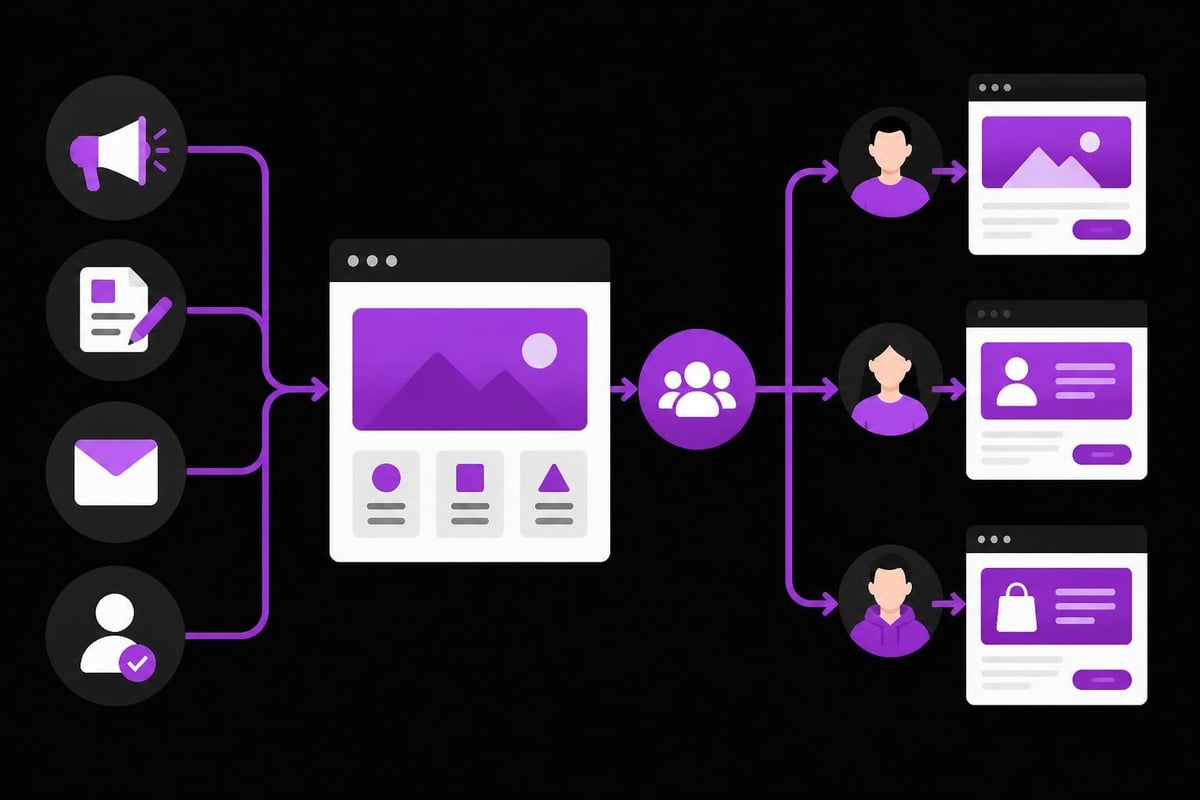
A product website rarely exists in isolation. It integrates with paid advertising, content marketing, email campaigns, and sales processes to form a complete customer acquisition system.
Paid Traffic Optimization
Visitors arriving from paid advertisements have different expectations than organic searchers. Ad-specific landing pages that match ad copy and eliminate navigation options consistently outperform sending paid traffic to general product pages.
Message match between advertisement and landing page reduces bounce rates and improves quality scores, lowering acquisition costs while increasing conversions. The headline on your landing page should echo the promise made in the ad that brought visitors there.
Content Marketing Alignment
Blog content, guides, and resources attract top-of-funnel visitors who are not ready to purchase. Your product website should provide clear pathways for these visitors to engage at their current stage while collecting contact information for future nurturing.
Educational content that demonstrates expertise builds trust that transfers to product credibility. A blog focused on relevant industry topics positions your company as a knowledgeable authority, making visitors more receptive when they eventually consider your product.
Email Campaign Landing Pages
Email subscribers already know your brand, making them warmer prospects than cold traffic. Landing pages for email campaigns can skip some awareness-building and focus more directly on conversion, assuming familiarity with your company.
Personalization opportunities increase with email traffic since you possess subscriber data. Addressing returning visitors differently than first-time guests creates more relevant experiences that respect their existing knowledge.
Platform and Technology Decisions
Choosing the right technology stack for your product website depends on complexity, resources, and long-term goals. No single solution fits all scenarios.
Website Builders vs Custom Development
Website builders like Webflow, Framer, or WordPress offer speed and convenience for straightforward product websites. Templates provide starting points, and drag-and-drop interfaces allow non-technical team members to make updates.
Custom development through specialized engineering teams provides flexibility for complex requirements, unique functionality, or tight integration with other systems. Products requiring custom calculators, configurators, or dynamic personalization often benefit from custom approaches.
| Factor | Website Builder | Custom Development |
|---|---|---|
| Time to launch | 2-4 weeks | 6-12 weeks |
| Initial cost | $2,000-$10,000 | $15,000-$100,000+ |
| Flexibility | Limited to platform capabilities | Unlimited |
| Maintenance | Minimal technical knowledge needed | Requires development resources |
| Scalability | Platform-dependent | Fully customizable |
Headless CMS Approaches
Headless CMS architecture separates content management from presentation, allowing content to feed multiple channels (website, mobile app, kiosks) from a single source. For product websites that need content consistency across platforms, this approach prevents duplication and inconsistency.
Platforms like Contentful, Sanity, or Strapi provide flexible content modeling while allowing developers to build custom front-ends optimized for performance and user experience.
Accessibility and Inclusive Design
An accessible product website expands your potential customer base while demonstrating social responsibility. Legal requirements in many jurisdictions mandate certain accessibility standards, making this both an ethical and practical consideration.
Guidelines for creating user-friendly websites emphasize that accessibility improvements often benefit all users, not just those with disabilities. Clear headings help screen readers and scanners alike. Sufficient color contrast aids visibility for everyone. Keyboard navigation serves both accessibility needs and power users.
Core accessibility considerations:
- Semantic HTML structure for screen readers
- Alternative text for all images
- Sufficient color contrast ratios (WCAG standards)
- Keyboard navigation support
- Clear focus indicators
- Descriptive link text
- Captions for video content
Localization and International Considerations
Product websites targeting international markets face additional complexity beyond simple translation. Cultural context influences design preferences, trust signals, pricing presentation, and even color symbolism.
Payment method preferences vary dramatically by region. While credit cards dominate in North America, many Asian markets prefer bank transfers or regional payment platforms. European customers expect SEPA transfers and local payment options.
Currency display, date formats, measurement units, and even reading direction (for right-to-left languages) all require consideration. Comprehensive ecommerce design guides outline these regional variations and their impact on conversion rates.
Testing and Launch Preparation
Before launching your product website to the world, systematic testing catches issues that could undermine conversions or create poor first impressions.
Cross-Browser and Device Testing
Your product website should function flawlessly across major browsers (Chrome, Safari, Firefox, Edge) and device types (desktop, tablet, mobile). Browser compatibility testing tools automate much of this process, but manual testing on actual devices reveals nuances automated tools miss.
Pay particular attention to form functionality, interactive elements, and payment processing across different environments. A broken checkout flow on Safari mobile could silently lose thousands in revenue.
Performance Testing Under Load
If your launch includes significant promotional activity, ensure your hosting infrastructure can handle traffic spikes. Load testing simulates high concurrent user numbers to identify bottlenecks before real customers encounter them.
Content delivery networks and scalable hosting solutions provide insurance against traffic-related crashes during critical launch periods or promotional campaigns.
Building an effective product website requires balancing persuasive design, technical excellence, and continuous optimization based on real user behavior. The most successful implementations focus relentlessly on visitor needs while removing friction from the conversion path.
Whether you are launching a SaaS MVP, mobile app, or complex technical product, having the right development partner accelerates your path to market while ensuring quality execution. Absolute Foundry specializes in building high-converting product websites alongside complete product engineering, serving as your on-demand tech department so you can focus on growth while we handle the technical complexity. From initial design through launch and optimization, we deliver the digital experiences that turn visitors into customers.