Brand and Web Design: Building Digital Products That Convert
The intersection of brand identity and digital interface design represents one of the most critical success factors for modern product companies. For businesses building complex technical products like payment systems, blockchain applications, or AI-powered dashboards, the relationship between brand and web design extends far beyond visual aesthetics. It creates the foundation for user trust, product comprehension, and ultimately, commercial success. When executed strategically, this combination transforms technical complexity into intuitive experiences that drive adoption and retention.
The Strategic Value of Unified Brand and Web Design
Technical product companies often underestimate how brand consistency affects user behavior. Research demonstrates that cohesive visual identity across digital touchpoints increases brand recognition by up to 80%, directly impacting conversion rates and customer lifetime value. For product engineering firms, this translates into measurable business outcomes.
Building trust becomes paramount when users interact with financial products, smart contracts, or AI systems. A well-designed brand system communicates professionalism, security, and reliability before a single line of code executes. The visual language established through brand guidelines creates immediate cognitive associations that either build confidence or raise red flags.
Why Technical Products Demand Exceptional Design
Complex products face unique challenges that make brand and web design particularly critical:
- Reducing cognitive load: Users must understand sophisticated functionality without technical expertise
- Establishing credibility: Visual professionalism signals technical competence and security
- Differentiating in competitive markets: Strong design creates memorable positioning against competitors
- Facilitating user education: Consistent visual patterns help users learn complex workflows faster
- Supporting global expansion: Scalable design systems accommodate multiple languages and markets
The most successful technical products balance sophisticated functionality with approachable design. Consider how leading fintech platforms use clean interfaces and consistent branding to make complex financial operations feel simple and trustworthy.
Core Elements of Effective Brand and Web Design Integration
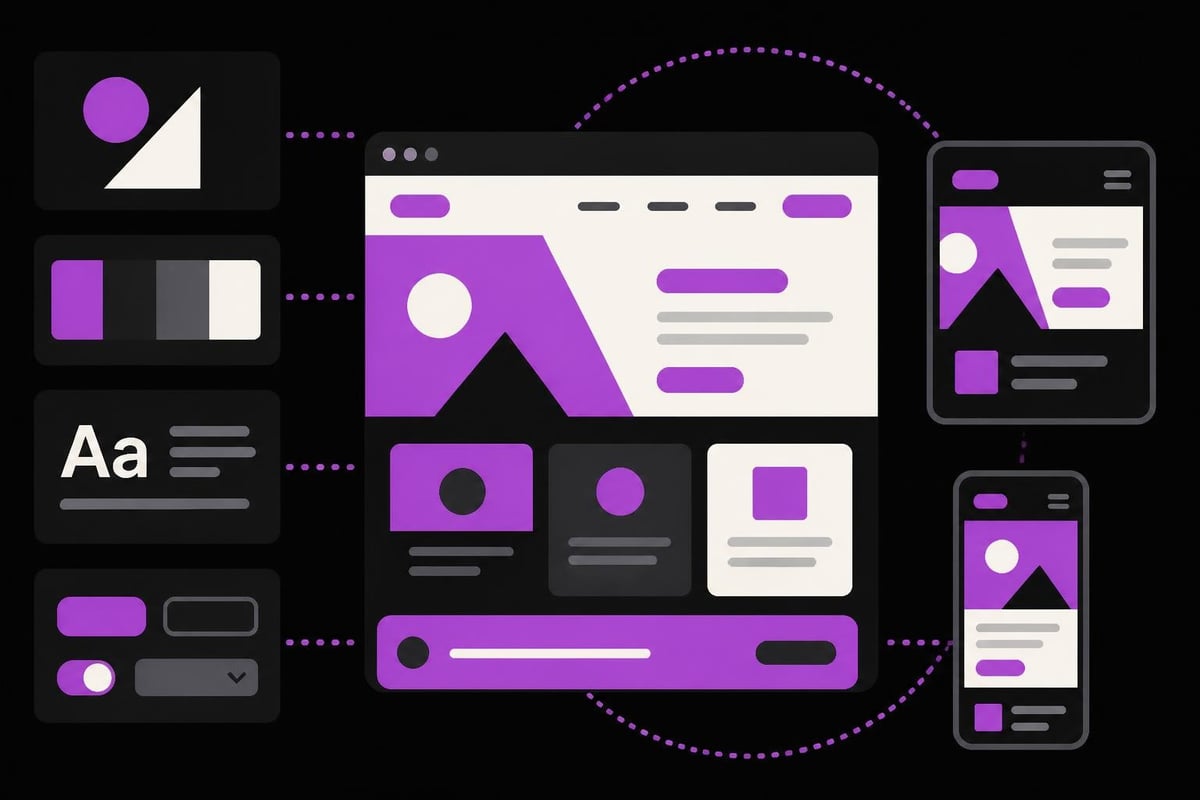
Creating cohesive experiences requires understanding how brand elements translate into digital interfaces. This process involves more than applying logos and colors to templates. It demands strategic thinking about how visual systems support product goals.
Visual Identity Systems for Digital Products
A comprehensive visual identity provides the foundation for all design decisions. For technical products, this system must work across diverse contexts, from marketing websites to complex application interfaces.
| Brand Element | Application in Web Design | Impact on User Experience |
|---|---|---|
| Color Palette | Primary actions, status indicators, data visualization | Guides attention, communicates meaning, reduces decision time |
| Typography | Heading hierarchy, body text, code snippets, labels | Improves readability, establishes information hierarchy |
| Iconography | Navigation, feature representation, status communication | Accelerates comprehension, reduces language barriers |
| Spacing System | Layout grids, component padding, white space management | Creates visual rhythm, improves scannability |
| Motion Design | Transitions, loading states, micro-interactions | Provides feedback, maintains engagement during operations |
These elements must work harmoniously to create what Webflow describes in their design guidelines as a "consistent and memorable brand identity" that users can recognize and trust.
Translating Brand Personality into Interface Design
Brand personality manifests through design choices that extend beyond visual elements. For a product website, these decisions shape how users perceive the company's technical capabilities and reliability.
Voice and tone influence everything from button labels to error messages. A fintech platform targeting institutional clients requires different language patterns than a consumer gaming application. The brand personality established in marketing materials must translate consistently into product interfaces.
Visual weight and hierarchy communicate priority and importance. Technical products often present multiple data points simultaneously. Effective brand and web design uses consistent visual patterns to help users distinguish critical information from supporting details.
Design Systems: Scaling Brand and Web Design
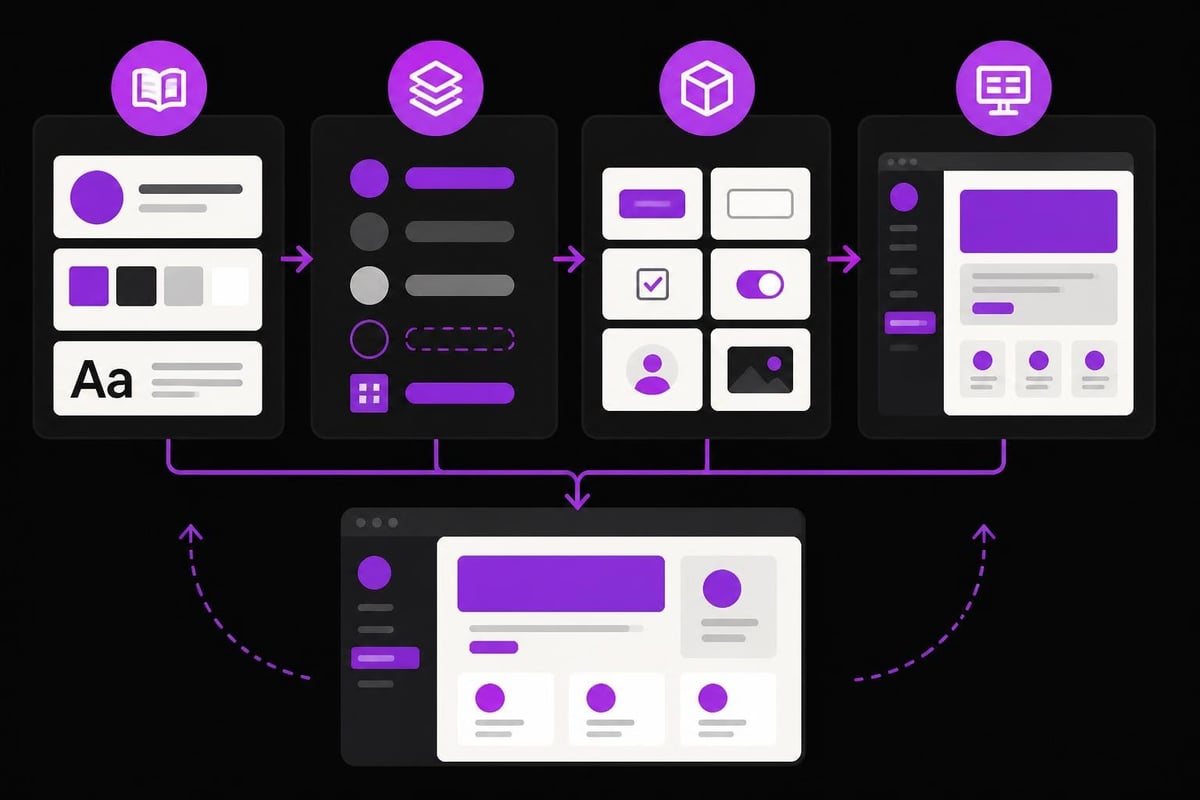
Organizations building multiple products or features require systematic approaches to maintaining consistency. Design systems codify brand decisions into reusable components and patterns that scale across teams and products.
Building Component Libraries
Modern technical products benefit from comprehensive component libraries that embody brand decisions:
- Establish foundational elements: Define colors, typography, spacing, and grid systems based on brand guidelines
- Create core components: Build buttons, form fields, cards, and navigation patterns that reflect brand personality
- Document usage patterns: Specify when and how to apply each component for consistent experiences
- Maintain accessibility standards: Ensure components meet WCAG requirements while preserving brand aesthetics
- Version and evolve: Implement governance processes for updating components as brands and products mature
The Interface Guidelines resource provides framework-agnostic recommendations that help teams build accessible, responsive design systems aligned with brand requirements.
Ensuring Consistency Across Product Suites
Companies building multiple products face challenges maintaining brand coherence while allowing product-specific optimization. Strategic approaches include:
- Shared design tokens: Central repositories of brand values that propagate to all products
- Flexible theming systems: Architecture that supports brand consistency with product-specific variations
- Cross-functional design reviews: Regular audits ensuring brand alignment across product teams
- Centralized asset management: Single sources of truth for logos, icons, and brand resources
For example, when building a SaaS MVP or creating a marketplace, maintaining brand consistency from initial development prevents expensive redesigns as products scale.
Optimizing Web Design for Technical Audiences
Brand and web design for technical products requires understanding how different user segments interact with interfaces. Engineering teams, business stakeholders, and end users each bring different expectations and literacy levels.
Balancing Technical Detail with Usability
Technical accuracy and user-friendly design need not conflict. The most effective interfaces present complex information through progressive disclosure and thoughtful information architecture.
Dashboard design exemplifies this balance. When designing trading dashboards, designers must display real-time data, charts, order books, and account information without overwhelming users. Brand consistency through color coding, typography hierarchy, and component patterns helps users parse dense information efficiently.
Documentation integration represents another critical consideration. Technical products require robust documentation that maintains brand consistency while prioritizing clarity. Design systems should include documentation components that feel native to the product experience.
Mobile Responsiveness and Brand Integrity
Mobile experiences present unique challenges for brand and web design execution. Screen constraints force prioritization decisions that reveal which brand elements truly matter.
The principles outlined in web design best practices emphasize that successful mobile design maintains brand recognition while adapting layouts for smaller screens. For technical products, this often means:
- Simplified navigation structures that preserve brand-consistent interaction patterns
- Adaptive typography systems that maintain hierarchy across breakpoints
- Touch-optimized components that retain brand personality through visual feedback
- Strategic use of brand colors to guide mobile user flows
When building mobile apps, teams should establish mobile-first brand guidelines that inform desktop experiences rather than attempting to compress desktop designs.
Performance Considerations in Brand and Web Design
Technical excellence encompasses more than visual polish. The most beautiful brand and web design fails if performance issues undermine user experience. For product companies, site speed and application performance directly impact conversion rates and user retention.
Optimizing Visual Assets
Brand assets must balance visual impact with technical performance:
| Asset Type | Optimization Strategy | Brand Impact Consideration |
|---|---|---|
| Logos | SVG format with optimized paths | Maintains crispness at all sizes |
| Brand imagery | WebP format with fallbacks, lazy loading | Preserves visual quality while improving load times |
| Custom fonts | Variable fonts, subset characters, font-display strategies | Balances brand typography with render performance |
| Icons | Icon fonts or sprite sheets | Ensures consistent iconography with minimal requests |
| Animations | CSS transforms over JavaScript, reduced motion preferences | Delivers brand personality without accessibility barriers |
Performance optimization should begin during brand development. Choosing web-optimized typefaces and designing with technical constraints in mind prevents compromises later.
Code Quality and Brand Consistency
Clean, maintainable code supports long-term brand consistency. When multiple developers work on products over time, well-structured CSS and component architecture prevents visual drift.
CSS architecture matters significantly. Methodologies like BEM or CSS modules help teams apply brand styles consistently. Design tokens implemented as CSS custom properties allow brand updates to propagate throughout products automatically.
Component documentation ensures developers implement designs correctly. Tools like Storybook showcase components in isolation, demonstrating proper usage and preventing brand inconsistencies from accumulating.

Brand and Web Design for Specific Product Categories
Different product types require tailored approaches to brand and web design. Understanding category-specific requirements ensures design systems support product functionality.
Financial and Payment Products
Fintech applications demand designs that communicate security, clarity, and professionalism. When building stablecoin payment rails or traditional payment systems, brand and web design choices directly influence user trust.
Visual indicators for transaction states must be unambiguous. Color coding for pending, completed, and failed transactions should align with brand colors while meeting accessibility contrast requirements. Typography hierarchy must make transaction amounts and critical details immediately scannable.
Data visualization for financial products requires brand-consistent chart styles, legends, and interactive elements. The visualization library chosen should support theming that matches brand guidelines while maintaining data integrity and readability.
Blockchain and Web3 Applications
Decentralized applications present unique brand and web design challenges. Users need confidence in smart contract interactions, wallet connections, and blockchain transactions. The design must demystify complex technical processes.
When building production dApps or crypto iGaming platforms, brand consistency helps users navigate unfamiliar territory. Clear visual feedback for blockchain confirmations, gas estimates, and transaction statuses reduces anxiety and abandonment.
Wallet connection flows should maintain brand continuity while clearly communicating security implications. Loading states during blockchain confirmations need brand-appropriate animation that manages user expectations about processing time.
AI and Machine Learning Products
AI-powered products require interfaces that make algorithmic decisions transparent and trustworthy. Brand and web design must communicate confidence while acknowledging uncertainty inherent in probabilistic systems.
For AI automation tools or AI hedge funds, visual design should:
- Use brand-consistent confidence indicators for AI predictions
- Provide clear visual hierarchies that distinguish AI recommendations from user data
- Design explanation interfaces that maintain brand personality while delivering technical accuracy
- Create loading and processing states that set appropriate expectations for AI computation time
The brand personality established through these interfaces shapes how users perceive AI capabilities and limitations.
Testing and Iterating Brand and Web Design
Continuous improvement separates good design from exceptional experiences. Strategic testing reveals how users actually interact with brand and web design decisions.
User Research Methods for Design Validation
Different research methods provide complementary insights:
- First-click testing: Validates whether brand-consistent navigation patterns guide users effectively
- A/B testing: Compares design variations to optimize conversion while maintaining brand integrity
- Heatmap analysis: Reveals which brand elements attract attention and which go unnoticed
- Session recordings: Shows how real users navigate interfaces and where design patterns succeed or fail
- Accessibility audits: Ensures brand implementation meets WCAG standards across user contexts
As noted in the dos and don'ts of website design, effective testing balances quantitative metrics with qualitative user feedback.
Evolving Brands Without Disrupting Users
Brands must evolve as markets and products mature. Managing these transitions requires strategic planning to avoid alienating existing users while attracting new audiences.
Gradual rollouts of brand updates allow user acclimation. Introducing new colors or typography in limited contexts before full deployment reduces disruption. Version-controlled design systems enable teams to support both legacy and updated brand expressions during transitions.
User communication about brand changes demonstrates respect for established relationships. Explaining the rationale for updates and highlighting improvements helps users embrace rather than resist change.
Measuring Brand and Web Design Success
Effective measurement connects design decisions to business outcomes. For product companies, relevant metrics extend beyond aesthetics to capture impact on adoption, retention, and revenue.
Key Performance Indicators
| Metric Category | Specific Indicators | What They Reveal |
|---|---|---|
| Engagement | Time on site, pages per session, feature adoption rates | Whether design facilitates product exploration |
| Conversion | Sign-up rates, trial-to-paid conversion, feature activation | How design affects user decisions |
| Retention | Return visit frequency, churn rates, feature stickiness | Whether experiences build lasting relationships |
| Perception | Brand recognition surveys, Net Promoter Score, design feedback | How users perceive brand professionalism |
| Performance | Page load time, interaction responsiveness, error rates | Whether technical implementation supports design vision |
The web design standards analysis from Orbit Media demonstrates how data-driven approaches identify which design patterns deliver results.
Portfolio Presentation for Product Companies
For agencies and product studios, demonstrating brand and web design capabilities requires thoughtful portfolio curation. The design portfolio examples analyzed by Creative Bloq highlight how successful portfolios showcase both process and outcomes.
Case studies should illustrate how brand and web design decisions solved specific product challenges. Rather than just displaying finished visuals, effective portfolios explain the reasoning behind design systems, the constraints navigated, and the measurable results achieved.
Project diversity demonstrates versatility across product categories. Showing high-converting fintech landing pages alongside internal tools or eSignature flows proves capability across different technical requirements and user contexts.
Strategic Implementation Approaches
Successfully executing brand and web design requires organizational alignment and clear processes. The most effective implementations balance creative vision with technical constraints and business requirements.
Cross-Functional Collaboration
Brand and web design excellence demands collaboration between multiple disciplines. Designers, developers, product managers, and marketing teams must align around shared objectives.
Design handoff processes should include detailed specifications that preserve brand intent through implementation. Component libraries, design tokens, and documented patterns reduce ambiguity between design and development.
Regular design reviews ensure brand consistency as products evolve. Establishing review cadences where teams assess new features against brand guidelines prevents drift over time.
Selecting the Right Tools and Platforms
Technology choices impact how effectively teams can implement and maintain brand and web design. Modern product companies typically benefit from:
- Design tools with developer handoff: Platforms like Figma that support design systems and generate specifications
- Component-based frameworks: React, Vue, or similar technologies that align with design system thinking
- CSS-in-JS or design tokens: Approaches that programmatically enforce brand consistency
- Content management flexibility: Systems that allow brand-consistent content presentation without requiring developer intervention
- Analytics integration: Tools that measure how design decisions affect user behavior
The choice between custom development and platforms depends on product complexity, team capabilities, and scalability requirements. For many technical products, custom development provides the flexibility needed to implement sophisticated brand systems while optimizing performance.
Successful brand and web design integration creates cohesive experiences that build trust, facilitate understanding, and drive product adoption across complex technical domains. By establishing comprehensive design systems, maintaining consistency through collaboration, and continuously measuring impact, product companies transform visual identity into competitive advantage. Whether you're building fintech platforms, blockchain applications, or AI-powered tools, Absolute Foundry provides end-to-end brand identity and web design services that align with your technical requirements, helping you focus on market expansion while we handle the complete product development cycle.