Manufacturing Process Engineer: Role & Career Guide 2026
The manufacturing sector continues to evolve rapidly in 2026, driven by automation, artificial intelligence, and digital transformation initiatives. At the heart of this transformation stands the manufacturing process engineer, a professional responsible for designing, implementing, and optimizing production systems that deliver quality products efficiently. This role has expanded beyond traditional factory floors to encompass digital manufacturing, smart production systems, and data-driven process optimization. Whether you're considering a career in this field or looking to hire talent with these capabilities, understanding the modern manufacturing process engineer's responsibilities, skills, and impact is essential.
Core Responsibilities of a Manufacturing Process Engineer
A manufacturing process engineer serves as the technical architect of production operations, focusing on continuous improvement and operational excellence. These professionals bridge the gap between design concepts and scalable manufacturing realities.
Primary duties include:
- Analyzing existing production processes to identify bottlenecks and inefficiencies
- Designing new manufacturing workflows that maximize throughput and minimize waste
- Implementing quality control systems that ensure product consistency
- Collaborating with cross-functional teams including design, quality assurance, and operations
- Managing process documentation and standard operating procedures
The comprehensive job description for a manufacturing process engineer outlines how these professionals typically spend their time solving complex production challenges.
Process Design and Optimization
Manufacturing process engineers dedicate significant effort to designing workflows that balance efficiency, quality, and cost. They evaluate equipment capabilities, material requirements, and labor allocations to create optimal production sequences.
This involves creating detailed process flow diagrams, conducting time studies, and performing capacity analyses. Engineers use simulation software and statistical methods to predict outcomes before implementing changes on the factory floor.
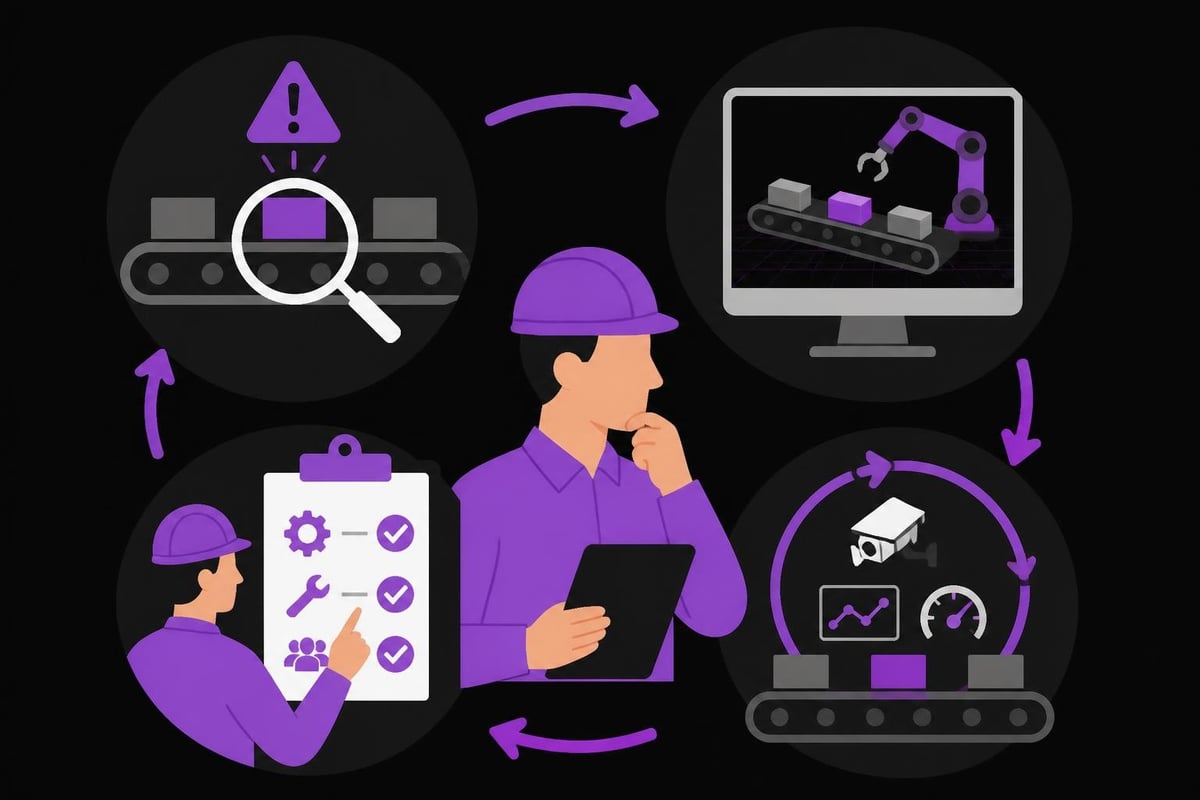
Process optimization extends beyond initial design. Engineers establish key performance indicators (KPIs) and monitoring systems that provide real-time visibility into production metrics. When deviations occur, they investigate root causes and implement corrective actions.
| Optimization Focus | Key Metrics | Tools Used |
|---|---|---|
| Cycle Time Reduction | Units per hour, throughput rate | Time studies, value stream mapping |
| Quality Improvement | Defect rates, first-pass yield | Statistical process control, Six Sigma |
| Cost Reduction | Cost per unit, material waste | Activity-based costing, lean analysis |
| Equipment Efficiency | Overall equipment effectiveness (OEE) | Predictive maintenance, IoT sensors |
Quality Systems and Compliance
Ensuring product quality represents a critical responsibility for every manufacturing process engineer. They develop inspection protocols, establish quality checkpoints, and implement statistical process control methods that detect variations before they become defects.
These professionals work closely with quality assurance teams to investigate non-conformances and implement preventive measures. They also ensure manufacturing processes comply with industry standards, regulatory requirements, and customer specifications.
Documentation forms a crucial component of quality management. Engineers maintain detailed records of process parameters, validation studies, and change controls that demonstrate compliance during audits and certifications.
Essential Skills and Technical Competencies
The modern manufacturing process engineer requires a diverse skill set that spans engineering fundamentals, digital technologies, and business acumen. Technical expertise forms the foundation, but soft skills increasingly differentiate top performers.
Engineering and Analytical Skills
Core technical competencies include:
- Process engineering principles - Understanding thermodynamics, fluid mechanics, and materials science
- Statistical analysis - Applying design of experiments, regression analysis, and hypothesis testing
- CAD and simulation software - Using tools for process modeling and virtual commissioning
- Manufacturing methods - Knowledge of machining, assembly, molding, and other production techniques
- Automation and controls - Familiarity with programmable logic controllers (PLCs) and human-machine interfaces (HMIs)
The research on capabilities and skills in manufacturing highlights how Industry 4.0 demands have expanded the technical knowledge required for process engineering roles.
Data literacy has become increasingly important. Manufacturing process engineers must interpret large datasets from sensors, quality systems, and enterprise resource planning (ERP) platforms to make informed decisions.
Digital Transformation Capabilities
Modern manufacturing process engineers increasingly work with digital tools that parallel software development practices. Similar to how product design engineers blend physical and digital expertise, process engineers now integrate smart manufacturing technologies.
Digital competencies include:
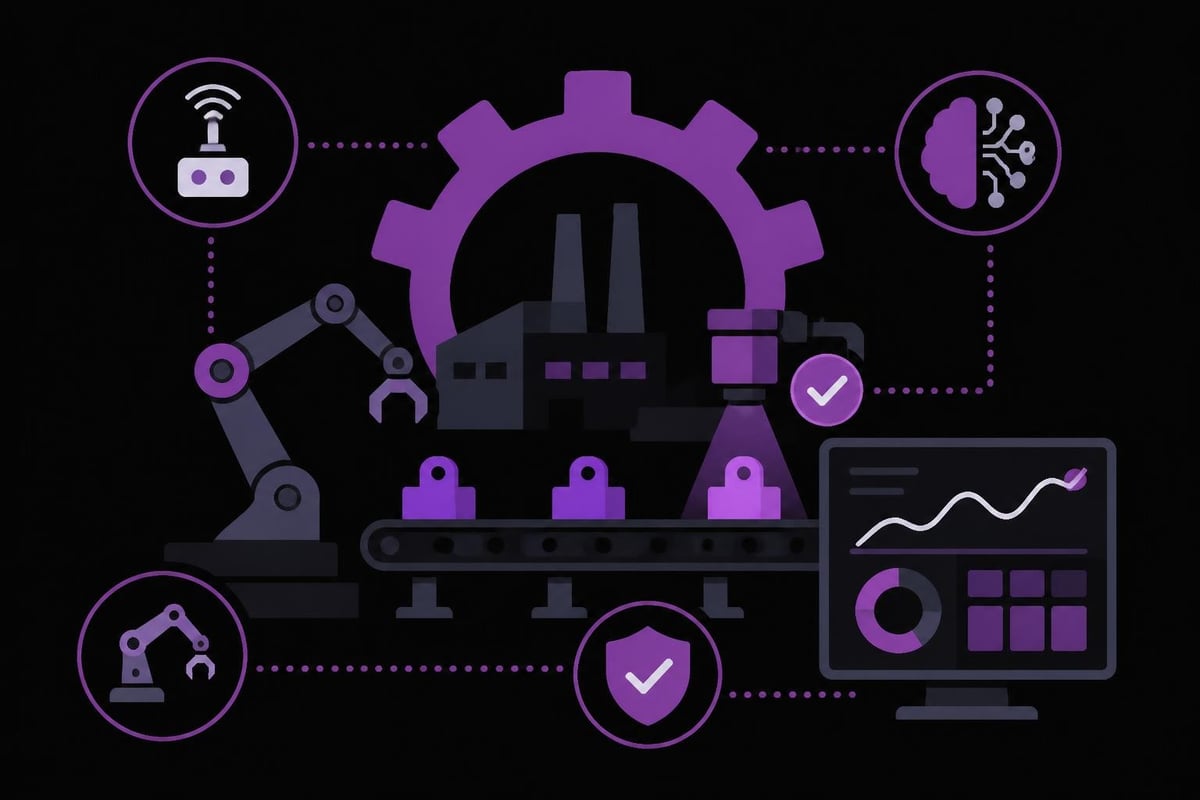
- Industrial Internet of Things (IIoT) - Implementing sensor networks that provide real-time production data
- Data analytics platforms - Using business intelligence tools to visualize trends and predict issues
- Artificial intelligence and machine learning - Applying predictive models for quality control and maintenance
- Digital twin technology - Creating virtual replicas of production systems for testing and optimization
Companies like Absolute Foundry demonstrate how AI automation services can transform traditional workflows, a trend that manufacturing process engineers must embrace to remain competitive.
Educational Pathways and Career Development
Becoming a manufacturing process engineer typically requires formal education in engineering disciplines combined with practical experience. Most positions require at minimum a bachelor's degree in mechanical, industrial, chemical, or manufacturing engineering.
Academic Foundation
Relevant degree programs include:
- Mechanical Engineering
- Industrial Engineering
- Manufacturing Engineering
- Chemical Engineering
- Materials Science and Engineering
Coursework emphasizes mathematics, physics, chemistry, and engineering principles. Students learn computer-aided design, statistics, production planning, and quality control methodologies.
Many universities offer specialized manufacturing engineering programs that combine mechanical engineering fundamentals with business and operations management courses. These programs often include cooperative education experiences that provide hands-on factory exposure.
| Career Stage | Education Level | Typical Experience | Responsibilities |
|---|---|---|---|
| Entry-Level | Bachelor's degree | 0-2 years | Process documentation, data collection, improvement projects |
| Mid-Level | Bachelor's/Master's | 3-7 years | Process design, project leadership, cross-functional coordination |
| Senior-Level | Bachelor's/Master's | 8-15 years | Strategic planning, departmental management, capital projects |
| Principal/Director | Master's/MBA | 15+ years | Plant-wide optimization, technology roadmaps, organizational development |
Professional Development and Certifications
Continuous learning distinguishes successful manufacturing process engineers. The field evolves rapidly, requiring professionals to stay current with emerging technologies and methodologies.
Valuable certifications include:
- Six Sigma (Green Belt, Black Belt) - Demonstrates process improvement and statistical analysis expertise
- Lean Manufacturing - Validates knowledge of waste elimination and continuous improvement principles
- Project Management Professional (PMP) - Shows capability to lead complex initiatives
- Certified Manufacturing Engineer (CMfgE) - Recognizes comprehensive manufacturing knowledge
- Industry-specific certifications - Such as automotive (IATF 16949) or pharmaceutical (cGMP) standards
The reference model for capabilities in manufacturing provides frameworks that help engineers understand the competencies needed at different organizational levels.
Industry Applications and Specializations
Manufacturing process engineers work across diverse industries, each with unique challenges and technical requirements. While core principles remain consistent, application specifics vary significantly by sector.
Sector-Specific Opportunities
Automotive manufacturing requires process engineers who understand high-volume production, robotics integration, and stringent quality standards. These professionals optimize assembly lines, implement error-proofing systems, and manage supplier quality.
Electronics and semiconductor production demands expertise in cleanroom environments, precision equipment, and yield optimization. Engineers in this sector work with nanometer-scale tolerances and complex multi-step processes.
Pharmaceutical and biotechnology manufacturing emphasizes regulatory compliance, validation, and contamination control. Process engineers ensure products meet FDA requirements while maintaining efficiency and consistency.
Aerospace and defense industries require engineers familiar with advanced materials, tight tolerances, and extensive documentation. These professionals often work with composite materials, specialized coatings, and non-destructive testing methods.
Emerging Fields and Technologies
Additive manufacturing (3D printing) has created new opportunities for process engineers who can optimize build parameters, post-processing workflows, and quality inspection methods. This technology enables customization and complexity impossible with traditional methods.
Smart manufacturing initiatives integrate cyber-physical systems, creating factories where equipment communicates autonomously and processes adapt in real-time. Manufacturing process engineers lead these digital transformation projects, similar to how web development teams architect complex digital systems.
Sustainable manufacturing has become a priority, with process engineers developing methods that reduce energy consumption, minimize waste, and use environmentally friendly materials. Life cycle assessment and circular economy principles inform their design decisions.
The Digital Manufacturing Revolution
Traditional manufacturing process engineering focused primarily on physical production systems. Today's role increasingly resembles that of systems architects who design interconnected digital and physical workflows.
Process Dashboards and Real-Time Monitoring
Modern factories generate massive amounts of data from sensors, machines, and quality systems. Manufacturing process engineers design dashboards that visualize this information, enabling operators and managers to make data-driven decisions.
These dashboards display real-time metrics including production rates, equipment status, quality trends, and efficiency indicators. Alert systems notify teams when parameters drift outside acceptable ranges, enabling rapid response.
The skills required to design effective manufacturing dashboards parallel those needed for building web applications, including user experience design, data architecture, and visualization best practices.
Automation and AI Integration
Manufacturing process engineers increasingly collaborate with automation specialists and data scientists to implement intelligent production systems. Machine learning models predict equipment failures, optimize process parameters, and detect quality issues before they occur.
Computer vision systems inspect products with superhuman speed and accuracy. Natural language processing analyzes maintenance logs and quality reports to identify recurring issues. Robotic process automation handles repetitive tasks like data entry and report generation.
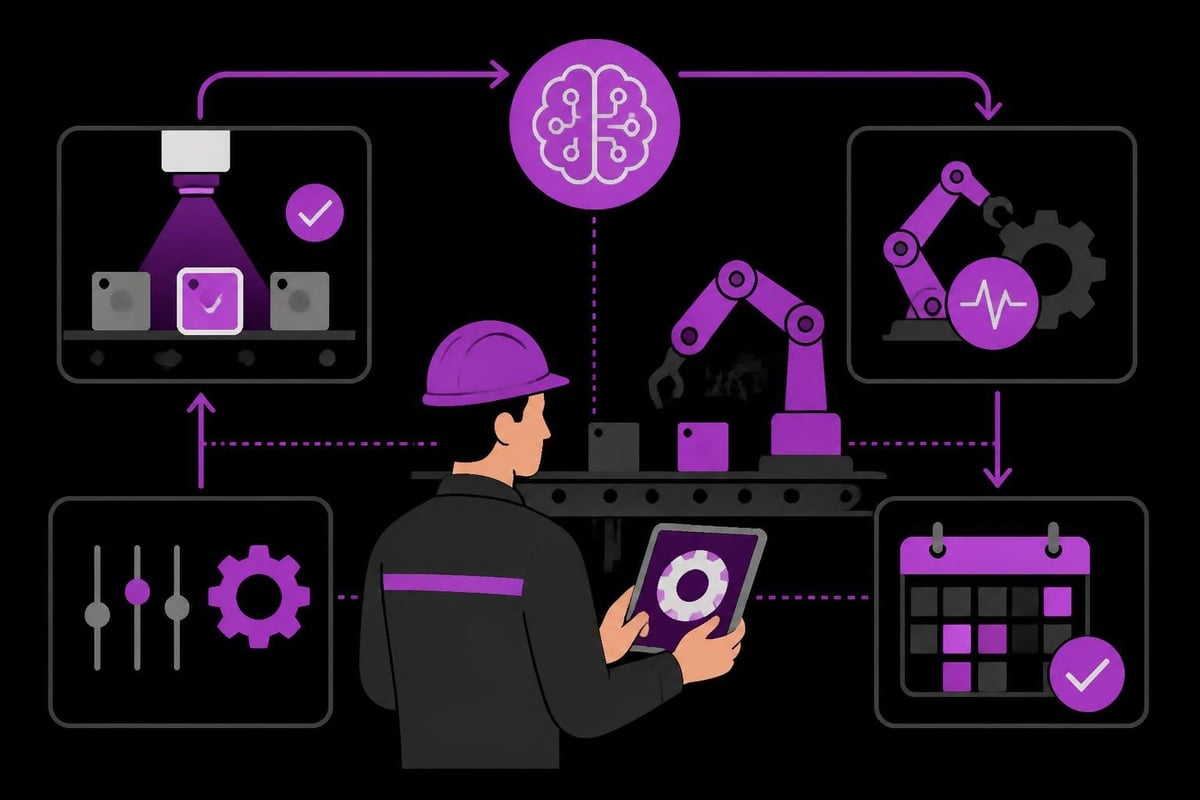
Understanding AI agents for operations helps manufacturing process engineers identify automation opportunities and implement systems that enhance productivity without replacing human expertise.
Cross-Functional Collaboration and Leadership
Manufacturing process engineers rarely work in isolation. Success depends on effective collaboration with diverse stakeholders across organizations.
Working with Product Design Teams
Close coordination between manufacturing process engineers and product designers ensures manufacturability from concept stage. Early involvement in design reviews allows engineers to identify potential production challenges before they become costly problems.
Design for Manufacturing (DFM) principles guide these collaborations, balancing aesthetic and functional requirements with production capabilities and cost constraints. Engineers provide feedback on material selection, tolerances, and assembly methods.
This relationship mirrors the collaboration between product design services and technical implementation teams, where understanding both creative vision and practical constraints yields optimal outcomes.
Supply Chain and Vendor Management
Manufacturing process engineers evaluate supplier capabilities, qualify new vendors, and resolve quality issues in purchased components. They establish specifications, conduct audits, and manage incoming material inspections.
When introducing new materials or components, engineers work with procurement teams to source qualified suppliers and negotiate technical requirements. They balance cost, quality, and delivery considerations to support production goals.
Training and Knowledge Transfer
As process experts, manufacturing process engineers develop training materials and conduct operator instruction sessions. They create standard work documents, video tutorials, and troubleshooting guides that capture best practices.
Mentoring junior engineers and technicians represents an important responsibility. Experienced process engineers share technical knowledge, problem-solving approaches, and industry insights that accelerate team development.
Challenges and Problem-Solving Approaches
Manufacturing process engineers encounter complex problems requiring systematic analysis and creative solutions. Understanding common challenges helps prepare professionals for real-world scenarios.
Scaling Production from Prototype to Volume
Transitioning from small-batch prototype production to high-volume manufacturing presents significant challenges. Processes that work at low volumes often fail when scaled up due to equipment limitations, material variability, or labor constraints.
Manufacturing process engineers conduct detailed capability studies, identify scaling risks, and develop mitigation strategies. They design pilot production runs that validate processes under realistic conditions before full-scale launch.
Common scaling considerations:
- Equipment capacity and throughput requirements
- Material handling and logistics
- Quality control sampling strategies
- Workforce training and skill development
- Cost modeling and economic analysis
Balancing Quality, Cost, and Speed
Every manufacturing process engineer faces the perpetual challenge of optimizing competing objectives. Improving quality often increases costs or reduces speed. Accelerating production may compromise quality or require capital investment.
Data-driven decision-making helps navigate these trade-offs. Engineers quantify the financial impact of quality issues, calculate return on investment for process improvements, and model the cost-benefit of different scenarios.
Similar to how building efficient internal tools requires balancing functionality, development time, and maintainability, manufacturing optimization demands strategic prioritization based on business objectives.
Compensation and Career Outlook
The manufacturing process engineer role offers competitive compensation reflecting the technical expertise and business impact these professionals provide. Salary varies based on education, experience, industry, and geographic location.
2026 salary ranges (United States):
- Entry-level (0-2 years): $65,000 - $80,000
- Mid-level (3-7 years): $80,000 - $110,000
- Senior-level (8-15 years): $110,000 - $145,000
- Principal/Director (15+ years): $145,000 - $200,000+
Industries with complex production processes or stringent regulatory requirements typically offer higher compensation. Pharmaceutical, semiconductor, and aerospace sectors often pay premium salaries for experienced manufacturing process engineers.
Job Market Trends
The Bureau of Labor Statistics projects steady demand for industrial engineers (which includes manufacturing process engineers) through 2030. Digital transformation initiatives, reshoring of manufacturing operations, and sustainability mandates drive this demand.
Companies increasingly seek candidates with both traditional engineering skills and digital competencies. Professionals who combine process knowledge with data analytics, automation, and AI capabilities command premium positions.
Tools and Technologies for Modern Process Engineering
Manufacturing process engineers leverage sophisticated software and hardware tools that enhance analysis, simulation, and implementation capabilities.
Software Platforms
Essential tools include:
- CAD software (SolidWorks, CATIA, AutoCAD) for designing fixtures, tooling, and layouts
- Process simulation (Arena, Simio, FlexSim) for modeling production flows and identifying bottlenecks
- Statistical analysis (Minitab, JMP, R) for data analysis and designed experiments
- Project management (Microsoft Project, Asana, Jira) for coordinating improvement initiatives
- Manufacturing execution systems (MES) for production tracking and shop floor control
The trend toward integrated digital platforms means manufacturing process engineers increasingly work with systems similar to design systems that provide consistent frameworks and reusable components.
Measurement and Testing Equipment
Precise measurement capabilities enable manufacturing process engineers to validate processes and ensure quality. Modern measurement systems combine traditional metrology with digital data capture and automated analysis.
Equipment includes coordinate measuring machines (CMMs), optical comparators, surface roughness testers, and material testing apparatus. Non-contact measurement technologies like laser scanning and photogrammetry enable rapid data collection on complex geometries.
Integration with statistical process control software allows real-time monitoring and automated alerting when measurements indicate process drift or capability issues.
Manufacturing process engineers play a vital role in creating efficient, high-quality production systems that drive business success in 2026 and beyond. As manufacturing continues its digital transformation, these professionals must combine traditional engineering expertise with emerging capabilities in AI, automation, and data analytics. Whether you're building physical products or digital solutions, Absolute Foundry provides the technical expertise and end-to-end services to bring your vision to production, allowing you to focus on market expansion while we handle the complex engineering challenges.