Controls Engineering: Building Smarter Digital Products
Controls engineering represents the backbone of modern digital product development, enabling systems to maintain desired behaviors through feedback mechanisms and automated decision-making. As product engineering teams build increasingly complex applications in 2026, the principles that govern how systems self-regulate, respond to inputs, and optimize performance have become essential knowledge. Whether developing AI-driven automation, real-time dashboards, or blockchain-based payment systems, understanding control theory creates products that are responsive, reliable, and resilient at scale.
The Foundation of Controls Engineering in Digital Products
Controls engineering focuses on designing systems that automatically adjust their behavior to achieve specific objectives. Traditional control systems managed physical processes like temperature regulation or motor speed, but modern applications extend these principles to software systems, algorithms, and digital workflows.
Core components in any control system include:
- Sensors that measure current system states
- Controllers that process measurements and determine actions
- Actuators that execute changes to the system
- Feedback loops that enable continuous adjustment
The IEEE Technology Navigator provides comprehensive insights into control engineering applications across various domains, demonstrating how these principles scale from embedded systems to cloud infrastructure.
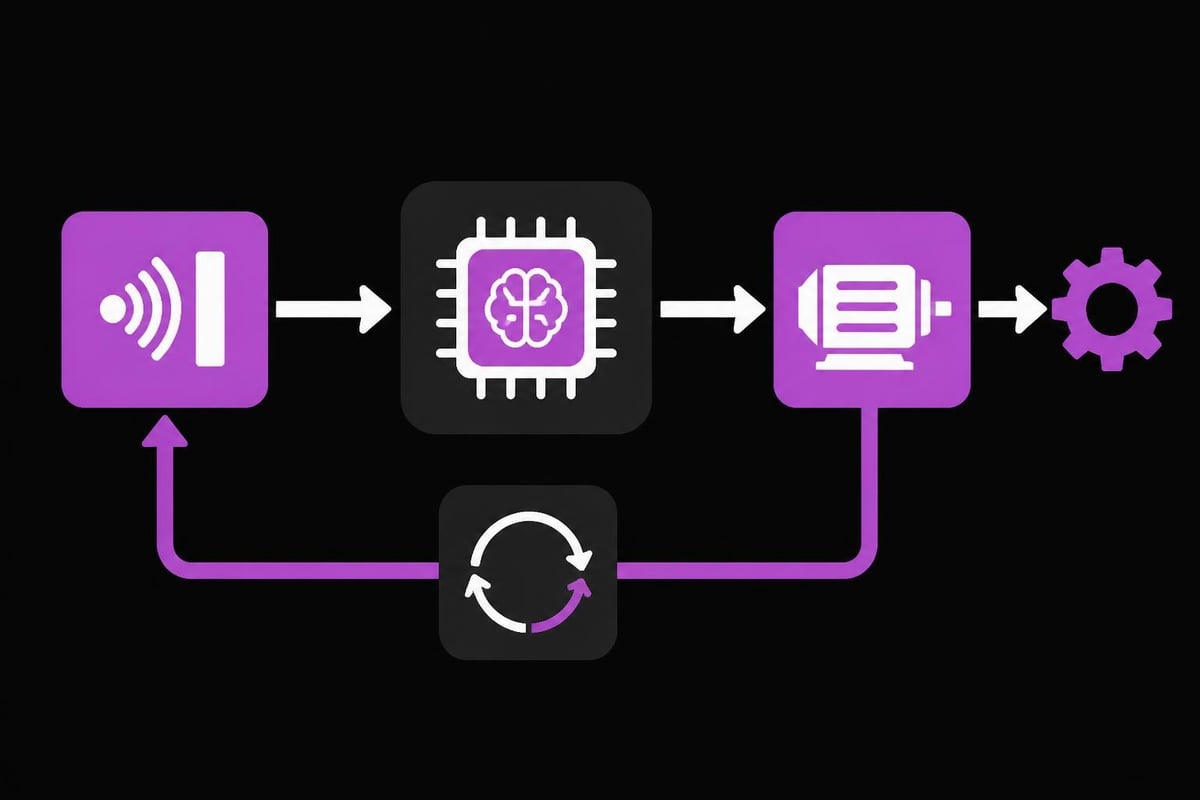
In software development, controls engineering manifests through automated testing pipelines, load balancers, auto-scaling infrastructure, and intelligent routing systems. Each component monitors specific parameters and adjusts behavior based on predefined objectives and real-time conditions.
Feedback Mechanisms in Modern Applications
Feedback loops distinguish reactive systems from truly intelligent ones. A simple notification system reacts to events, while a control-based notification system monitors user engagement patterns and adjusts delivery timing, frequency, and content based on measured outcomes.
| Feedback Type | Application Example | Measurement Metric |
|---|---|---|
| Positive Feedback | Viral content amplification | Share velocity |
| Negative Feedback | Rate limiting systems | Request frequency |
| Adaptive Feedback | Recommendation engines | Engagement duration |
| Predictive Feedback | Capacity planning | Resource utilization trends |
Product teams implementing AI automation services leverage these feedback mechanisms to create systems that improve through operation. Machine learning models represent advanced control systems, continuously adjusting their parameters based on prediction accuracy and outcome measurements.
Implementing Control Theory in Product Development
Translating control engineering principles into product features requires systematic thinking about system states, desired outcomes, and intervention strategies. Development teams must identify controllable variables, measurable outputs, and acceptable operating ranges.
State Management and System Modeling
Every digital product maintains state across multiple dimensions: user sessions, database records, cache layers, and external integrations. Controls engineering provides frameworks for modeling these states and defining transitions between them.
Effective state management requires:
- Clear definition of all possible system states
- Identification of valid state transitions
- Establishment of error states and recovery procedures
- Implementation of monitoring for state consistency
- Design of controls that prevent invalid states
When building production-ready dApps, state management becomes critical as blockchain transactions create irreversible state changes. Control systems must validate conditions before execution and implement safety mechanisms that prevent catastrophic errors.
Cambridge University research on quantitative engineering design methods demonstrates how controls engineering integrates with design thinking to create robust, predictable systems across disciplines.
PID Controllers in Digital Systems
Proportional-Integral-Derivative (PID) controllers represent one of the most widely implemented control strategies. While traditionally used in physical systems, PID logic applies equally to digital products managing resources, traffic, or computational loads.
The proportional component responds to current error magnitude, the integral component addresses accumulated error over time, and the derivative component anticipates future error based on rate of change. This three-part approach creates responsive yet stable behavior.
Digital applications of PID control include:
- Auto-scaling algorithms that adjust server capacity
- Content delivery networks balancing traffic across nodes
- Database query optimizers managing execution plans
- Trading systems adjusting order placement strategies
When developing trading dashboards, PID-inspired algorithms can manage position sizing, risk exposure, and execution timing based on market conditions and portfolio objectives.
Advanced Control Strategies for Complex Systems
Modern products often involve multiple interacting subsystems, each with its own control requirements. Advanced controls engineering addresses coordination, optimization, and emergent behavior in these complex environments.
Model Predictive Control
Model predictive control (MPC) uses system models to forecast future states and optimize control actions over a prediction horizon. This approach excels in situations with constraints, multiple objectives, and delayed effects.
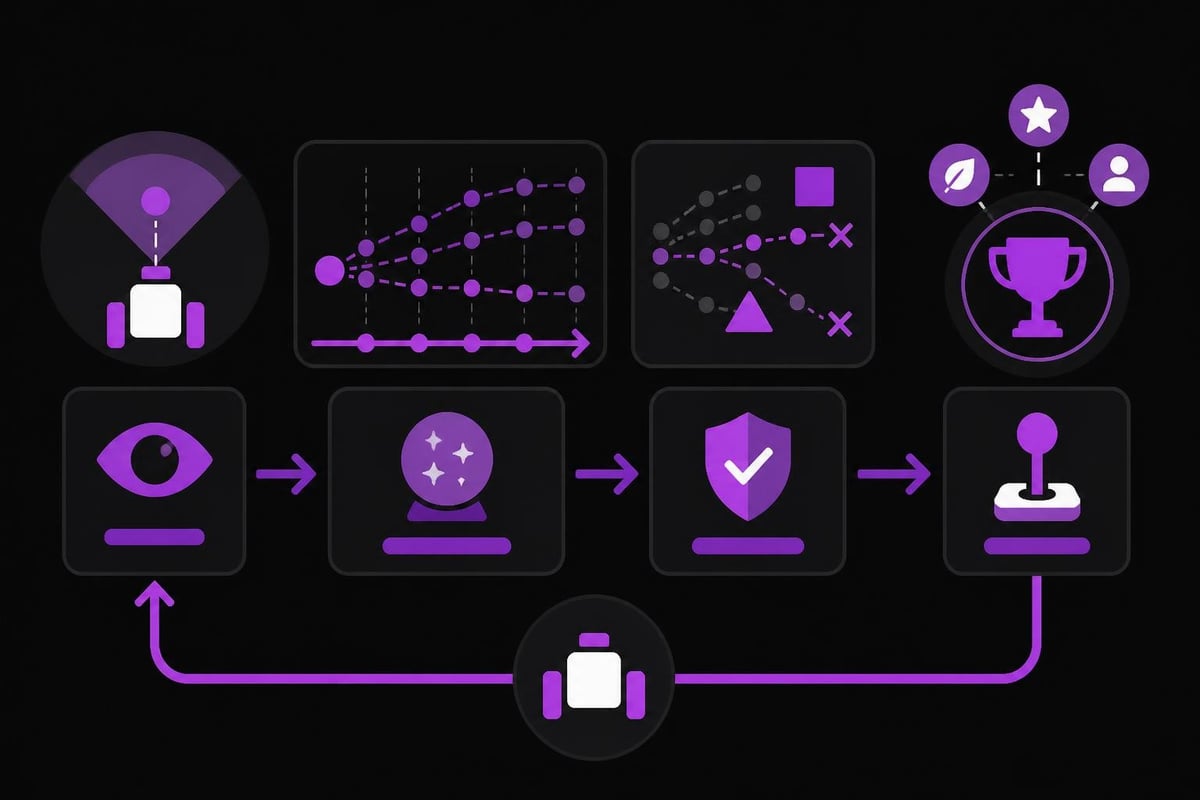
AI-powered products particularly benefit from MPC approaches. When building AI hedge funds, predictive models forecast market movements while control algorithms optimize portfolio allocation within risk constraints and regulatory requirements.
| Control Strategy | Best Use Case | Implementation Complexity |
|---|---|---|
| Bang-Bang | Simple on/off systems | Low |
| PID | Single-variable optimization | Medium |
| MPC | Multi-constraint problems | High |
| Adaptive | Systems with changing dynamics | High |
| Fuzzy Logic | Imprecise or subjective inputs | Medium |
Adaptive and Learning Controls
Adaptive control systems modify their parameters based on observed system behavior, making them ideal for environments where characteristics change over time or are initially unknown. This parallels machine learning but focuses specifically on control objectives rather than general pattern recognition.
Gaming applications demonstrate adaptive controls effectively. Player difficulty adjustment, matchmaking algorithms, and economy balancing all represent control systems that learn optimal parameters through observation and experimentation.
The fundamental principles covered in control engineering handbooks provide mathematical foundations for implementing these adaptive strategies in software systems.
Real-World Applications Across Product Categories
Controls engineering principles manifest differently across product types, but the underlying concepts of measurement, feedback, and automated adjustment remain constant.
Smart Contract Control Systems
Blockchain-based smart contracts represent deterministic control systems where code execution follows predefined rules without human intervention. Designing these systems requires careful consideration of initial conditions, state transitions, and failure modes.
When building stablecoin payment rails, control mechanisms maintain price stability through algorithmic adjustments to supply, collateralization ratios, or incentive structures. These systems implement classical control theory in distributed, trustless environments.
Smart contract control considerations:
- Immutable control logic requiring thorough testing
- Gas-efficient state updates and calculations
- Oracle integration for external data inputs
- Emergency shutdown mechanisms and circuit breakers
- Multi-signature controls for parameter adjustments
Dashboard and Monitoring Systems
Real-time dashboards function as control system interfaces, displaying system state and enabling manual or automated interventions. Effective dashboard design reflects controls engineering principles through clear state visualization, threshold alerts, and actionable controls.
Web dashboard development requires defining which metrics matter for control decisions, establishing normal operating ranges, and implementing alerting logic that distinguishes signal from noise.
Data refresh rates, aggregation windows, and visualization choices all impact how effectively users can monitor and control complex systems. Too much information creates cognitive overload, while too little prevents informed decision-making.
System Stability and Performance Optimization
Stability represents a fundamental concern in controls engineering. Unstable systems oscillate, diverge, or exhibit unpredictable behavior, making them unreliable for production use.
Analyzing System Dynamics
Understanding how systems respond to inputs requires analysis of their dynamic characteristics. Response time, overshoot, settling time, and steady-state error define system behavior and guide control design.
Key performance metrics:
- Rise time (speed of initial response)
- Peak overshoot (maximum deviation)
- Settling time (time to reach steady state)
- Steady-state error (final deviation from target)
- Stability margins (robustness to disturbances)
When implementing AI agents for operations, these metrics help evaluate whether automated systems respond appropriately to changing conditions without creating instability or excessive resource consumption.
Robustness and Fault Tolerance
Robust control systems maintain acceptable performance despite uncertainties, disturbances, and component failures. This requires designing for worst-case scenarios while optimizing for typical operation.
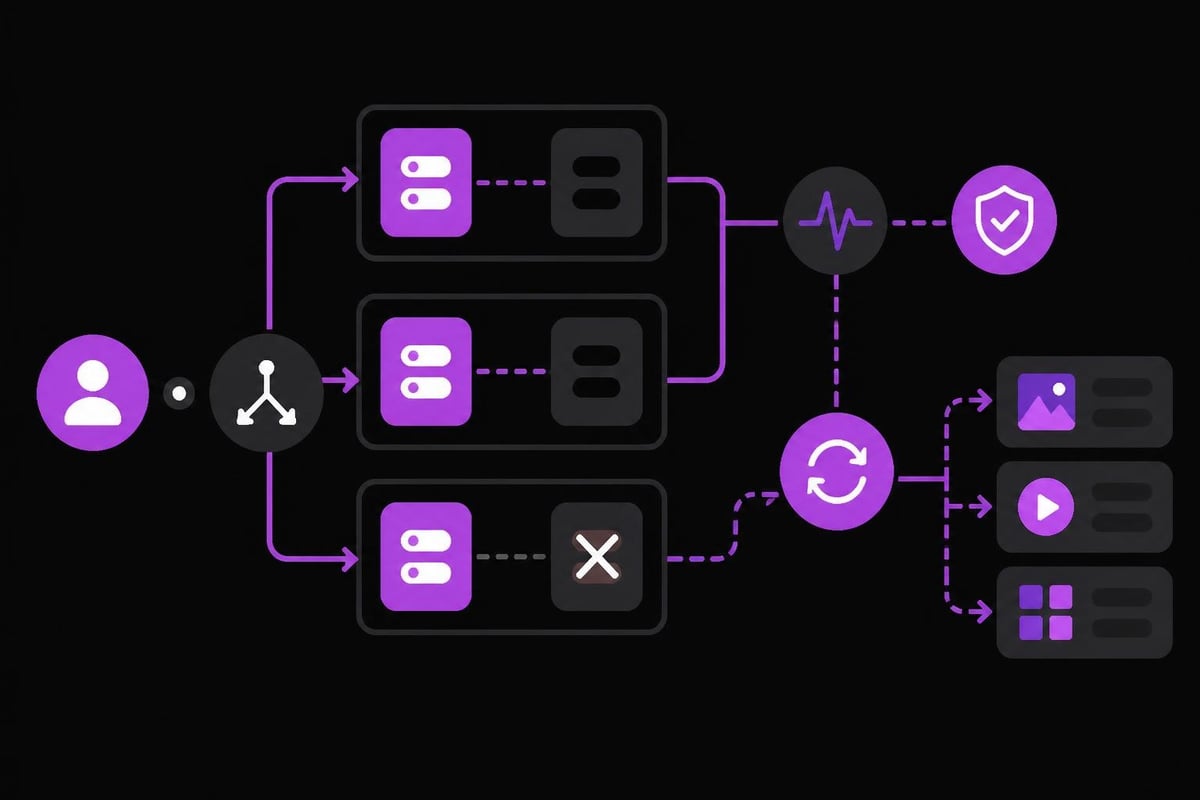
Payment systems exemplify the need for robust controls. Smart contract escrow implementations must handle network congestion, price volatility, and potential exploits while ensuring funds remain secure and transactions complete reliably.
| Robustness Technique | Purpose | Trade-off |
|---|---|---|
| Redundancy | Backup components | Increased cost |
| Graceful Degradation | Partial functionality during failures | Reduced performance |
| Circuit Breakers | Prevent cascade failures | Temporary service interruption |
| Rate Limiting | Protect from overload | Delayed processing |
Integration with Modern Development Practices
Controls engineering concepts integrate naturally with contemporary software development methodologies, particularly DevOps, continuous deployment, and infrastructure as code.
Observability and Control
Observability provides the measurement foundation that enables effective control. Without comprehensive visibility into system state, behavior, and performance, automated controls operate blindly.
Modern observability stacks combine metrics, logs, and traces to create complete system pictures. Control systems consume this data to make informed decisions about scaling, routing, alerting, and intervention.
Observability requirements for effective controls:
- Real-time metric collection and aggregation
- Distributed tracing across service boundaries
- Structured logging with consistent formats
- Alert routing and escalation policies
- Historical data for trend analysis
Product teams working on internal tools often implement custom control dashboards that combine observability data with business metrics, enabling both technical and operational control decisions.
Automated Testing as Control Validation
Test automation represents a control system for code quality. Tests measure software behavior against specifications, and continuous integration systems prevent defective code from reaching production.
This quality control system includes unit tests (component-level verification), integration tests (interaction validation), and end-to-end tests (full system behavior). Each layer provides feedback at different granularities and speeds.
The Wikipedia overview of control engineering fundamentals highlights how verification and validation processes mirror control theory's emphasis on measurement and feedback.
Designing Control Interfaces
User interfaces for controlled systems must balance automation with manual override capability, providing appropriate visibility and intervention points without overwhelming users.
Progressive Disclosure in Control Panels
Effective control interfaces reveal complexity progressively, showing high-level status by default while enabling detailed inspection and adjustment when needed. This approach applies controls engineering thinking to user experience design.
Dashboard layouts should prioritize critical control points and status indicators, relegating detailed parameters to secondary screens or expandable sections. Users need to quickly assess system health and take action during anomalies.
When designing marketing websites with conversion optimization features, control interfaces might expose A/B testing parameters, traffic allocation sliders, and performance metrics through progressively disclosed panels.
Feedback Visualization
Visualizing control system behavior helps users understand current states, recent trends, and projected futures. Time-series charts, state diagrams, and threshold indicators communicate system dynamics effectively.
Effective visualization techniques include:
- Color-coded status indicators with clear semantics
- Trend sparklines showing recent behavior
- Threshold markers indicating normal ranges
- Prediction overlays for forecasted states
- Historical comparison for context
Performance Measurement and Optimization
Quantifying control system performance enables continuous improvement and validates design decisions. Metrics must align with business objectives while remaining technically measurable.
Defining Control Objectives
Control systems optimize toward specific objectives, whether minimizing error, maximizing efficiency, or balancing multiple competing goals. Clearly defined objectives enable systematic design and evaluation.
For marketplace platforms, control objectives might include maintaining liquidity on both supply and demand sides, minimizing transaction friction, preventing fraud, and optimizing matching algorithms for user satisfaction.
| System Type | Primary Objective | Secondary Objectives |
|---|---|---|
| E-commerce | Conversion rate | Page load speed, cart abandonment |
| SaaS Platform | User engagement | Feature adoption, retention |
| Payment System | Transaction success rate | Processing cost, settlement time |
| Gaming | Player retention | Session duration, monetization |
Continuous Optimization Loops
Control systems should themselves be subject to continuous improvement. A/B testing control parameters, analyzing performance across conditions, and refining algorithms based on outcomes creates meta-level optimization.
Machine learning enhances this process by discovering optimal control parameters through experimentation. However, purely data-driven optimization risks overfitting to current conditions or creating fragile systems that fail under novel circumstances.
Resources like advanced control system methods provide rigorous frameworks for optimization that balance performance with robustness and adaptability.
Future Directions in Digital Product Controls
Controls engineering continues evolving as systems become more complex, distributed, and autonomous. Several trends shape how control theory applies to product development in 2026 and beyond.
Distributed Control Architectures
Modern applications span multiple services, regions, and cloud providers, requiring distributed control strategies that coordinate across boundaries while maintaining local autonomy. Microservices architectures exemplify this trend, with each service implementing local controls while participating in system-wide coordination.
Blockchain systems take distribution further, implementing trustless control through consensus mechanisms and smart contracts. This creates unique challenges for maintaining coherent system behavior without centralized coordination.
AI-Enhanced Control Systems
Artificial intelligence augments traditional control approaches by learning optimal strategies from data, adapting to changing conditions, and handling complexity that exceeds human design capacity. However, AI-based controls raise questions about interpretability, safety, and robustness.
Hybrid approaches combining model-based control with machine learning often prove most effective. Physics-informed neural networks, for example, incorporate domain knowledge into learning algorithms, creating controls that respect fundamental constraints while discovering optimal policies.
Edge Computing and Real-Time Control
Latency-sensitive applications increasingly implement control logic at the edge, closer to sensors and actuators. This enables faster response times and reduces dependence on network connectivity, critical for applications requiring sub-second control loops.
Gaming, autonomous systems, and industrial IoT applications drive edge computing adoption, bringing controls engineering challenges to resource-constrained environments where traditional approaches may require modification.
Practical Implementation Strategies
Translating controls engineering theory into working product features requires systematic approaches that balance theoretical rigor with practical constraints.
Starting with Simple Controllers
Beginning with straightforward control strategies enables rapid iteration and learning before tackling complex adaptive or predictive approaches. Many systems benefit from simple proportional controllers or threshold-based logic before justifying sophisticated alternatives.
Implementation progression:
- Manual controls with monitoring
- Threshold-based automation
- Proportional or PID controllers
- Adaptive parameter tuning
- Model predictive or learning-based controls
This progression allows teams to validate control objectives, understand system dynamics, and build confidence before investing in advanced approaches.
Testing and Validation
Control systems require rigorous testing across normal operation, edge cases, and failure scenarios. Simulation environments enable testing without risking production systems, while canary deployments provide controlled real-world validation.
When building SaaS MVPs, incorporating basic control mechanisms early establishes foundations for future automation and optimization. Even simple alerting and manual intervention procedures represent initial control implementations.
Documentation and Knowledge Transfer
Controls engineering decisions embed critical assumptions about system behavior, objectives, and constraints. Documenting these choices, including alternative approaches considered and trade-offs made, preserves institutional knowledge and enables future refinement.
Control system documentation should cover measurement strategies, control algorithms, tuning parameters, operating ranges, and failure modes. This enables team members to maintain and improve systems over time.
Controls engineering principles provide powerful frameworks for building intelligent, responsive digital products that automatically adapt to changing conditions while maintaining stability and reliability. As product complexity increases across domains from AI automation to blockchain applications, systematic approaches to feedback, measurement, and automated control become essential for delivering professional results. Absolute Foundry applies these engineering fundamentals across all product development services, ensuring the systems we build operate reliably at scale while enabling clients to focus on market expansion and business growth.