Web Site AI: Transform Your Digital Presence in 2026
The integration of artificial intelligence into website development has fundamentally transformed how businesses approach their digital presence. Web site AI now powers everything from initial design concepts to ongoing optimization, enabling companies to build more sophisticated platforms with unprecedented efficiency. As we navigate through 2026, understanding how to leverage these AI capabilities has become essential for maintaining competitive advantage in the digital marketplace.
The Evolution of Web Site AI Technologies
Web site AI has progressed far beyond simple chatbots and recommendation engines. Modern implementations encompass sophisticated systems that handle code generation, content personalization, automated testing, and real-time optimization. These technologies have matured to the point where AI in web development now influences every stage of the website lifecycle, from conception through continuous improvement.
The transformation has been particularly dramatic in the product engineering space. Companies building complex platforms-whether payment systems, gaming environments, or blockchain applications-now rely on AI to accelerate development cycles and reduce technical debt. This shift reflects a broader trend where AI capabilities have become core infrastructure rather than optional enhancements.
Core Components of Modern Web Site AI
Today's web site AI systems consist of multiple interconnected technologies:
- Intelligent code generation that translates requirements into functional components
- Design-to-code conversion that bridges the gap between visual concepts and implementation
- Automated testing frameworks that ensure quality across deployment cycles
- Personalization engines that adapt content and experiences to individual users
- Performance optimization that continuously refines load times and resource allocation
Each component operates both independently and in concert with others, creating a comprehensive ecosystem that supports rapid iteration and continuous improvement.
Implementation Strategies for Product Engineering Teams
Product engineering teams face unique challenges when implementing web site AI. Unlike consumer-facing website builders, engineering foundries require solutions that integrate with existing development workflows, support complex architectures, and maintain code quality standards. The approach differs significantly from plug-and-play solutions.
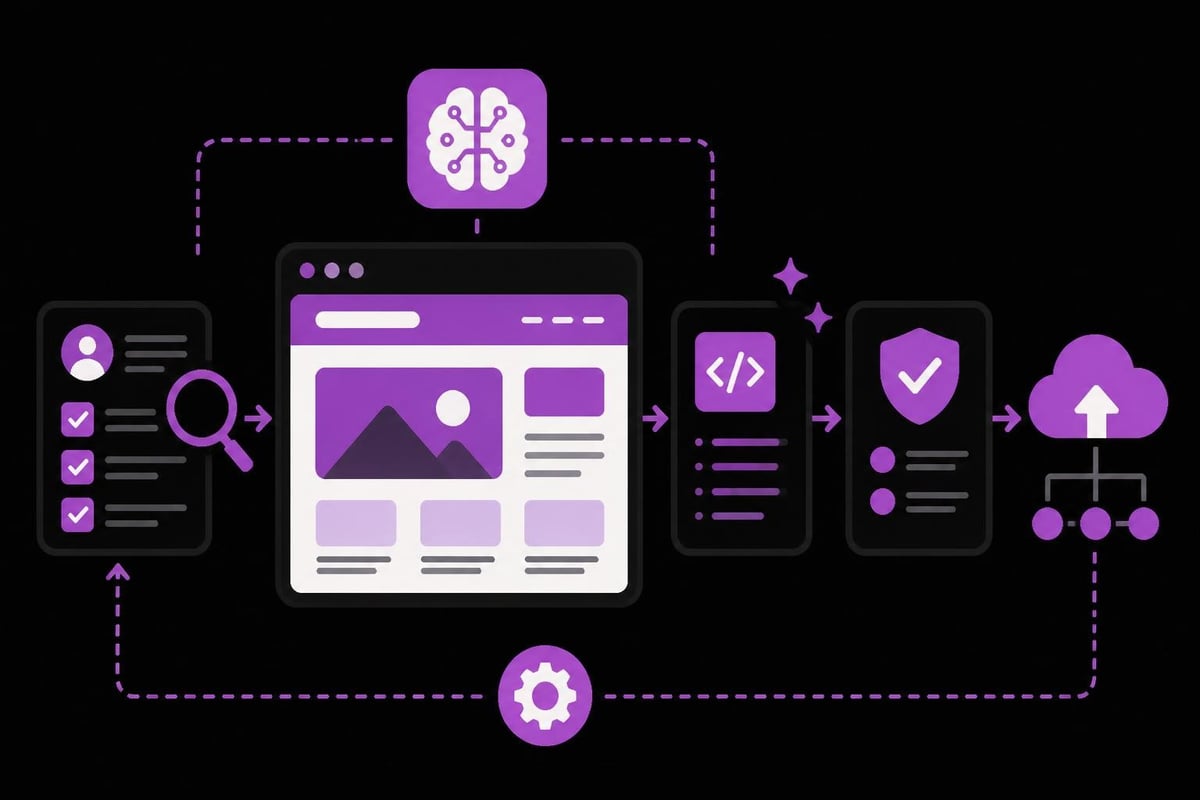
Building AI-Augmented Development Pipelines
Successful implementation starts with identifying high-impact areas where AI can accelerate delivery without compromising quality. For teams building web development projects, this typically means integrating AI at specific workflow stages rather than attempting wholesale automation.
Key integration points include:
- Requirements translation: Converting client specifications into structured technical requirements
- Component generation: Creating reusable UI components and backend services
- Test creation: Automatically generating test cases based on implementation patterns
- Documentation: Maintaining up-to-date technical documentation as code evolves
- Code review: Identifying potential issues, security vulnerabilities, and optimization opportunities
Teams building dashboards, payment rails, or smart contracts can leverage these integration points while maintaining control over critical business logic and security-sensitive code. The goal is augmentation rather than replacement of engineering expertise.
Selecting the Right Web Site AI Tools
The market offers numerous web site AI platforms, each optimized for different use cases. No-code AI website builders work well for marketing sites and simple applications, but product engineering requires more sophisticated tooling.
| Tool Category | Best For | Limitations |
|---|---|---|
| No-Code Builders | Marketing sites, prototypes | Limited customization, platform lock-in |
| AI Code Assistants | Development acceleration | Requires engineering oversight |
| Design-to-Code | Rapid prototyping | May require significant refinement |
| Testing Automation | Quality assurance | Training data requirements |
| Personalization Engines | User experience optimization | Privacy compliance complexity |
For companies building production systems, the emphasis should be on tools that integrate with existing development environments and support custom workflows. Solutions that offer API access, version control integration, and deployment flexibility provide the most value for engineering-focused organizations.
Accessibility and Quality Considerations
As web site AI becomes more prevalent, ensuring accessibility compliance has become increasingly important. Research on AI-assisted coding for accessibility demonstrates that AI systems can introduce accessibility issues if not properly guided. Product engineering teams must implement verification processes to ensure AI-generated code meets WCAG standards.
Quality Assurance for AI-Generated Components
Web site AI introduces new quality assurance challenges. Code generated by AI systems may be functional but suboptimal, potentially creating technical debt that compounds over time. Establishing quality gates requires:
- Code review protocols specifically designed for AI-generated output
- Performance benchmarking to ensure AI suggestions don't degrade system performance
- Security scanning to identify vulnerabilities in generated code
- Accessibility testing to verify WCAG compliance
- Documentation standards that maintain clarity across human and AI contributions
Teams working on AI automation projects often find that investing in robust quality assurance processes upfront prevents costly refactoring later.
Content Generation and SEO Optimization
Web site AI has dramatically changed content creation and search engine optimization strategies. Modern platforms use AI to generate copy, optimize meta descriptions, and structure content for maximum visibility. However, the rise of AI-generated content has also complicated the SEO landscape, as website publishers face challenges from AI-driven search behaviors.
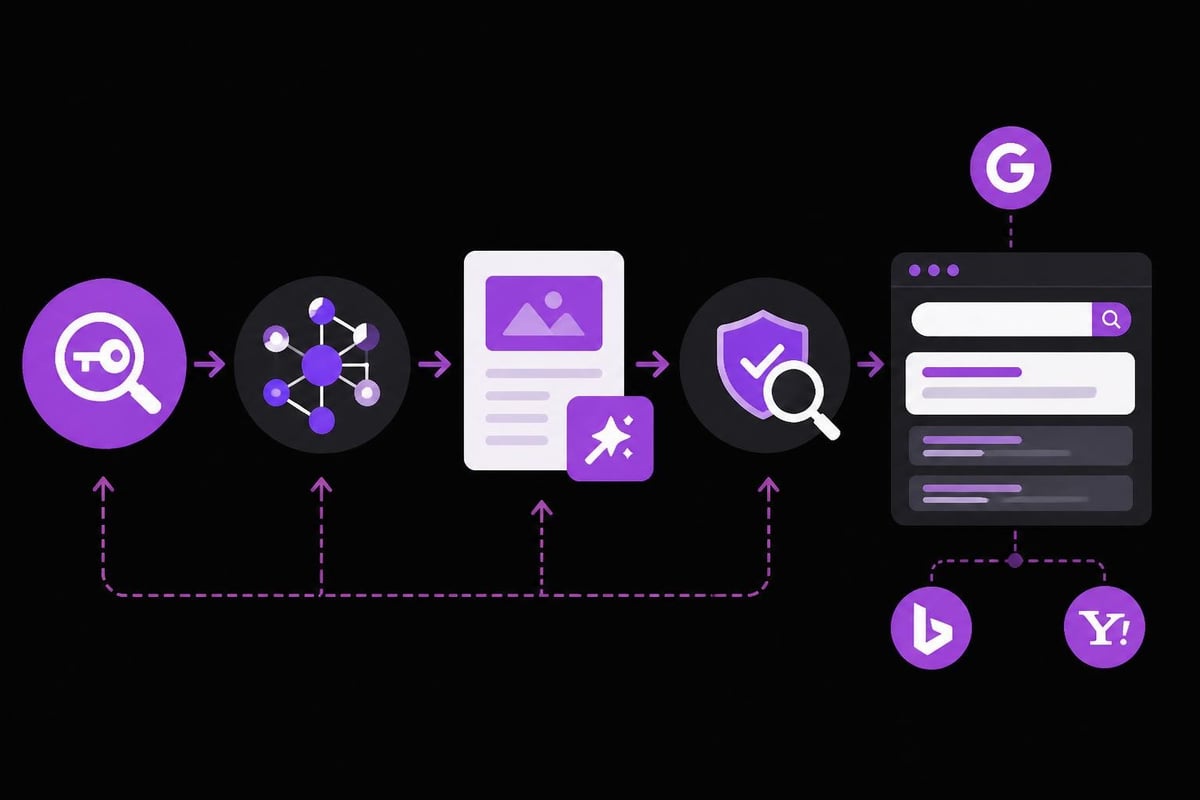
Balancing Automation with Authenticity
For businesses building SEO content strategies, the challenge lies in leveraging AI efficiency while maintaining brand voice and expertise. Effective approaches include:
- Using AI for research and outline generation
- Applying AI to identify content gaps and opportunities
- Implementing AI-powered competitor analysis tools for strategic insights
- Maintaining human oversight for final content approval
- Continuously training AI systems on brand-specific style guidelines
This hybrid approach combines the scale advantages of web site AI with the nuanced understanding that comes from human expertise, particularly valuable when creating technical content for specialized audiences.
The Emerging AI-Native Web Architecture
Forward-thinking organizations are beginning to explore how web architectures might fundamentally change to better serve AI interactions. Research on AI-Native Internet concepts suggests that websites may evolve to include structured metadata specifically designed for AI consumption, enabling more efficient information retrieval and interaction.
This shift has significant implications for product engineering teams building next-generation platforms. Websites that incorporate structured interaction protocols, such as webMCP standards, may gain advantages in AI-mediated discovery and integration scenarios.
Platform-Specific Web Site AI Solutions
Different platforms have introduced distinct approaches to web site AI integration. Wix Harmony represents one evolution of AI-driven website creation, emphasizing natural language interfaces and automated design decisions. These platforms work well for certain use cases but may not provide the flexibility required for complex product engineering.
Custom AI Integration vs. Platform Solutions
Product engineering teams must decide between leveraging platform-based web site AI solutions and building custom integrations. Each approach offers distinct advantages:
Platform Solutions:
- Rapid deployment with minimal setup
- Predictable costs and maintenance requirements
- Limited customization options
- Potential vendor lock-in concerns
Custom Integration:
- Complete control over implementation details
- Alignment with existing development workflows
- Higher initial investment in setup and training
- Flexibility to evolve with changing requirements
Teams building sophisticated applications-whether design systems, trading dashboards, or blockchain platforms-typically benefit more from custom integration approaches that allow fine-grained control over AI behavior.
Regulatory and Ethical Considerations
As web site AI becomes more autonomous, regulatory frameworks are emerging to govern its use. Research on Agentic AI Optimization highlights the need for proactive governance frameworks that address how AI agents interact with web platforms. Product engineering teams must consider these implications when architecting AI-powered systems.
Data Privacy and User Consent
Web site AI systems often require significant user data to deliver personalized experiences. This creates privacy obligations that extend beyond traditional website requirements:
- Transparent data collection practices that clearly communicate what data AI systems access
- User consent mechanisms that allow granular control over AI-powered features
- Data minimization strategies that limit collection to necessary information
- Security protocols protecting training data and user information
- Audit trails documenting AI decision-making processes for compliance verification
For companies building product design solutions that incorporate AI personalization, addressing these considerations upfront prevents costly redesigns when regulations tighten.
Performance Optimization Through Web Site AI
Modern web site AI excels at identifying and resolving performance bottlenecks. AI-powered analysis can detect issues that manual review might miss, from inefficient database queries to suboptimal asset loading sequences. This capability proves particularly valuable for teams managing complex applications with multiple integration points.
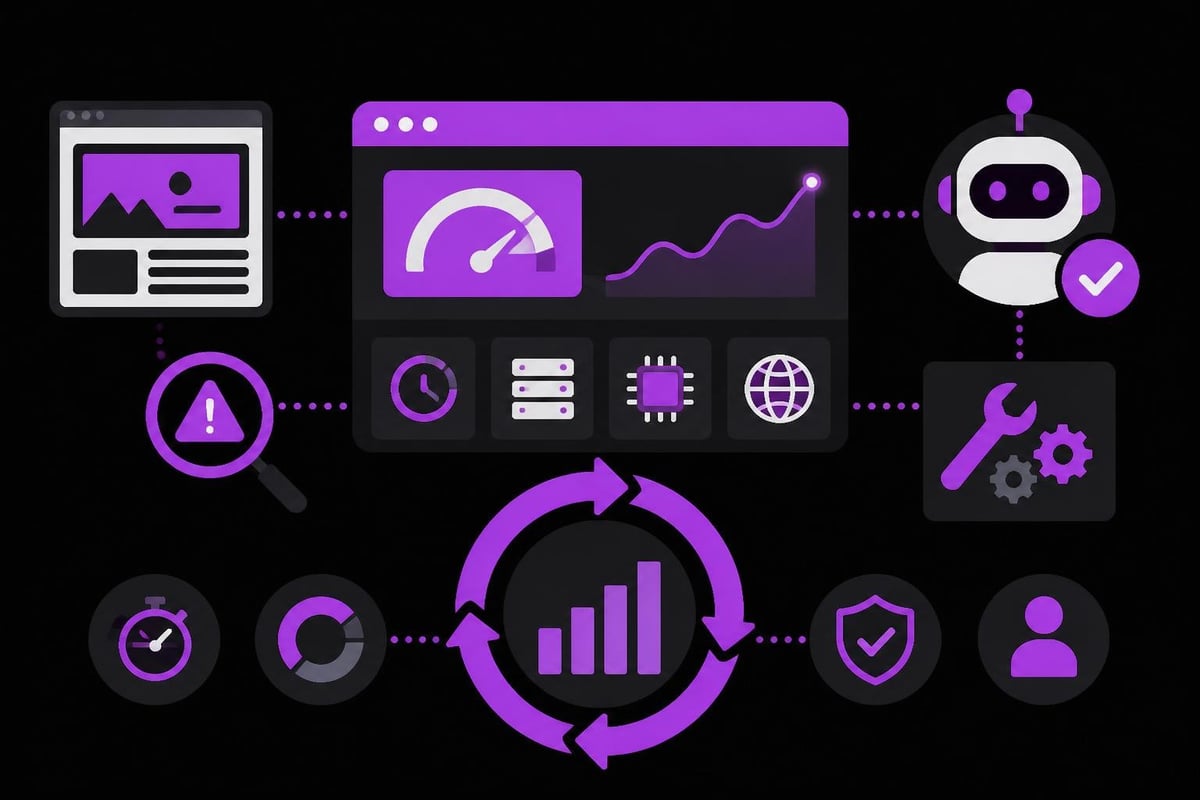
Automated Performance Tuning
Web site AI systems can continuously monitor and optimize performance across multiple dimensions:
| Performance Area | AI Contribution | Impact |
|---|---|---|
| Load Time | Asset optimization, lazy loading | 30-50% improvement |
| Server Response | Query optimization, caching strategies | 40-60% reduction |
| Mobile Performance | Adaptive resource delivery | 25-40% faster rendering |
| Core Web Vitals | Layout shift prevention, input responsiveness | Improved SEO rankings |
These optimizations happen automatically as web site AI systems learn from usage patterns and identify opportunities for improvement. For engineering teams building web design projects, this means performance improvements continue long after initial deployment.
Future Trajectories of Web Site AI
Looking ahead, web site AI will likely become even more deeply integrated into development workflows. Emerging trends suggest several significant developments on the horizon. AI systems will increasingly handle entire feature implementations from specification to deployment, though human oversight will remain essential for complex business logic and user experience decisions.
The boundary between development and design will continue to blur as AI systems become more sophisticated at translating conceptual requirements into functional implementations. Teams working on brand identity projects will find AI increasingly capable of maintaining consistency across digital touchpoints while adapting to context-specific requirements.
Preparing for AI-First Web Development
Organizations that want to maximize web site AI benefits should begin preparing now:
- Invest in AI literacy across technical and non-technical teams
- Establish governance frameworks that define appropriate AI use cases
- Build data infrastructure that supports AI training and improvement
- Develop quality assurance protocols specific to AI-generated output
- Create feedback loops that continuously improve AI performance
Companies providing comprehensive services that span design, development, and optimization are particularly well-positioned to integrate web site AI holistically across their offerings.
Integration with Existing Systems
One of the most challenging aspects of web site AI implementation involves integration with legacy systems and existing workflows. Many organizations have invested significantly in current platforms and cannot simply replace them with AI-native alternatives. Successful integration requires careful planning and phased implementation.
Migration Strategies and Hybrid Approaches
Teams managing complex ecosystems-such as those building payment rails or multi-component platforms-should consider these migration patterns:
- Parallel implementation: Running AI systems alongside existing tools to validate outputs
- Progressive enhancement: Adding AI capabilities to existing workflows incrementally
- Selective replacement: Identifying specific components where AI provides clear advantages
- Wrapper integration: Using AI to enhance existing systems without replacing core functionality
- Greenfield opportunities: Applying AI-first approaches to new projects while maintaining legacy systems
This measured approach reduces risk while allowing teams to build confidence in web site AI capabilities before committing to broader adoption.
Measuring ROI and Success Metrics
Quantifying the value of web site AI investments requires establishing clear metrics aligned with business objectives. Different stakeholders care about different outcomes, from reduced development time to improved user engagement. Comprehensive measurement frameworks should address multiple dimensions of value.
Development Efficiency Metrics:
- Time from concept to deployment
- Code review cycles required
- Bug density in AI-generated versus human-written code
- Developer satisfaction and productivity
Business Outcome Metrics:
- User engagement and conversion rates
- Support ticket reduction through improved UX
- Time-to-market for new features
- Cost per feature implemented
For organizations building growth marketing systems, tracking how web site AI contributes to user acquisition and retention provides essential feedback for optimization.
Web site AI represents a fundamental shift in how businesses approach digital development, offering unprecedented opportunities to accelerate delivery while maintaining quality. From automated code generation to sophisticated personalization, AI capabilities continue expanding the possibilities for what websites can achieve. Whether you're building payment systems, gaming platforms, or complex dashboards, integrating AI thoughtfully into your development process can dramatically improve outcomes. Absolute Foundry helps companies worldwide leverage these technologies effectively, providing end-to-end product engineering services that combine AI automation with expert human oversight to deliver production-ready solutions faster.