UX Design and Marketing: A Strategic Integration Guide
The relationship between user experience design and marketing has evolved dramatically over the past decade. Where these disciplines once operated in separate silos, today's most successful digital products integrate both perspectives from the earliest stages of development. For companies building complex technical products, from AI-powered dashboards to blockchain payment systems, understanding how ux design and marketing intersect isn't just beneficial-it's essential for competitive advantage. This integration creates products that not only function flawlessly but also resonate with target audiences and drive measurable business outcomes.
The Strategic Convergence of Two Disciplines
Modern product development requires a holistic approach where design and marketing inform each other continuously. UX design and marketing share fundamental principles rooted in psychology, user research, and creating value for customers. Both disciplines start with the same question: what do users actually need, and how can we deliver it effectively?
The convergence becomes particularly evident in product engineering contexts. When developing a smart contract platform or gaming ecosystem, design decisions directly impact marketing effectiveness. A confusing onboarding flow doesn't just frustrate users-it undermines every marketing dollar spent acquiring them. Conversely, marketing insights about user pain points should drive interface improvements and feature prioritization.
Research as the Common Foundation
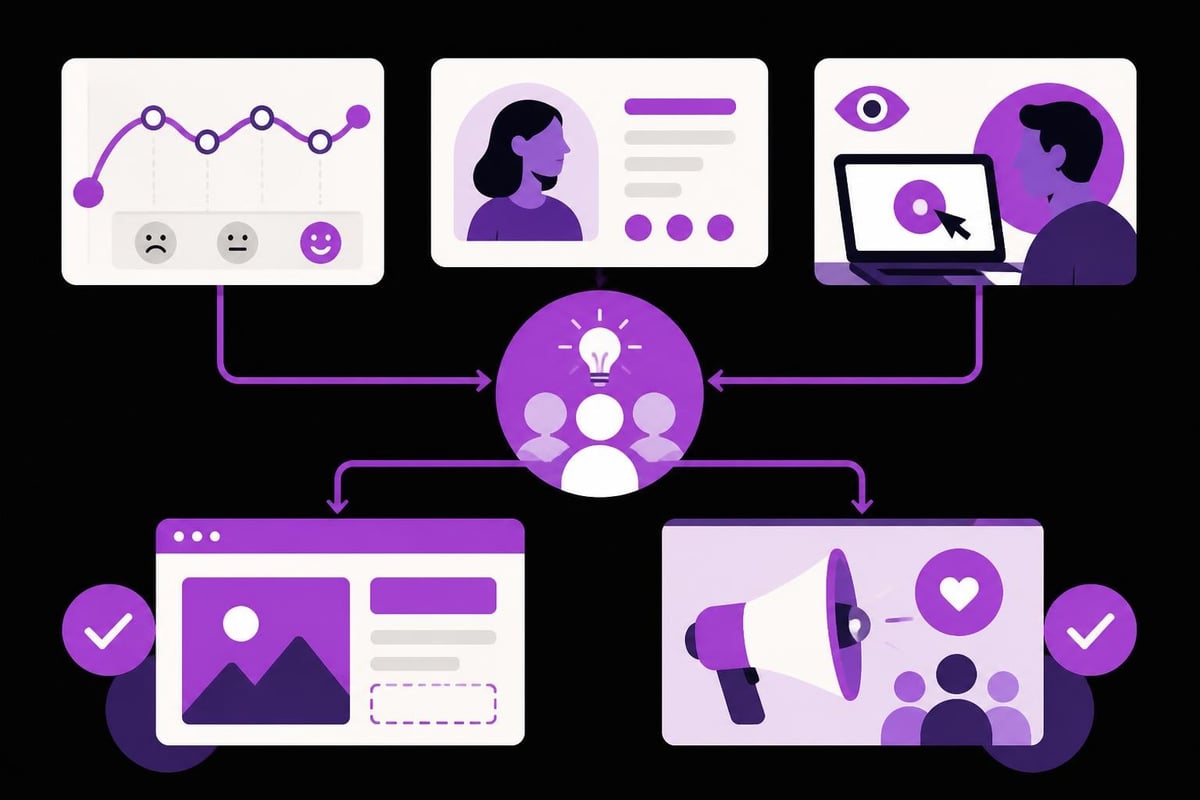
User research forms the bedrock of both disciplines. Marketing teams conduct audience analysis, competitive research, and message testing. UX designers perform usability studies, user interviews, and behavioral analysis. The overlap is substantial, yet many organizations duplicate these efforts rather than consolidating insights.
Shared research methodologies include:
- Customer journey mapping to identify friction points
- Persona development based on behavioral data
- A/B testing to validate assumptions
- Analytics interpretation for decision-making
- Qualitative interviews exploring motivations
When product design and marketing collaborate on research, the resulting insights become more actionable. Marketing understands which features to emphasize in campaigns. Design knows which user problems deserve immediate attention. This alignment accelerates development cycles and improves resource allocation.
Design Decisions That Drive Marketing Performance
Every interface element communicates a message to users. Typography choices, color psychology, spatial hierarchy, and interaction patterns all contribute to how users perceive a product's value proposition. These aren't merely aesthetic considerations-they're marketing tools that influence conversion rates and user retention.
Consider the first-time user experience for a complex technical product like a trading dashboard or blockchain payment rail. The initial screens must simultaneously educate users, build confidence, and guide them toward activation. This requires tight coordination between UX design and marketing to ensure messaging clarity and interface intuitiveness work in tandem.
| Design Element | Marketing Impact | Technical Consideration |
|---|---|---|
| Onboarding Flow | Reduces acquisition cost by improving activation rates | Must balance education with time-to-value |
| Information Architecture | Enables self-service, reducing support costs | Requires deep understanding of user mental models |
| Microcopy & CTAs | Directly affects conversion metrics | Should align with brand voice and user intent |
| Loading States | Manages expectations, reduces abandonment | Needs backend optimization for credibility |
Conversion-Focused Design Patterns
The application of UX design techniques to improve marketing campaigns has become increasingly sophisticated. Progressive disclosure patterns prevent overwhelming users while maintaining engagement. Strategic placement of social proof elements builds trust at decision points. Friction reduction in forms and checkout processes directly impacts bottom-line metrics.
For technical products, conversion optimization extends beyond traditional e-commerce tactics. When users interact with complex systems-whether AI automation tools, smart contract interfaces, or analytics dashboards-the design must reduce cognitive load while maintaining power and flexibility. This balance directly affects how marketing positions the product: as accessible to non-technical users or exclusively for specialists.
Marketing Insights That Inform Design Strategy
Marketing teams gather invaluable data about what messaging resonates with different audience segments. These insights should directly influence design priorities. If marketing discovers that a particular use case drives most qualified leads, the interface should make that workflow prominent and optimized.
Campaign performance data reveals which features attract attention and which ones confuse prospects. Low engagement with certain product capabilities might indicate poor discoverability in the interface rather than lack of interest. High bounce rates on specific pages often signal UX problems that no amount of marketing spend can overcome.
Building for Different User Segments
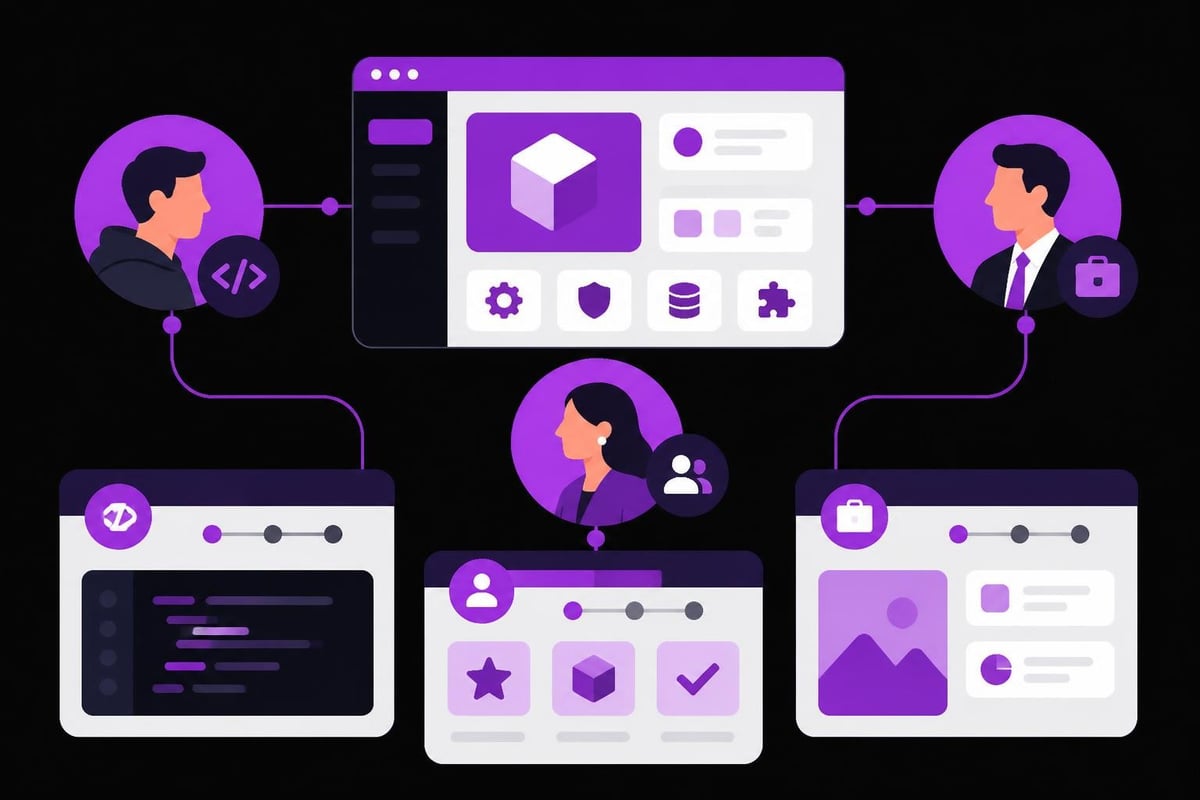
Marketing typically identifies multiple personas within a target market. A payment infrastructure product might serve fintech startups, enterprise finance teams, and independent developers-each with different needs, technical capabilities, and decision criteria. Design systems should accommodate these variations without fragmenting the product experience.
Segment-specific design considerations:
- Technical proficiency levels - Determine interface complexity and documentation depth
- Use case priorities - Influence feature hierarchy and default configurations
- Decision-making authority - Affect onboarding flows and permission structures
- Integration requirements - Shape API documentation and developer experience
- Budget constraints - Impact pricing page design and plan comparison tools
This segmentation approach ensures that web design efforts address real market needs rather than theoretical user requirements. When marketing and design collaborate on persona development, both disciplines benefit from more nuanced user understanding.
The Role of UX in Digital Marketing Channels
Every marketing channel creates a user experience, whether intentional or not. Email campaigns, landing pages, social media content, and advertising all contribute to how users perceive a brand before they ever interact with the core product. Enhancing digital marketing through UX design ensures consistency across these touchpoints.
Landing page optimization represents a clear intersection point. Marketing drives traffic through campaigns and content, while design determines what happens when users arrive. A compelling value proposition means nothing if the page loads slowly, displays poorly on mobile devices, or presents a confusing call-to-action hierarchy.
For companies offering growth marketing services, understanding this relationship enables more effective campaign design. Rather than treating landing pages as isolated marketing assets, they become integrated components of the overall product experience. Design decisions about form fields, navigation options, and content structure directly affect marketing metrics like cost-per-acquisition and conversion rates.
Content Experience as Product Experience
SEO content strategy exemplifies how ux design and marketing must collaborate. Search-optimized content attracts users, but the reading experience determines whether they engage, share, or convert. Typography, spacing, multimedia integration, and internal navigation all influence content performance beyond keyword optimization.
Documentation, tutorials, and knowledge bases occupy an interesting middle ground between marketing and product. These resources serve both acquisition (helping prospects understand capabilities) and retention (enabling existing users to extract value). Their design requires input from technical writers, product teams, and marketing strategists.
Measuring the Combined Impact
Traditional marketing metrics and UX metrics often remain siloed, creating an incomplete picture of product performance. Marketing focuses on acquisition costs, conversion rates, and channel attribution. UX teams track task completion rates, error frequencies, and satisfaction scores. Integrating these measurement frameworks reveals deeper insights.
| Combined Metric | Marketing Component | UX Component | Strategic Value |
|---|---|---|---|
| Activation Rate | Source quality, message-market fit | Onboarding clarity, time-to-value | Reveals efficiency of entire acquisition funnel |
| Customer Lifetime Value | Pricing strategy, upsell effectiveness | Product stickiness, feature adoption | Indicates product-market fit strength |
| Referral Rate | Incentive design, sharing mechanisms | User satisfaction, advocacy triggers | Demonstrates combined brand and product quality |
| Support Ticket Volume | Educational content effectiveness | Interface intuitiveness, error prevention | Exposes hidden costs in user experience |
This holistic measurement approach enables better resource allocation. When a metric underperforms, teams can determine whether the root cause lies in marketing execution, product design, or the handoff between them. For instance, high acquisition costs might stem from targeting issues, poor landing page conversion, or product complexity that requires extensive pre-sale education.
Attribution Across the User Journey
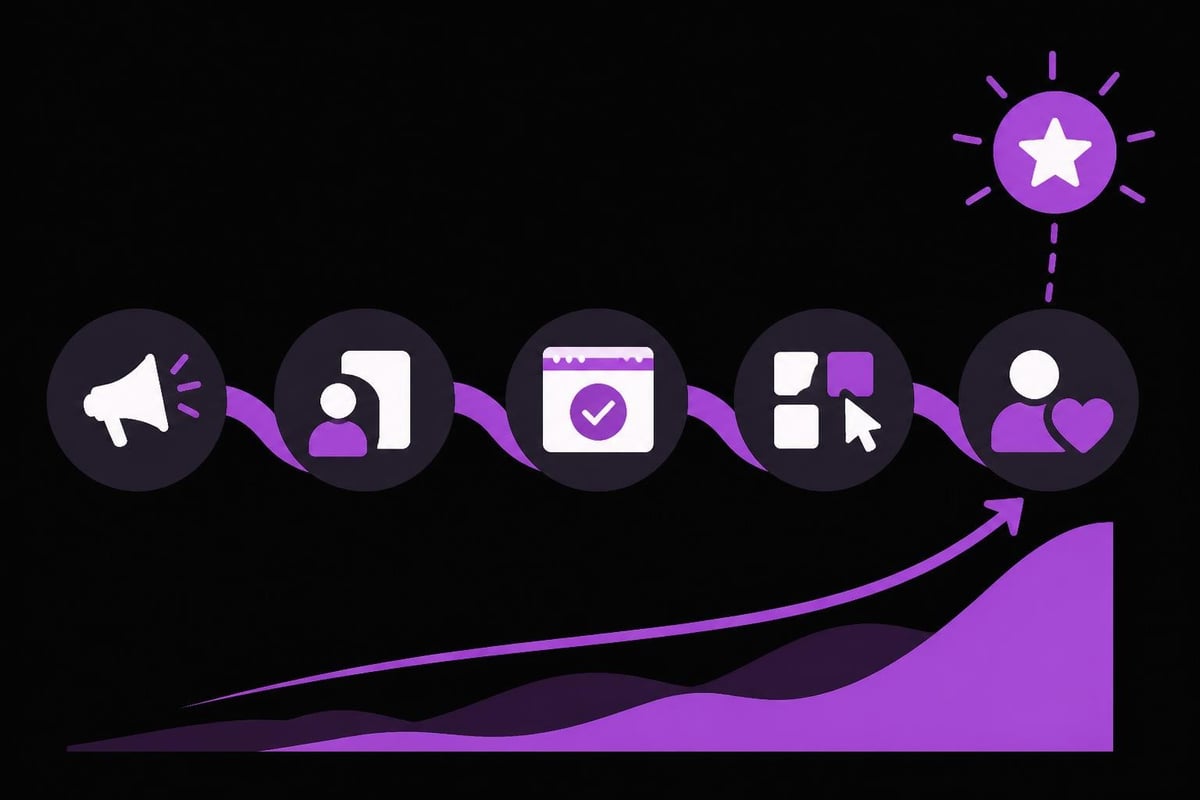
Modern users interact with products through multiple touchpoints before making decisions. They might discover a product through content marketing, explore features through interactive demos, seek peer validation on social platforms, and finally convert after a sales consultation. Understanding how UX design turns visitors into customers requires tracking this complex journey.
Attribution modeling helps marketing teams understand which touchpoints contribute most to conversions. When combined with behavioral analytics from the product itself, patterns emerge about which user paths lead to successful outcomes. This intelligence should inform both marketing strategy and interface design priorities.
Organizational Structures That Enable Integration
The strategic alignment of ux design and marketing requires more than good intentions-it demands organizational structures that facilitate collaboration. Traditional departmental boundaries often create communication gaps and conflicting priorities. Product engineering teams need frameworks that bring these disciplines together effectively.
Some organizations embed designers within marketing teams to ensure creative assets maintain UX principles. Others establish cross-functional product squads where marketing, design, and engineering collaborate from project inception. The optimal structure depends on company size, product complexity, and market dynamics.
Collaboration mechanisms that work:
- Weekly cross-functional standups sharing insights and priorities
- Shared analytics dashboards accessible to all stakeholders
- Joint customer research sessions with combined objectives
- Integrated project management tools showing dependencies
- Regular design reviews including marketing perspectives
For companies operating as an on-demand tech department, like those providing AI automation or web development services, this collaborative approach becomes even more critical. Client products often fail not from technical shortcomings but from misalignment between what marketing promises and what design delivers.
Emerging Trends Shaping the Future
The integration of artificial intelligence into both marketing and design practices represents a significant frontier. AI-powered personalization enables interfaces that adapt to individual user preferences while marketing campaigns target increasingly specific microsegments. This creates both opportunities and complexities for maintaining consistent brand experiences.
The rise of no-code and low-code platforms democratizes product creation but raises questions about maintaining design quality and marketing effectiveness. When non-designers build interfaces and non-marketers launch campaigns, the principles of ux design and marketing become even more important as foundational knowledge.
Voice interfaces, augmented reality, and other emerging interaction paradigms challenge traditional assumptions about how users discover, evaluate, and adopt products. Marketing must evolve beyond visual channels while design adapts to spatial computing and conversational interfaces. Companies that master these transitions early gain substantial competitive advantages.
AI-Driven Personalization Challenges
Personalized experiences offer tremendous value but introduce complexity in maintaining brand consistency and avoiding fragmented user experiences. Marketing automation tools might serve different messages to different segments while the product interface presents a unified experience-or vice versa. Coordinating these personalization strategies requires careful planning and continuous optimization.
The integration of AI into product experiences also raises questions about transparency and user control. Design must balance the efficiency of automated personalization against user preferences for explicit control. Marketing communications need to clearly explain how AI enhances the experience without creating privacy concerns or trust issues.
Practical Implementation Framework
Organizations ready to integrate ux design and marketing more effectively need concrete frameworks for implementation. Starting with shared goals ensures both teams work toward common outcomes rather than optimizing for narrow departmental metrics. Product adoption, user satisfaction, and revenue growth serve as unifying objectives that transcend functional boundaries.
Establish regular touchpoints throughout the product development cycle where design and marketing sync perspectives. During discovery phases, marketing shares market research and competitive intelligence while design presents user research findings. During development sprints, marketing previews upcoming campaigns while design demonstrates new interface patterns. At launch, both teams coordinate messaging and monitor early adoption signals together.
Implementation roadmap:
- Audit current state - Document existing collaboration points and gaps
- Define shared metrics - Establish KPIs both teams influence and benefit from improving
- Create communication rituals - Schedule recurring meetings with clear agendas and outcomes
- Build shared tools - Implement platforms for collaborative research, design, and analytics
- Pilot integrated projects - Start with smaller initiatives to prove value before scaling
- Measure and iterate - Track collaboration effectiveness and refine processes continuously
This systematic approach helps organizations move beyond ad hoc coordination toward truly integrated product development. The benefits compound over time as teams develop shared vocabulary, mutual understanding, and collaborative workflows that become organizational capabilities.
The strategic integration of ux design and marketing creates products that simultaneously delight users and achieve business objectives. By breaking down silos between these disciplines, organizations build more coherent experiences that reduce acquisition costs while improving retention and satisfaction. Whether you're developing smart contracts, AI-powered tools, or complex dashboards, this integrated approach accelerates time-to-market and increases product-market fit. Absolute Foundry helps clients worldwide bridge the gap between exceptional design and effective marketing, delivering end-to-end product engineering that considers both user experience and market positioning from day one.