Marketing Web Development: Build Sites That Convert
The digital landscape has evolved beyond simple websites that merely present information. Modern businesses need platforms that function as sophisticated marketing engines, driving conversions, capturing leads, and delivering measurable ROI. Marketing web development represents the convergence of technical expertise and strategic marketing objectives, creating websites that don't just look good but actively contribute to business growth. This approach demands more than traditional web development skills; it requires understanding user psychology, conversion optimization, analytics implementation, and the technical architecture needed to support aggressive marketing campaigns.
The Foundation of Marketing-Driven Development
Marketing web development differs fundamentally from traditional development approaches. While conventional projects focus primarily on functionality and aesthetics, marketing-centric development prioritizes business outcomes from the first line of code.
Core Principles That Drive Results
The foundation begins with understanding that every technical decision impacts marketing performance. Page load speed affects bounce rates and conversion rates. URL structure influences SEO rankings. Database architecture determines how effectively you can segment and personalize user experiences.
Technical elements that directly impact marketing outcomes include:
- Server response times and hosting infrastructure
- Mobile responsiveness and cross-device compatibility
- Schema markup and structured data implementation
- API integrations for marketing automation platforms
- Analytics tracking architecture and event configuration
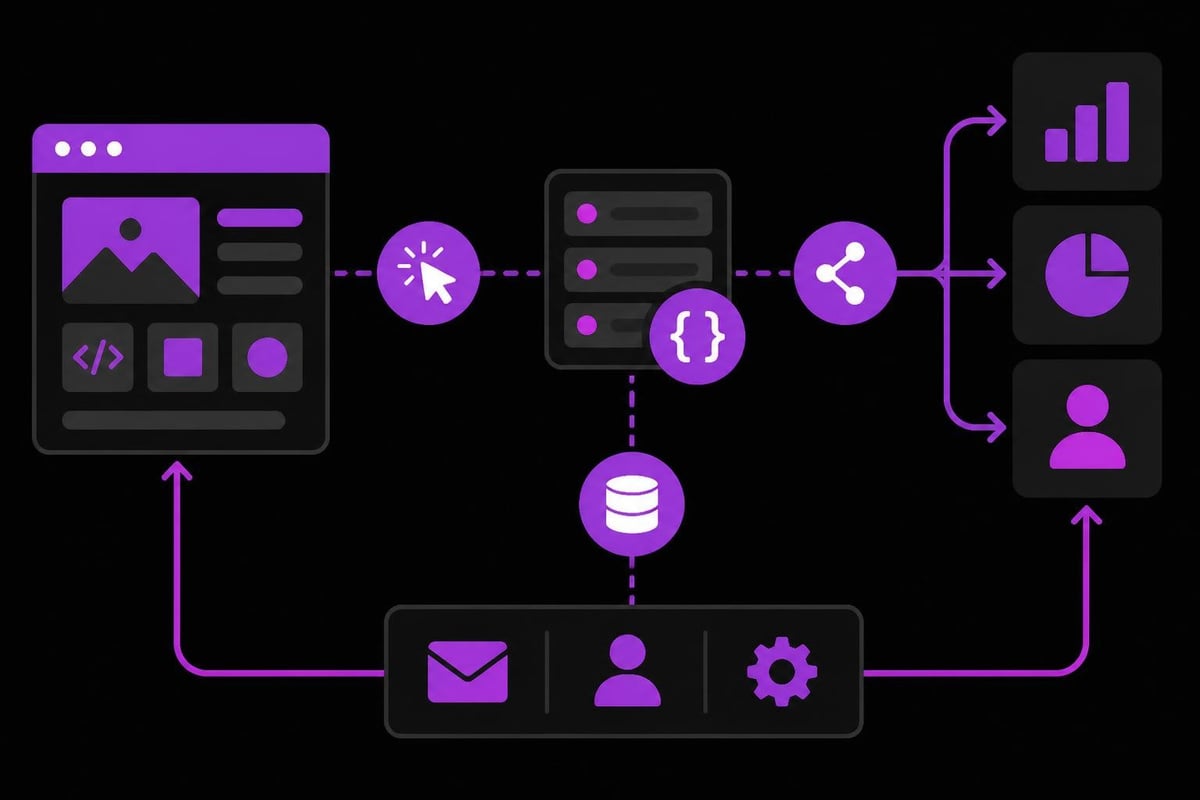
When building web development projects with marketing objectives in mind, developers must consider the entire customer journey. This means implementing tracking pixels, conversion events, and attribution models during the initial build phase rather than retrofitting them later.
Building for Conversion Optimization
Every element on a marketing website should serve a purpose in the conversion funnel. Forms need proper validation and error handling to reduce abandonment. Call-to-action buttons require proper contrast ratios and placement based on heat map data. Navigation structures must guide users toward conversion points without creating friction.
The technical implementation of A/B testing capabilities requires careful planning. Developers need to build flexible templating systems that allow marketers to test different headlines, layouts, and content variations without requiring code changes for every experiment.
| Development Approach | Traditional Web Dev | Marketing Web Development |
|---|---|---|
| Primary Focus | Functionality & aesthetics | Conversion & business metrics |
| Success Metrics | Bug-free deployment | ROI & conversion rate |
| Performance Priority | General speed | Load time for key conversion pages |
| Analytics Integration | Basic Google Analytics | Comprehensive event tracking & attribution |
| Testing Framework | QA testing only | A/B testing infrastructure built-in |
Technical Architecture for Marketing Success
The architecture decisions made during initial development significantly impact a website's marketing effectiveness. Choosing between monolithic and microservices architectures, selecting content management systems, and implementing caching strategies all influence how effectively marketers can execute campaigns.
CMS Selection and Marketing Flexibility
Your content management system choice determines marketing team autonomy. Headless CMS platforms provide maximum flexibility for omnichannel marketing but require more development resources. Traditional CMS platforms offer easier content management but may limit technical customization.
For companies building complex products like payment rails or dashboards, the CMS must integrate seamlessly with existing systems. Experts emphasize selecting website builders and platforms that align with both technical requirements and marketing goals.
Modern marketing web development often involves API-first architectures that allow content to flow between multiple touchpoints. This approach enables marketers to maintain consistent messaging across web platforms, mobile apps, and even IoT devices.
Essential architectural considerations include:
- Scalability for traffic spikes from campaigns
- Security measures for handling customer data
- Integration capabilities with marketing tools
- Content versioning and rollback functionality
- Multi-environment setup for testing
Performance Optimization as Marketing Strategy
Page speed directly correlates with conversion rates. According to industry research, a one-second delay in page load time can reduce conversions by seven percent. For e-commerce platforms and SaaS products, this translates to significant revenue loss.
Marketing web development requires aggressive performance optimization. This includes implementing lazy loading for images, minimizing JavaScript bundle sizes, optimizing critical rendering paths, and leveraging content delivery networks for global audiences.
Web development best practices for digital marketers emphasize mobile-first design and performance as non-negotiable requirements. With mobile traffic dominating most industries, responsive design isn't optional; it's essential for marketing success.
SEO and Technical Marketing Integration
Search engine optimization represents a critical component of marketing web development. Unlike traditional SEO implementations that happen after launch, marketing-driven development embeds SEO considerations throughout the technical stack.
Building SEO into the Code
Proper heading hierarchy, semantic HTML, and accessible markup aren't just development best practices; they're marketing necessities. Search engines reward well-structured code with better rankings. Accessibility features that help screen readers also help search engine crawlers understand content.
Implementing structured data requires developer expertise. Schema markup for products, articles, events, and local businesses helps search engines display rich results, increasing click-through rates from search results pages.
URL architecture demands careful planning. Clean, descriptive URLs that include target keywords perform better in search results than auto-generated strings of numbers and parameters. This requires thoughtful routing implementation during initial development.

Analytics and Attribution Infrastructure
Marketing web development demands comprehensive analytics implementation. This goes beyond basic page view tracking to include event tracking, conversion funnel analysis, and multi-touch attribution.
Critical tracking implementations include:
- Form submissions and lead capture events
- Button clicks and user interaction tracking
- Scroll depth and engagement metrics
- Video play events and content consumption
- E-commerce transactions and revenue attribution
For businesses offering services like growth marketing, proper analytics infrastructure enables data-driven optimization. Without accurate tracking, marketing teams operate blind, unable to determine which efforts drive results.
Custom event tracking requires collaboration between developers and marketers. Developers must implement tracking code correctly, while marketers define which events matter for business objectives. This partnership approach characterizes effective marketing web development.
Conversion Rate Optimization Through Development
The technical implementation of conversion optimization features separates marketing websites from standard corporate sites. Features like exit-intent popups, dynamic content personalization, and smart forms all require careful development.
Dynamic Content and Personalization
Personalized experiences convert better than generic ones. Implementing personalization requires building systems that track user behavior, segment audiences, and deliver customized content based on various triggers.
This might involve showing different hero images to visitors from different geographic locations, displaying case studies relevant to a visitor's industry, or highlighting features that match a user's previous interactions.
For companies building complex products like smart contracts or payment systems, personalization helps address different audience segments. Technical decision-makers need different information than business stakeholders.
| Personalization Type | Technical Requirements | Marketing Impact |
|---|---|---|
| Geographic | IP detection, CDN integration | Localized messaging, increased relevance |
| Behavioral | User tracking, session management | Contextual offers, higher conversion |
| Demographic | Data capture forms, CRM integration | Targeted content, improved engagement |
| Lifecycle Stage | Marketing automation sync | Nurture sequences, sales alignment |
Form Optimization and Lead Capture
Forms represent critical conversion points, yet many websites implement them poorly. Marketing web development requires attention to form validation, error messaging, multi-step implementation, and integration with marketing automation platforms.
Progressive profiling allows you to gather information gradually rather than overwhelming users with lengthy forms. This requires backend logic to track what information you've already collected and dynamically adjust form fields.
Smart forms that pre-fill information, validate in real-time, and provide clear error messages convert significantly better than basic implementations. The development effort required for these features pays dividends in improved conversion rates.
Mobile-First Development for Marketing
Mobile traffic surpasses desktop across most industries. Marketing web development must prioritize mobile experiences, not as afterthoughts but as primary design targets.
Responsive Design Beyond Aesthetics
Responsive design encompasses more than visual adaptation. Mobile users have different contexts, behaviors, and patience levels than desktop users. Navigation must work intuitively with touch interfaces. Forms need appropriate input types for mobile keyboards. Click targets must be sized for fingers, not mouse cursors.
Understanding which website elements marketers can control helps teams divide responsibilities effectively. Some elements require developer intervention, while marketers can manage others independently with proper tooling.
Progressive web app capabilities enable websites to function like native apps, with offline functionality, push notifications, and home screen installation. For businesses targeting mobile-first audiences, these features significantly enhance user experience and engagement.
Mobile-specific development considerations:
- Touch-friendly navigation and interactions
- Optimized images for varying connection speeds
- Streamlined checkout processes for mobile commerce
- Click-to-call functionality and location services
- Accelerated Mobile Pages (AMP) implementation
Testing Across Devices and Contexts
Marketing web development requires extensive cross-device testing. Real device testing reveals issues that emulators miss. Different browsers render code differently. Various screen sizes expose layout problems.
Automated testing frameworks help catch regressions, but manual testing across representative devices remains essential. This testing burden increases development timelines but ensures marketing campaigns reach audiences effectively across all platforms.
Integration Ecosystem for Marketing Tools
Modern marketing depends on interconnected tools. Email platforms, CRM systems, marketing automation, analytics tools, and advertising platforms all need to exchange data with your website.
API Development and Third-Party Integrations
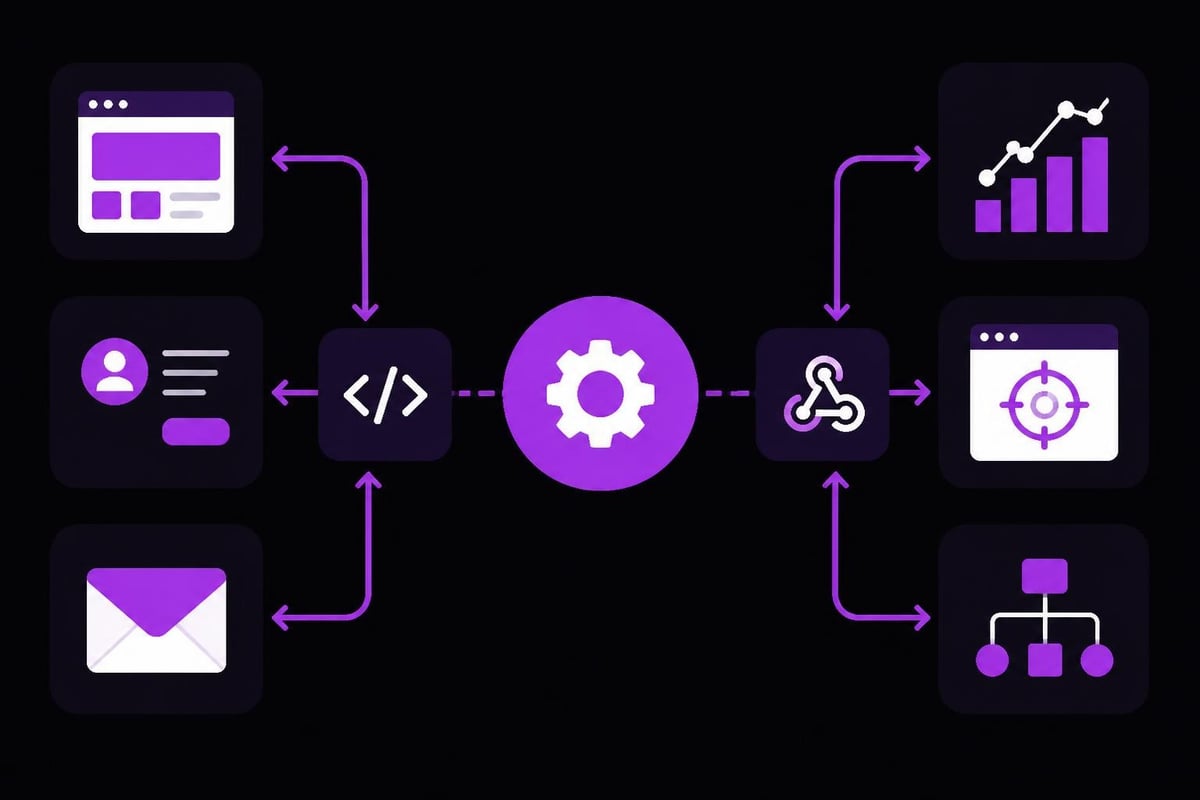
Marketing web development often involves building custom APIs or integrating with third-party services. Capturing leads requires CRM integration. Email marketing demands platform synchronization. Advertising campaigns need pixel implementation and conversion tracking.
For businesses building sophisticated products like AI automation tools or complex dashboards, integration complexity increases. Each integration point represents potential failure modes that developers must handle gracefully.
Webhook implementations allow real-time data flow between systems. When a user completes a form, webhooks can trigger immediate responses in marketing automation platforms, CRM systems, and notification tools simultaneously.
Marketing Automation Platform Integration
Platforms like HubSpot, Marketo, and Pardot require careful implementation. Developers must install tracking codes, configure form submissions, and ensure data synchronization works reliably.
Lead scoring models depend on accurate event tracking. When developers implement tracking incorrectly, marketing automation fails to segment audiences properly, resulting in irrelevant messaging and poor campaign performance.
Security Considerations for Marketing Sites
Marketing websites handle sensitive customer data through form submissions, account registrations, and transaction processing. Security isn't optional; it's fundamental to maintaining customer trust and legal compliance.
Data Protection and Compliance
GDPR, CCPA, and other privacy regulations require specific technical implementations. Cookie consent management, data deletion workflows, and privacy policy enforcement all demand developer attention.
Form submissions need proper encryption. Customer data requires secure storage. Payment processing demands PCI compliance. These security requirements add complexity but protect both businesses and customers.
For companies building payment rails or financial products, security requirements multiply. Financial applications face stricter regulations and higher stakes for security failures.
Essential security implementations include:
- SSL/TLS certificates for encrypted connections
- Input validation and sanitization against injection attacks
- CSRF protection for forms and sensitive actions
- Regular security audits and penetration testing
- Secure session management and authentication
Performance vs. Security Balance
Security measures sometimes conflict with performance optimization. Adding security layers can slow page loads. Encryption requires processing power. Finding the right balance between security and performance requires careful architectural decisions.
Content security policies, secure headers, and other protective measures need proper implementation without breaking functionality. This requires testing and validation to ensure security features work correctly across different browsers and devices.
Measuring Marketing Web Development Success
Unlike traditional development projects measured by feature completion, marketing web development success ties directly to business metrics. Tracking the right KPIs determines whether development efforts deliver value.
Key Performance Indicators
Conversion rate stands as the primary metric for marketing websites. Whether converting visitors to leads, trials, or purchases, this metric directly reflects development effectiveness.
Other critical metrics include bounce rate, time on site, pages per session, and goal completion rates. These engagement metrics indicate whether the user experience successfully guides visitors toward conversion points.
For businesses focused on SEO and content strategies, organic traffic growth and keyword rankings matter significantly. Technical SEO implementations during development directly impact these metrics.
| Metric Category | Specific Metrics | Development Impact |
|---|---|---|
| Conversion | Form submissions, sign-ups, purchases | Form design, CTAs, checkout flow |
| Engagement | Time on site, bounce rate, pages/session | Content architecture, navigation, internal linking |
| Performance | Page load time, Time to Interactive | Code optimization, caching, CDN implementation |
| SEO | Organic traffic, keyword rankings, backlinks | Technical SEO, structured data, site architecture |
Continuous Optimization Through Data
Marketing web development doesn't end at launch. Continuous optimization based on analytics data drives ongoing improvement. This requires building systems that facilitate rapid iteration and testing.
A/B testing frameworks allow marketers to test hypotheses without waiting for development cycles. Proper implementation during initial development enables this marketing independence while maintaining code quality.
Heat mapping and session recording tools reveal how users actually interact with websites, often contradicting assumptions. These insights inform development priorities for optimization efforts.
Building for Scale and Growth
Marketing websites must scale as businesses grow. Traffic spikes from successful campaigns test infrastructure. Expanding product lines require flexible content management. International expansion demands multi-language capabilities.
Infrastructure Planning for Marketing Success
Cloud hosting platforms provide scalability, but configuration matters. Auto-scaling groups handle traffic surges. Content delivery networks reduce load on origin servers. Database optimization ensures queries remain fast under load.
Caching strategies significantly impact both performance and scalability. Page caching, object caching, and database query caching all reduce server load while improving response times.
For companies building products like trading dashboards or real-time applications, scalability requirements intensify. Real-time data processing demands different architectural approaches than static content websites.
Content Management at Scale
As content libraries grow, management complexity increases. Taxonomy planning, content relationships, and search functionality all require thoughtful implementation during initial development.
Media management becomes critical for content-heavy sites. Automatic image optimization, responsive image implementation, and video hosting solutions all impact both performance and content team efficiency.
Marketing agencies implementing best practices emphasize strategic content planning and scalable management systems. These considerations affect both immediate usability and long-term maintainability.
Collaboration Between Developers and Marketers
Successful marketing web development requires close collaboration between technical and marketing teams. Developers need to understand marketing objectives. Marketers need to appreciate technical constraints.
Establishing Effective Workflows
Clear communication channels prevent misunderstandings. Regular sync meetings ensure alignment. Shared documentation maintains consistent understanding of requirements and priorities.
Project management tools that both teams use facilitate transparency. Marketers can track development progress. Developers can see upcoming campaign requirements and plan accordingly.
For businesses acting as on-demand tech departments, this collaboration extends to client relationships. Understanding client marketing objectives while managing technical implementation requires sophisticated project management.
Successful collaboration practices include:
- Joint planning sessions for major campaigns
- Shared access to analytics and performance data
- Clear documentation of technical capabilities and limitations
- Regular training sessions to cross-educate teams
- Defined ownership boundaries with overlap areas identified
Empowering Marketing Independence
While collaboration matters, marketers also need appropriate independence. Building systems that allow marketers to update content, create landing pages, and modify elements without developer intervention increases agility.
Component-based systems or page builders provide this flexibility within controlled parameters. Marketers can assemble pages from pre-built components without breaking layouts or functionality.
However, some elements require developer expertise. Understanding what marketers can control versus what needs IT intervention prevents frustration and maintains site integrity.
Future-Proofing Marketing Websites
Technology evolves rapidly. Marketing web development must anticipate future needs while delivering immediate value. This balance requires strategic architectural decisions and modular implementation approaches.
Emerging Technologies and Marketing Integration
Artificial intelligence increasingly powers marketing personalization. Chatbots handle customer service. Predictive analytics identify high-value prospects. Voice search optimization affects content strategy.
Building flexible architectures allows integrating these technologies as they mature. API-first approaches enable adding new services without rebuilding entire systems.
For companies specializing in AI automation, staying ahead of technology curves represents competitive advantage. Early adoption of emerging technologies can differentiate marketing websites from competitors.
Maintaining Code Quality for Longevity
Technical debt accumulates when short-term solutions compromise long-term maintainability. Marketing pressure for rapid deployment can encourage shortcuts that create future problems.
Maintaining code quality through proper documentation, testing, and refactoring ensures websites remain maintainable as they evolve. This discipline pays dividends when implementing future enhancements or troubleshooting issues.
Research into HTML-first approaches suggests simpler architectures often outperform complex frameworks in maintainability and performance. Sometimes the best technical solution is the simplest one that meets requirements.
Marketing Web Development ROI
Ultimately, marketing web development investments must deliver measurable returns. Tracking ROI requires connecting development costs to business outcomes through analytics and attribution.
Calculating Development Impact on Revenue
Direct attribution links specific development features to revenue generation. Enhanced checkout flows reduce cart abandonment. Improved site speed increases conversion rates. Better SEO drives organic traffic.
ROI calculation framework:
- Identify baseline metrics before development
- Implement tracking for all relevant events
- Measure metric changes post-deployment
- Calculate revenue impact from improved metrics
- Compare against development investment costs
For instance, if site speed optimization costs $15,000 but increases conversion rate from 2% to 2.5% on a site with $1M monthly revenue, the additional $250,000 annual revenue justifies the investment many times over.
Long-Term Value of Quality Development
Quality marketing web development provides compounding returns. Better architecture reduces maintenance costs. Faster sites improve user experience and SEO over time. Flexible systems enable rapid campaign deployment without additional development.
Marketing playbooks for development agencies emphasize showcasing measurable performance improvements. Data-driven case studies demonstrate value far better than feature lists.
Marketing web development represents the intersection of technical excellence and strategic business thinking, transforming websites from digital brochures into revenue-generating platforms. Success requires collaboration between developers and marketers, commitment to performance and user experience, and focus on measurable business outcomes rather than just technical achievements. Whether you're building payment systems, gaming platforms, or sophisticated dashboards, Absolute Foundry serves as your on-demand tech department, delivering end-to-end product engineering that aligns technical implementation with your marketing and business growth objectives.