Engineering Formulas: Essential Guide for Product Teams
Engineering formulas serve as the mathematical backbone of modern product development, translating complex physical principles into actionable calculations that guide everything from structural integrity to electrical efficiency. Whether you're building payment rails, developing smart contracts, or designing AI-powered dashboards, understanding the fundamental engineering formulas that govern your systems enables better decision-making, optimization, and risk mitigation. For product teams in 2026, these mathematical relationships aren't just theoretical concepts but practical tools that directly impact performance, scalability, and user experience.
Foundation of Engineering Formulas in Product Development
Engineering formulas represent quantifiable relationships between variables that describe how systems behave under specific conditions. These mathematical expressions enable engineers to predict outcomes, validate designs, and troubleshoot problems before they manifest in production environments.
The power of engineering formulas lies in their universal applicability. A formula describing electrical resistance applies equally whether you're calculating power requirements for a data center or optimizing energy consumption in a mobile application. Similarly, thermodynamic principles that govern heat dissipation inform decisions about server infrastructure and hardware selection.
Mathematical Precision in Digital Systems
Modern product engineering relies heavily on formulas borrowed from traditional disciplines. When building payment rails or financial infrastructure, engineers apply statistical formulas to calculate transaction throughput, latency distributions, and system reliability metrics.
Key application areas include:
- Transaction processing: Queuing theory formulas predict wait times and system capacity
- Data encryption: Number theory formulas ensure cryptographic security
- Network optimization: Information theory formulas maximize bandwidth efficiency
- Resource allocation: Linear programming formulas optimize computational resources
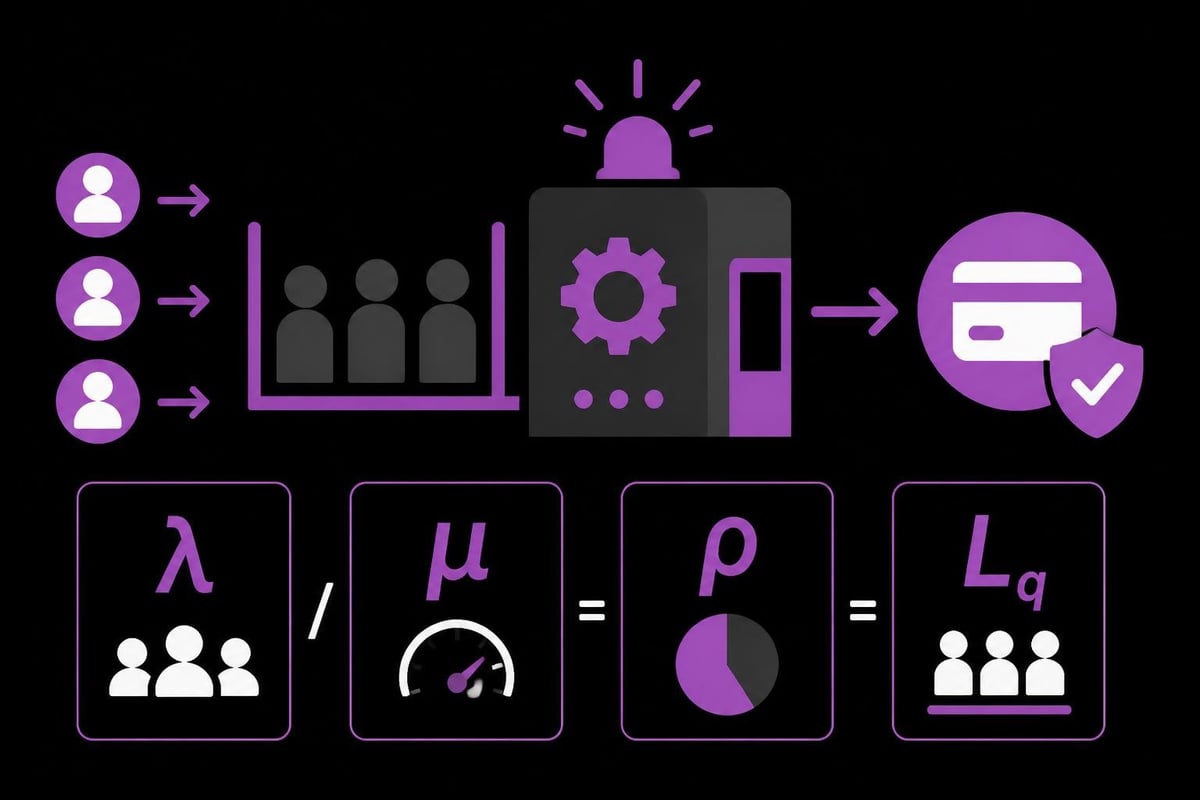
Performance engineering particularly depends on formulas that relate input variables to output metrics. Little's Law, for instance, expresses the relationship between throughput, response time, and work-in-progress: L = λW, where L represents the average number of items in the system, λ denotes arrival rate, and W indicates average time in the system.
Categories of Essential Engineering Formulas
Engineering formulas span multiple disciplines, each contributing unique perspectives to product development challenges. Understanding which category applies to your specific problem accelerates solution development and improves accuracy.
Mechanical and Structural Formulas
Even in purely digital products, mechanical engineering formulas prove valuable when considering physical infrastructure. Stress calculations determine rack mounting specifications, while vibration analysis informs placement of sensitive equipment.
| Formula Type | Application | Key Variables |
|---|---|---|
| Stress-Strain | Hardware design | Force, area, modulus |
| Beam deflection | Equipment mounting | Load, length, moment of inertia |
| Thermal expansion | Cooling systems | Temperature, coefficient, length |
| Fatigue analysis | Component lifespan | Cycles, stress amplitude |
The Handbook of Industrial Engineering Equations, Formulas, and Calculations provides comprehensive coverage of these mechanical relationships and their industrial applications.
Electrical Engineering Formulas
Electrical engineering formulas underpin virtually every aspect of modern product development. From basic Ohm's Law (V = IR) to complex impedance calculations, these relationships govern circuit design, power distribution, and signal processing.
When developing web applications or cloud infrastructure, electrical engineering formulas inform decisions about power consumption, cooling requirements, and energy efficiency. The power equation P = VI becomes critical when calculating operational costs for server farms or optimizing battery life in mobile applications.
Capacitance and inductance formulas guide high-frequency circuit design, essential for modern communication systems and data transfer protocols. Signal integrity calculations prevent data corruption in high-speed interfaces, while filter design formulas ensure clean power delivery to sensitive components.
Thermodynamic and Fluid Mechanics Formulas
Thermal management represents a critical concern in modern computing systems. Heat generation follows predictable patterns described by thermodynamic formulas, enabling engineers to design adequate cooling solutions.
The heat transfer equation Q = mcΔT quantifies energy required to change temperature, while convection formulas calculate heat dissipation rates from surfaces. These calculations directly impact decisions about fan specifications, heat sink design, and ambient temperature requirements.
For data centers and computing infrastructure, the coefficient of performance (COP) formula evaluates cooling system efficiency: COP = Q_c / W, where Q_c represents cooling capacity and W denotes work input. Maximizing COP reduces operational expenses and environmental impact.
Engineering Formulas in Software Architecture
Software systems, though intangible, obey mathematical laws expressed through engineering formulas. Performance characteristics, scalability limits, and reliability metrics all derive from quantifiable relationships.
Computational Complexity and Performance
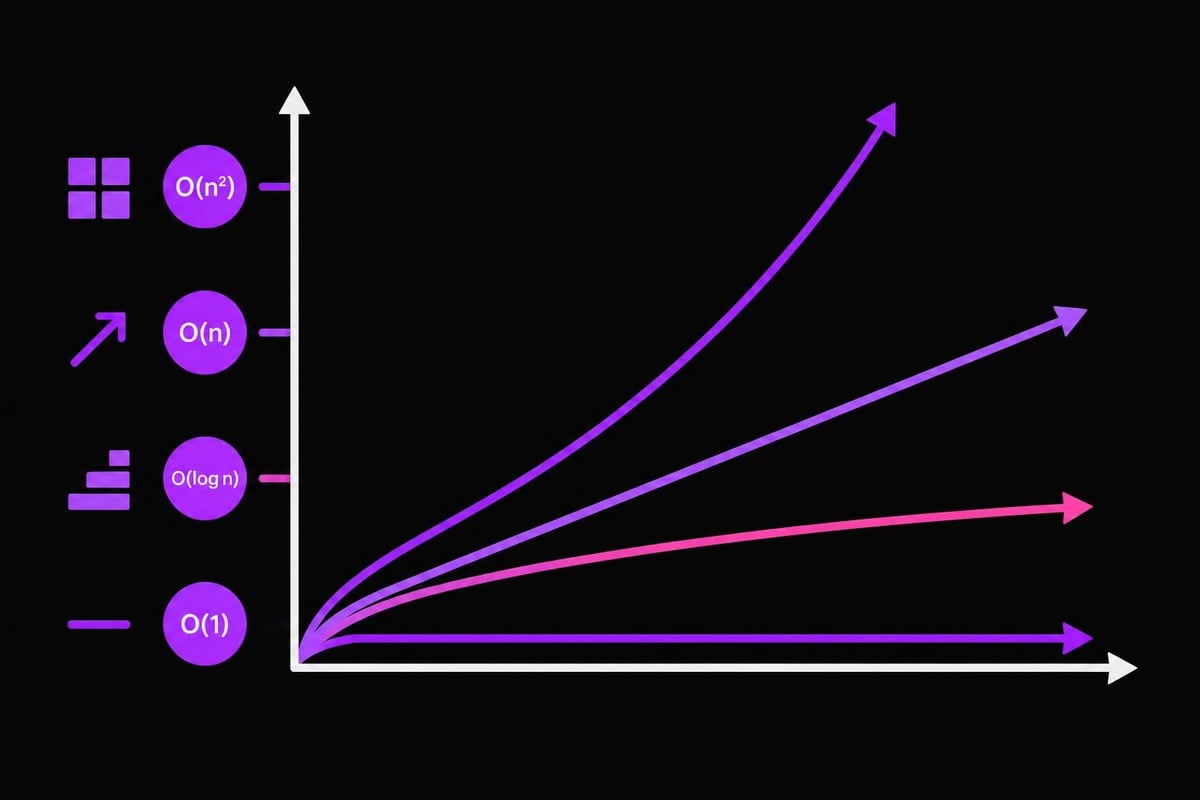
Algorithm analysis relies on mathematical formulas that describe how resource requirements scale with input size. Big O notation provides a formal framework, but specific performance predictions require concrete engineering formulas.
Time complexity formulas:
- Constant time operations: T(n) = c
- Linear algorithms: T(n) = an + b
- Logarithmic operations: T(n) = a log n + b
- Quadratic algorithms: T(n) = an² + bn + c
Memory utilization formulas similarly predict space requirements based on data structures and algorithm choices. When designing trading dashboards that handle real-time market data, these formulas determine whether systems can maintain responsiveness under peak loads.
Reliability and Availability Calculations
System reliability engineering employs formulas derived from probability theory and statistics. The exponential distribution describes failure rates, while the availability formula A = MTBF / (MTBF + MTTR) quantifies uptime expectations.
Mean Time Between Failures (MTBF) and Mean Time To Repair (MTTR) combine to predict system availability. For mission-critical applications like payment processing systems, these calculations justify redundancy investments and maintenance schedules.
Parallel systems improve reliability through redundancy. The formula for parallel component reliability R_parallel = 1 - (1 - R₁)(1 - R₂)...(1 - Rₙ) demonstrates how multiple independent components increase overall system reliability beyond individual component capabilities.
Practical Application of Engineering Formulas
Resources like AccessEngineering provide comprehensive collections of engineering formulas across disciplines, making these mathematical tools accessible to product teams. The challenge isn't finding formulas but selecting appropriate ones and applying them correctly.
Formula Selection Framework
Choosing the right engineering formulas requires understanding both the problem domain and formula assumptions. Many formulas include simplifications or constraints that limit applicability. For instance, ideal gas laws assume negligible molecular interactions, making them unsuitable for high-pressure calculations.
Consider a typical product engineering scenario: estimating server capacity for a new application. Multiple formula categories apply:
- Network bandwidth: Shannon capacity formula determines theoretical limits
- Processing power: Amdahl's law predicts parallel processing benefits
- Storage requirements: Data growth formulas project future needs
- Cooling capacity: Thermal dissipation formulas ensure adequate cooling
Each formula provides partial insight. Effective engineering integrates multiple formulas to build comprehensive understanding.
Validation and Verification
Engineering formulas produce theoretical predictions that require empirical validation. Even well-established formulas may not account for implementation-specific factors or edge cases.
| Validation Method | Purpose | Application |
|---|---|---|
| Dimensional analysis | Check unit consistency | Prevent calculation errors |
| Boundary testing | Verify extreme cases | Identify formula limits |
| Empirical comparison | Match predictions to data | Calibrate assumptions |
| Sensitivity analysis | Assess variable impact | Prioritize precision |
When building AI systems, validation becomes particularly important because machine learning introduces statistical uncertainty beyond traditional engineering formulas. Combining physics-based formulas with data-driven models creates robust hybrid approaches.
Engineering Formulas for Emerging Technologies
The rapid evolution of technology in 2026 demands adaptation of classical engineering formulas to new contexts. Blockchain systems, artificial intelligence, and quantum computing each present unique challenges requiring formula innovation.
Smart Contract Engineering
Smart contract development introduces novel engineering considerations where traditional formulas need reinterpretation. Gas cost calculations follow predictable patterns based on computational complexity, creating new formula categories specific to blockchain environments.
The gas cost formula for Ethereum transactions: Gas Cost = Gas Used × Gas Price parallels traditional cost estimation but introduces variables unique to distributed systems. Optimizing smart contracts requires minimizing gas consumption through algorithmic efficiency and storage optimization.
Transaction throughput formulas for blockchain systems consider block time, block size, and network propagation delays. Unlike traditional databases where throughput scales with hardware, blockchain throughput faces fundamental limits from consensus mechanisms.
AI System Resource Requirements
Artificial intelligence systems demand substantial computational resources, making engineering formulas critical for cost estimation and infrastructure planning. The computational requirements for training neural networks follow power laws related to model size and dataset volume.
Training time estimation formulas account for:
- FLOPs (Floating Point Operations): Total calculations required
- Hardware throughput: Operations per second capability
- Batch size: Parallel processing efficiency
- Epochs: Training iteration count
Memory requirements scale with model parameters, activation storage, and batch processing needs. The formula Memory = (Parameters × 4 bytes) + (Activations × Batch Size × 4 bytes) provides rough estimates for GPU memory allocation.
Tools like Instant Equation help engineers quickly locate relevant formulas by describing problems in plain language, accelerating formula discovery for novel applications.
Advanced Formula Applications in Product Engineering
Complex products often require combining multiple engineering formulas into integrated models. This systems engineering approach recognizes that components interact, creating emergent behaviors not captured by individual formulas.
Multi-Physics Modeling
Modern products frequently involve coupled physical phenomena requiring simultaneous solution of multiple formula sets. A cooling system design might combine:
- Electrical formulas: Power dissipation calculations
- Thermal formulas: Heat transfer and temperature distribution
- Fluid dynamics formulas: Airflow and pressure drop
- Acoustic formulas: Fan noise prediction
These coupled systems require iterative solution methods where outputs from one formula become inputs to others. Computational tools automate this process, but understanding underlying formulas remains essential for interpreting results and troubleshooting anomalies.

Optimization and Trade-off Analysis
Engineering formulas enable systematic optimization through mathematical techniques. Constraint satisfaction problems use formulas to define feasible regions, while objective functions quantify performance metrics to maximize or minimize.
The general optimization problem: Minimize f(x) subject to g(x) ≤ 0 and h(x) = 0 provides a framework where engineering formulas populate functions f, g, and h. Real-world examples include minimizing cost while meeting performance requirements or maximizing throughput within power budgets.
When designing systems that balance multiple objectives, Pareto optimization reveals trade-off frontiers. No single formula determines the "best" solution, but engineering formulas quantify trade-offs enabling informed decisions.
Reference Materials and Continuous Learning
Engineering formulas evolve as new research refines understanding and new technologies emerge. Staying current requires access to authoritative references and commitment to continuous learning.
The comprehensive "Engineering Formulas" by Kurt Gieck and Reiner Gieck remains a foundational reference, compiling thousands of formulas across disciplines. Regular consultation of such references prevents reinventing solutions and reduces errors.
Building Formula Libraries
Product teams benefit from curating formula collections relevant to their specific domains. Creating internal wikis or documentation systems that capture:
- Frequently used formulas with clear variable definitions
- Validation data comparing predictions to actual measurements
- Implementation examples demonstrating practical applications
- Limitation notes explaining when formulas don't apply
This institutional knowledge prevents repeated derivations and standardizes approaches across team members. When building internal tools, embedding common engineering formulas into calculators or automated workflows increases efficiency.
Formula Verification Tools
Modern engineering increasingly relies on computational tools that implement formula calculations. Spreadsheets, programming languages, and specialized engineering software all require careful validation to ensure correct formula implementation.
Verification best practices:
- Compare computational results against hand calculations for simple cases
- Test boundary conditions and limiting cases
- Use multiple independent implementations to cross-check results
- Document formula sources and derivation assumptions
- Maintain version control for formula libraries
The interactive engineering formulas reference by Frank Sims demonstrates how digital tools can enhance formula accessibility through searchable databases and automated unit conversions.
Integration with Modern Development Workflows
Engineering formulas don't exist in isolation from product development processes. Effective teams integrate formula-based calculations throughout design, development, testing, and operations phases.
Design Phase Applications
During initial product design, engineering formulas enable rapid feasibility assessment and alternative comparison. Back-of-the-envelope calculations using simplified formulas quickly eliminate unworkable approaches before investing in detailed analysis.
Parametric studies vary input variables systematically, revealing sensitivity to different factors. This analysis identifies critical parameters requiring tight control versus those with minimal impact. When developing marketplaces, formula-based modeling predicts transaction volumes, infrastructure requirements, and scaling timelines.
Testing and Validation
Engineering formulas establish expected behaviors that testing confirms or refutes. Deviation between formula predictions and measured performance indicates either formula inapplicability or implementation issues requiring investigation.
Performance testing frameworks often incorporate formula-based assertions. Load testing might verify that response time grows logarithmically with concurrent users, matching queuing theory predictions. Thermal testing confirms temperature rises align with heat transfer calculations.
Operational Monitoring
Production monitoring systems leverage engineering formulas to detect anomalies and trigger alerts. Baseline calculations establish normal operating ranges, while statistical formulas identify significant deviations.
For example, network throughput monitoring compares actual data rates against theoretical capacity determined by bandwidth formulas. Sustained operation below predicted performance indicates potential problems requiring investigation. Similarly, SEO performance tracking uses statistical formulas to distinguish meaningful ranking changes from normal fluctuation.
Future Directions in Engineering Formula Applications
As product complexity increases and new technologies emerge, engineering formulas continue evolving. Machine learning introduces data-driven approaches that complement traditional analytical formulas, creating hybrid methodologies.
Physics-Informed Machine Learning
Recent advances combine engineering formulas with neural networks, embedding physical laws as constraints or loss function components. This approach ensures predictions respect fundamental principles while capturing complex behaviors difficult to model analytically.
For instance, fluid dynamics simulations traditionally solve Navier-Stokes equations numerically, a computationally expensive process. Physics-informed neural networks learn solutions that satisfy these engineering formulas while achieving orders-of-magnitude speedups.
Automated Formula Discovery
AI systems now assist in discovering new engineering formulas by analyzing experimental data and proposing mathematical relationships. Symbolic regression algorithms search for equations explaining observed phenomena, potentially revealing insights humans might miss.
These tools don't replace human engineering judgment but augment it, suggesting candidate formulas for validation and refinement. As datasets grow larger and more comprehensive, automated formula discovery may accelerate scientific progress.
Cross-Domain Formula Transfer
Increasingly, engineers recognize that formulas from one domain often apply unexpectedly to others. Information theory formulas originally developed for telecommunications now inform machine learning optimization. Economic models explain ecosystem dynamics, while biological algorithms solve engineering optimization problems.
This cross-pollination enriches the engineering formula toolkit, providing novel approaches to persistent challenges. Product teams that actively seek analogies across disciplines gain competitive advantages through innovative formula applications.
Engineering formulas transform abstract principles into concrete calculations that guide product development decisions, from infrastructure sizing to algorithm optimization. Understanding and applying these mathematical relationships enables teams to build better products faster while avoiding costly mistakes. Whether you're developing smart contracts, designing AI systems, or building payment infrastructure, Absolute Foundry provides end-to-end engineering expertise that combines theoretical rigor with practical implementation experience. Our Singapore-based team acts as your on-demand tech department, applying proven engineering formulas and methodologies to deliver products that perform reliably at scale.